
When Emma Gannuzzi was given the ‘devastating’ news that she had the deadliest form of skin cancer at just 23, instead of railing at the injustice of the diagnosis, she blamed herself.
Emma was in no doubt she had caused melanoma to develop through her ‘foolish’ use of sunbeds from the age of 16.
Her doctor confirmed that exposure to artificial ultraviolet (UV) radiation in childhood does indeed significantly increase the risk of the disease, which claims around 2,600 lives a year in the UK.
Had it spread to other organs, Emma’s cancer could have killed her, but mercifully it was caught early and successfully removed.
A second potentially deadly melanoma was also detected and removed six years later.
Today, however, aged 36 and a mother of two, Emma still feels she has the ‘sword of Damocles’ hanging over her, and constantly checks her skin for changes.
Given her susceptibility, she will need regular check-ups for potentially malignant moles for the rest of her life.
‘Melanoma really is a life sentence,’ says Emma, a train conductor who lives in Newport with husband Carlo, 40. ‘I’m worried all the time – any new mark, any mole that I think has changed slightly, makes me utterly paranoid.
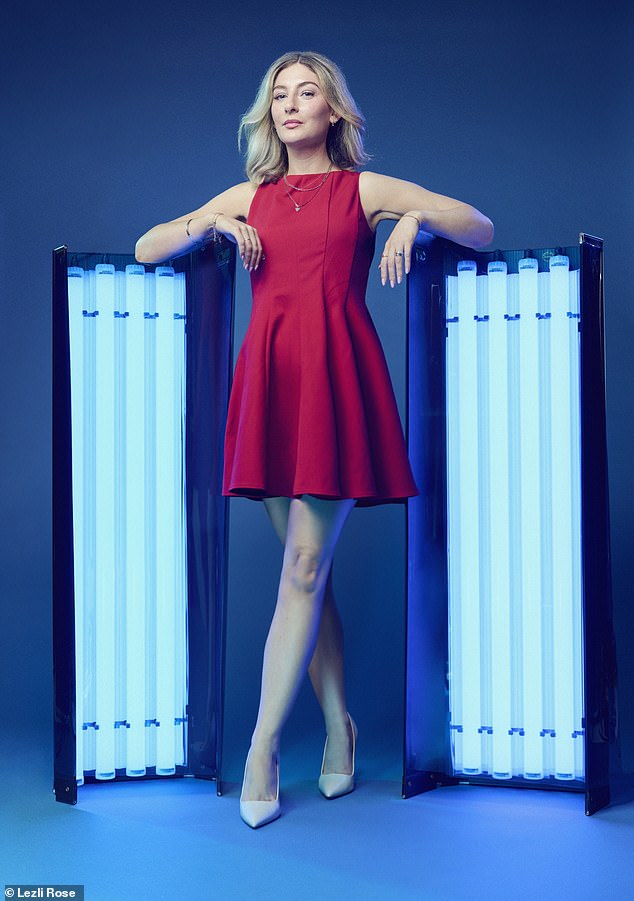
Emma Gannuzzi is in no doubt she had caused melanoma to develop through her ‘foolish’ use of sunbeds from the age of 16
‘There’s a misconception that skin cancers are harmless because you can just get them chopped off, but melanoma spreads so quickly – if you don’t catch it early, it can be incredibly dangerous.
‘Living with the knowledge that a change in one of my moles could kill me is terrifying. And what’s even worse is the guilt I feel about having brought this on myself, using sunbeds at an age when my skin was so vulnerable.’
So it’s hardly surprising that Emma is ‘utterly horrified’ by the recent rise in children, some as young as ten, using sunbeds.
Though it’s illegal to use a sunbed under the age of 18, figures from the charity Melanoma Focus show that more than a third of 16 and 17-year-olds admit to at least one sunbed session a year, while 23 per cent do so monthly.
More alarming still, tanning salons are allowing access to their facilities to much younger children, whose skin is even more susceptible to long-term UV damage.
According to shocking statistics uncovered through a Freedom of Information request, there have been more than 200 cases of younger children using sunbeds, including a ten-year-old in Hertfordshire, 11-year-olds in Leicestershire and Kent, and 12-year-olds in Bradford and Greater London.
The FOI requests were submitted by London-based specialist skin cancer clinic, The Devonshire Clinic, to local authorities across the country, in relation to the Sunbeds (Regulation) Act 2010, which prohibits commercial use by anyone under the age of 18.
While some local authorities have taken enforcement action against salons breaching this law, the vast majority have not. In fact, in the five local authority areas with the highest number of reports of underage sunbed use, only 20 per cent of salons have been issued with fines.
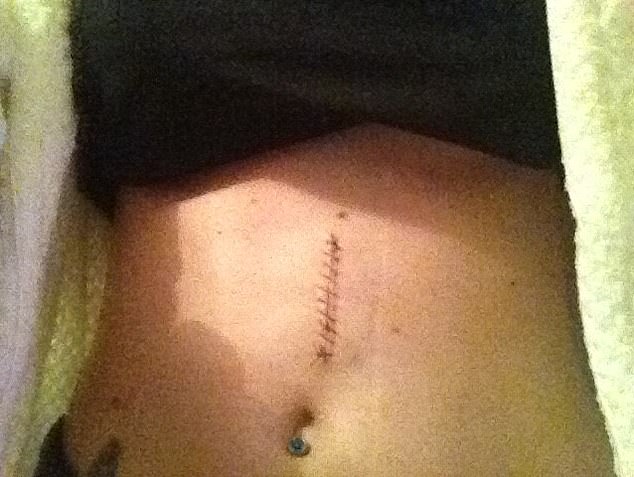
When she was 23, Emma had surgery on her stomach to remove a melanoma. She says: ‘Melanoma really is a life sentence. I’m worried all the time – any new mark, any mole that I think has changed slightly, makes me utterly paranoid’
Dr Conal Perrett, consultant dermatologist at The Devonshire Clinic, is alarmed but unsurprised by the statistics. ‘The dangers of sunbeds are widely underestimated, particularly when it comes to young people,’ he says.
‘We’re seeing individuals suffer severe burns, lasting skin damage and, in some cases, long-term health issues such as premature ageing and increased skin cancer risk, including melanoma.
‘Teenage skin is especially vulnerable to UV radiation, making early exposure even more damaging.
‘Regulations are in place for a good reason. We urgently need better enforcement, greater public awareness, and a shift in attitudes around tanning.’
Emma wasn’t even a regular user. Instead, for four years between 2005 and 2009 – when aged 16 to 20 – she visited salons in Newport up to three times a week in the month before going on her annual summer holiday.
The idea was ‘to get a base tan’ before jetting off to places such as Spain or Thailand.
However, one significant burn is all it takes to cause DNA damage that can lead to skin cancer and, today, she recalls that her stomach would always burn after a sunbed session. This is where her melanomas were later found.
It wasn’t illegal for under-18s to use sunbeds in England and Wales until 2011, but she knew that her mum did not approve of her habit. She ‘pulled a face’ when told of Emma’s visits to tanning salons – ‘but, like many teenagers, I was never going to listen to my mum telling me what to do at that age’.
It was only when a friend at university in Cardiff pointed out the risks and encouraged her to try fake tan instead that she finally gave up her annual habit.
By then, however, the damage had been done.
‘It wasn’t the first time I’d heard about the dangers, but I’d always thought “I’m young, I won’t get cancer”, ’ she says. ‘How wrong I was. I have fair, Celtic skin, with freckles and moles – the most susceptible to sun damage, in fact.’
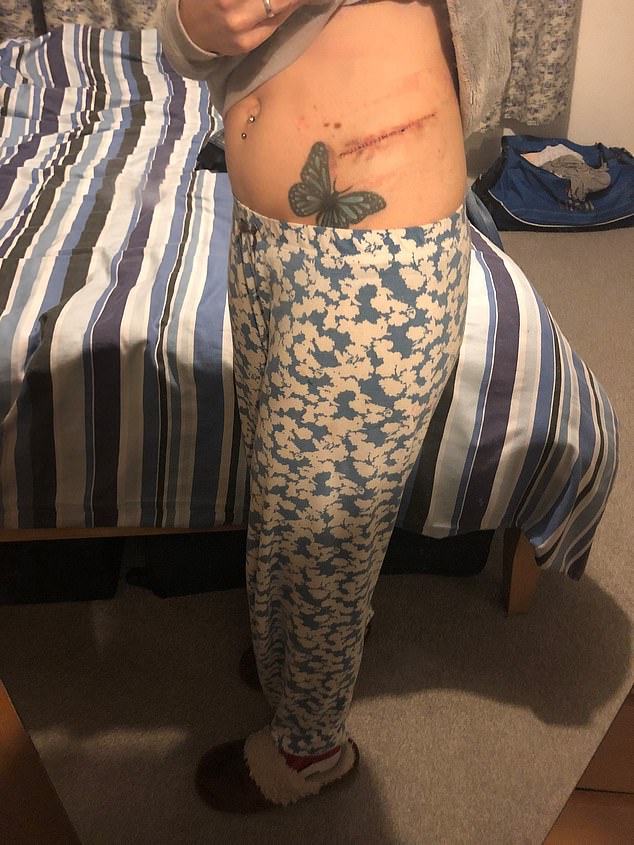
A selfie when Emma is 29 and pregnant with her second child, after she had further surgery. She is ‘utterly horrified’ by the recent rise in children, some as young as ten, using sunbeds
It was while applying suncream in Marbella at a friend’s hen do three years later that Emma first spotted a new mole on her stomach, which looked rather like a speck of chocolate.
Back home, she made an appointment with her GP, who referred her to the dermatology department at her local hospital, where the mole was removed that same day for testing. Within a few days, she was called back and ‘knew from the speed of the appointment it was bad news’.
‘Hearing the diagnosis left me feeling totally numb,’ says Emma. ‘I was too shocked to cry. It took time for me to process what I was hearing.’
Although a terrible shock, the melanoma was stage 1A, which meant it had not yet spread to her lymph nodes or organs.
‘The doctor told me not to Google it but I did. I remember sobbing, alone, after reading I had “the deadliest form of skin cancer”. All I could think was: “What have I done?”
‘I knew it was because of sunbeds – I remember my stomach would always burn when I used them, I guessed because it was so rarely exposed to UV rays.’
The skin around the mole was removed under local anaesthetic to ensure all cancerous cells had gone, and Emma was told, in no uncertain terms, to always wear sun protection factor 50 cream – and never to use sunbeds again.
She has regular check-ups, where every mole is examined for potentially risky changes by specialists, and it was during one of these, while pregnant with her second child in 2018, aged 29, that Emma received more devastating news.
‘Being told I had what looked like another cancerous mole, so wasn’t in the best possible health for the baby growing inside me, was incredibly scary,’ recalls Emma. Again the melanoma was on her stomach.
‘The doctor said it was too risky to remove it for biopsy during pregnancy because my stomach was expanding, so the wound might not heal properly.
‘It was incredibly hard putting the thought of it progressing to something more sinister from my mind. I was anxious throughout the rest of the pregnancy.’
The mole was removed in February 2019, and turned out once again to be a stage 1A melanoma. A further operation followed to remove the skin around it.
Emma will now be monitored for the rest of her life, something which brings some relief from the ‘constant anxiety’ she feels.
‘Unlike other cancers, you never go into remission from melanoma,’ she says. ‘The most reassurance they’ve been able to give over the past seven years is that there’s “no evidence of disease”.
‘So, every day, I have a good look at the moles I can see and regularly ask my husband to check, and photograph, the ones on my back.
‘As a wife and mother, I feel incredibly guilty for having given myself, albeit unwittingly, a life-threatening disease, all so I could have a bit of a tan.’
Melanoma Focus is especially alarmed that children and young people are being enticed into sunbed-use by online influencers promoting their supposed ‘wellness’ benefits.
Today, videos on TikTok and Instagram by so-called tanning influencers encourage the use of solariums as good places to relax and de-stress, as well as giving a vitamin D boost and, of course, the attendant ‘healthy glow’. In fact, a tan is essentially skin damage and evidence of the body trying to protect itself from cellular injury.
The problem is, many of the teens using sunbeds now weren’t even born when the dangers were widely publicised in the early Noughties. Without accurate information, they’re easily sucked into damaging beauty trends.
‘Influencers and online trends encouraging the use of sunbeds, often targeted at young people, completely ignore the fact they are a significant risk factor for developing melanoma,’ says Melanoma Focus’s chief executive Susanna Daniels. ‘Sadly, sunbeds are being marketed for wellbeing, possibly giving the illusion they are safe.
‘In fact, young skin is particularly vulnerable and research has shown that experiencing five or more bad sunburns between ages 15 and 20 increases your melanoma risk by 80 per cent.’
Since 2009, indeed, the World Health Organisation has classified artificial UV radiation as a Group 1 carcinogen, a known cause of cancer in humans, in the same category as asbestos and smoking.
Surprisingly, in the Melanoma Focus survey, twice as many men and boys admitted to using sunbeds as women and girls, at 40 per cent compared to 19 per cent.
This may be a side-effect of male gym trends – some gyms have solariums on-site – since tanning helps accentuate muscle definition.
Likewise the fashion for ‘looksmaxxing’ among young men – maximising physical attractiveness, with the help of good skincare and grooming – might explain why so many are turning to sunbeds.
Emma has two sons – Rico, ten, and Fabio, seven – and says she’ll keep a close eye on them to make sure they don’t get sucked into the pro-tanning culture online.

Though it’s illegal to use a sunbed under the age of 18, figures from the charity Melanoma Focus show that more than a third of 16 and 17-year-olds admit to at least one sunbed session a year, while 23 per cent do so monthly
‘I don’t have TikTok but I’ve seen influencers and celebrities using sunbeds on Instagram and immediately unfollowed them,’ says Emma. ‘It’s extremely irresponsible, they know their followers will copy what they do.
‘If my sons ever suggested using one, at whatever age, I’d be very disappointed because I’ve done everything I can to teach them about the risks.
‘They know what happened to me. It might sound scary but it’s important that they know.
‘They also have my husband’s Italian genes, so they’re not as fair as me, but they still have my genetic predisposition. I make sure they always wear sunscreen.’
Consultant dermatologist Professor Catherine Harwood, a trustee of Melanoma Focus, is grateful to Emma for speaking out about her experience at a time when, to her despair, solariums have once again become ‘fashionable’.
‘Using sunbeds at any age can lead to DNA damage in skin cells, which significantly raises the likelihood of developing skin cancer later in life,’ says Professor Harwood. But using them in childhood is especially risky and foolish.
Emma would give anything to be able to turn back the clock and make different choices and feels the next best thing is raising awareness.
‘If I could, I’d go back in time and not use sunbeds, so I wouldn’t be living in fear of the melanoma spreading and potentially taking me away from my husband and kids.
‘If sharing my story prevents young people from being convinced by a social media reel that they are safe, I’ll be happy.’