
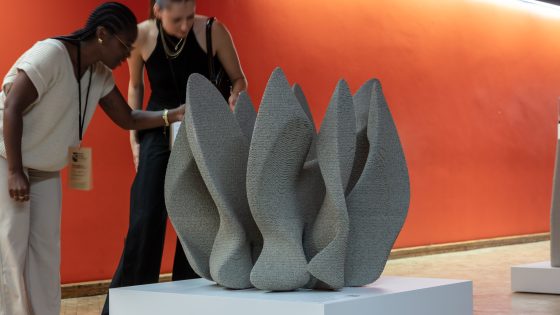
The project, known as Nereid, creates an artificial habitat intended for North Lantau Marine Park, Hong Kong. It was showcased at this year’s World Design Congress (WDC), held last week at London’s Barbican Centre.
The congress, a collaboration with the UK Design Council, was themed Design for the Planet, and focused on sustainable, innovative projects, with talks on environment regeneration and protection.
To develop Nereid, ZHA worked with Hong Kong Science & Technology Parks Corporation and the pioneering 3D printing company D-shape, which developed the advanced printing technology to create material that mimics the texture of a natural reef.
The North Lantau Marine Park is home to the Chinese White Dolphin, a critically endangered species. Nicknamed the ‘Pink Dolphin’ in Hong Kong, its habitat has been damaged by shipping, ferry traffic and land reclamation.
The ZHA project joins a number of existing efforts to revitalise the ecosystem and save the dolphins.
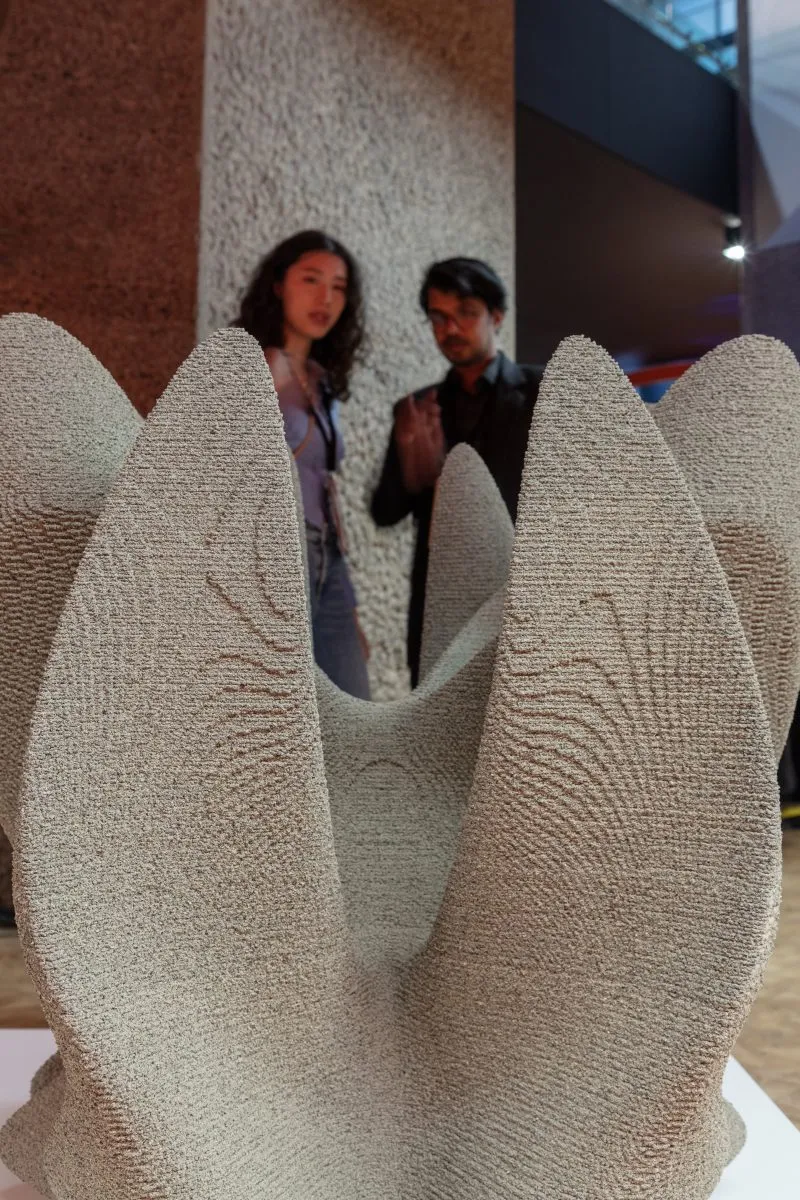
The Nereid project is designed to create structures that mimic real coral reefs, thereby supporting the foundations of the ecosystem
Specifically, the digitally fabricated structures are designed to encourage the growth of phytoplankton and filter-feeding shellfish, which are the ‘foundation of the marine ecosystem’s food chain’.
Other programmes using artificial reefs in Hong Kong have already shown they can be effective in promoting biodiversity and helping to regenerate damaged ecosystem.
ZHA design director Christos Passas said: ‘Driven by a deep understanding of the requirements needed to support local ecosystems, this prototype is part of a wider approach developed in collaboration with partners in innovative technologies to research and progress initiatives that enhance environmental sustainability.’
The AJ100 practice exhibited a number of other projects at the congress, including an element from its planned all-timber stadium proposed for Forest Green Rovers Football Club. A scaled-down version of the uppermost node, which crowns the triangular roof of the stadium, was on display, demonstrating how its timber structure is designed to minimise carbon footprint.
Also on display were the 3D-printed blocks used in ZHA’s Striatus and Phoenix bridge designs. Without the need for reinforcement or mortar, the bridges use entirely recycled materials and can be easily disassembled to be recycled, significantly reducing embodied carbon.
Further ZHA projects showcased were: NatPowerH, the world’s first green hydrogen refuelling infrastructure for the recreational boating industry; BEEAH Group’s new headquarters in Sharjah, UAE, which serves as a blueprint for tomorrow’s smart, sustainable cities; and Thalia, a cork wall system developed in collaboration with Gencork, combining the natural benefits and properties of cork’s remarkable materiality with ZHA’s advanced computational design.