
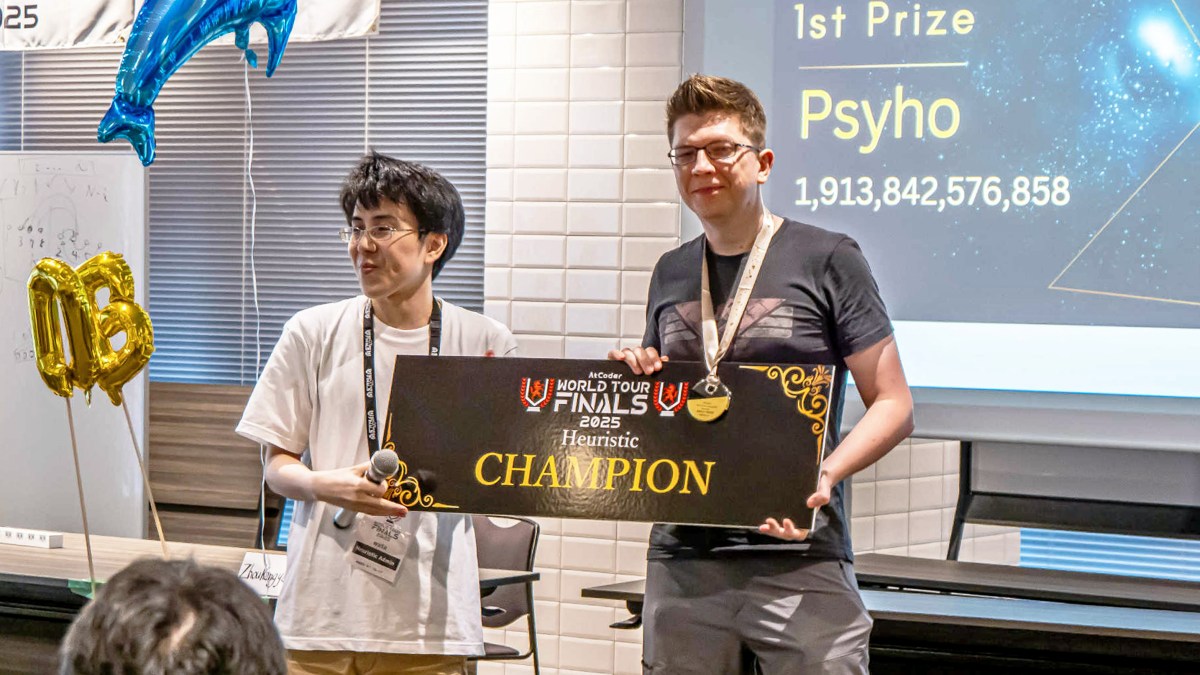
A programmer who beat artificial intelligence in a coding competition has declared that “humanity has prevailed (for now!)”.
Przemyslaw Debiak, known as Psyho, said he was “completely exhausted” and “barely alive” after prevailing in the AtCoder World Tour Finals contest in Tokyo.
Debiak beat an advanced and specially trained AI model from OpenAI, the company behind ChatGPT for which he used to work. Sam Altman, the chief executive of OpenAI, was gracious in defeat, posting on X that Debiak had done a “good job”.
The company added: “Congrats to the champion for holding us off this time.”
Please enable cookies and other technologies to view this content. You can update your cookies preferences any time using privacy manager.
Enable cookiesAllow cookies once
Debiak, 41, was competing in a contest where the goal was to write a program that guided robots across a grid using the fewest possible moves. He said that he only had ten hours of sleep in three days, adding on X: “Honestly, the hype feels kind of bizarre. Never expected so many people would be interested in programming contests.”
The Polish programmer’s victory, which comes with a 500,000 yen (£2,500) prize, will be some reassurance to those who fear for the future job prospects of coders.

Sam Altman, the chief executive of Debiak’s former employer, OpenAI, added his congratulations
TIMES PHOTOGRAPHER RICHARD POHLE
AI coding has become one of the hottest areas of the technology. Cursor, which provides AI for programmers, has become one of the fastest growing start-ups in history and more than half of the Fortune 500 companies use its services.
Leading companies in the field are also seeking to buy AI coding start-ups such as Windsurf, which had a turbulent few days last week. OpenAI had been expected to buy the company, but the deal fell apart, then Google hired Windsurf’s chief executive and other senior staff, and a rival AI start-up bought what was left.
AI coding has also enabled non-technical people to create software through text prompts, leading to a new trend called “vibe coding”. This year’s AI Index Report from Stanford University said that on one benchmark, AI systems could solve just 4.4 per cent of coding problems in 2023, but by last year that had jumped to 71.7 per cent.
Andrej Karpathy, the OpenAI co-founder, said in 2023, after the launch of ChatGPT: “The hottest new programming language is English.”
Debiak told The Times: “I can safely say that with the current tech, the less experienced someone is, the more they can gain by using models. The line between augmenting humans and replacing them is very thin and it’s unclear where we are heading as a society.”
He told Business Insider that in cases that require straightforward engineering, AI would beat humans. But in longer contests where programmers do everything from scratch, AI had a harder time keeping up. “The longer the contest is, the more chances for humans and less chances for AI,” he said.
A recent study from METR, a research group in California, found that while developers believed using AI tools helped them to perform 20 per cent faster, they actually worked 19 per cent slower. One key factor was that human developers found AI-generated code unreliable and ended up devoting extra time to reviewing, testing and fixing it.
But the study’s authors warned that AI coding tools were rapidly improving, so their findings could soon be out of date. They also pointed out that there were many counter-examples of organisations and projects that had become more productive using coding tools.
Debiak’s victory is the latest episode in a long history of contests pitting humans versus machines.
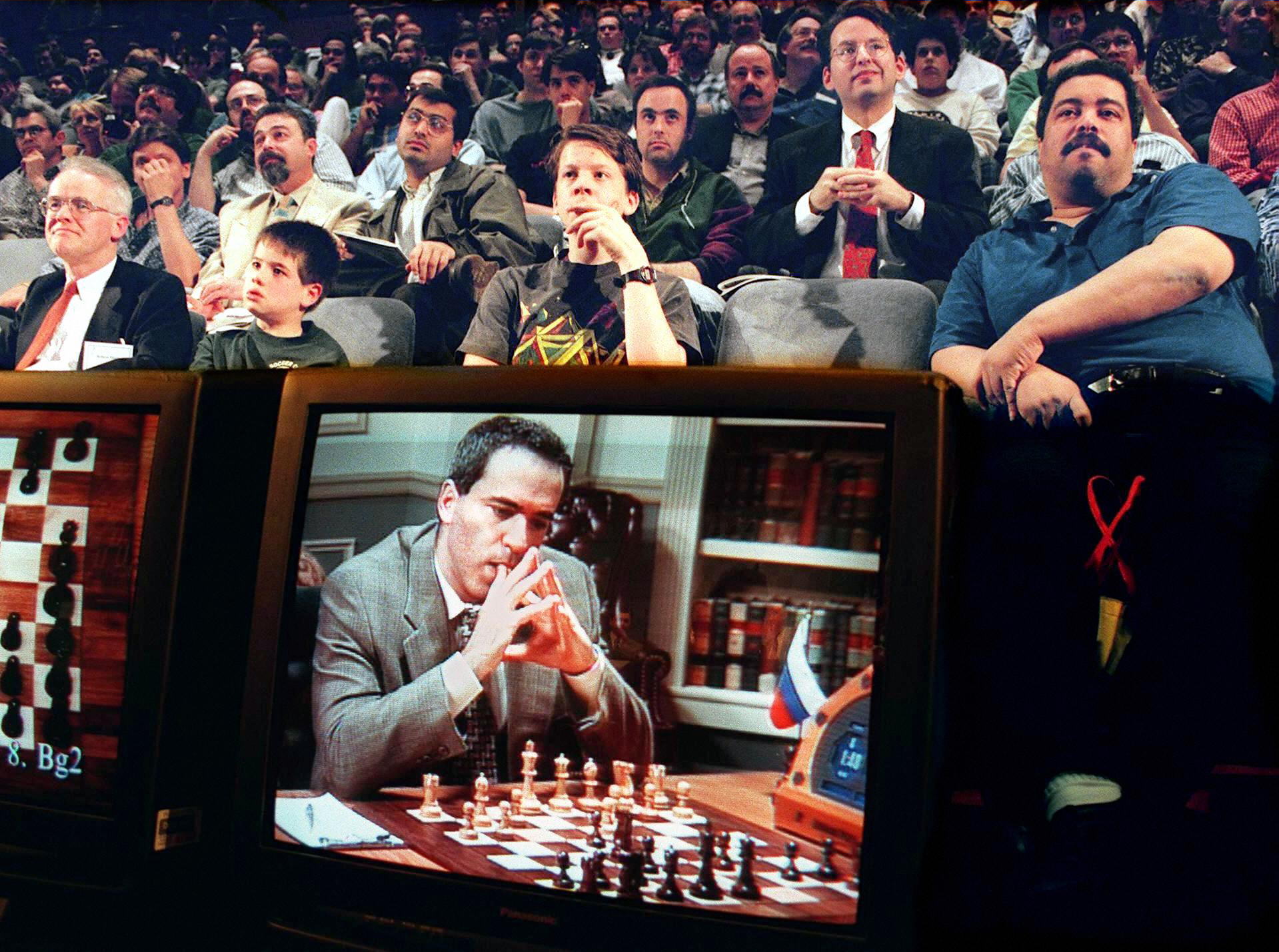
Garry Kasparov’s chess matches against the Deep Blue computer captivated millions in the Nineties
STAN HONDA/AFP/GETTY IMAGES
Garry Kasparov, the world chess champion, played two matches against IBM’s computer Deep Blue in 1996 and 1997, winning the first but losing the second.
In 2016 an AI program developed by DeepMind called AlphaGo beat the Go world champion, Lee Sedol.