
In the 1950s and 1960s, we built upwards. Futuristic dreams of streets in the sky abounded and brutalist concrete came into vogue as architects experimented with the potential of this modern form of construction. These estates were seen at the time as modern and exciting new ways to live – designed by an army of architects employed by the London County Council (LCC), which was the largest architectural practice in the country at the time. The homes were transformative for the working-class population, used to sharing between whole families and sweating to make rent for the private landlords who had ruled London since the nineteenth century. Pauline Hutchinson remembers growing up in Stepney, in the East End, in a house which had two rooms, a scullery and a minute back yard and was home to her mum, dad, grandmother and two siblings. The street was full of animal noises: dogs, cats, pigeons, rabbits and the chickens which Pauline’s family kept. Her parents were among the east Londoners who moved out of these conditions into council housing – getting a flat on a newly built council estate in 1950. Her parents were “over the moon” with the home, recalls Pauline. It was a three-bedroom flat with a tiny kitchen and living room together with an indoor bathroom, which felt like an unbelievable luxury in those days. “We knew everyone and there was a real sense of community. We had Jewish people, Africans, West Indians and Irish and lots of mixed-race families. We lived on the top floor and thought we were living in the clouds.” These new houses also gave Londoners stable and affordable rents and lifetime tenancies, which meant they had security and, in some circumstances, could pass it on to their children when they died. Oral histories of early social housing in London are scattered with new residents describing the social homes they moved into as “a palace”, “heaven with the gates off” or similar.
In essence, the provision of housing had become a direct role of the welfare state. It would be wrong to say there was ever complete consensus about this.
Throughout the twentieth century, governments also often looked for ways to sell off council homes, increase the rents and reduce the level of capital investment the state put up to build them. Even the ‘Homes for Heroes’ programme was subject to major cuts. Social housing became seen as the ‘wobbly pillar’ of the welfare state – never quite as secure in its place as health and education in the social contract between the government and its citizens.
But in London social housing thrived, particularly because of its staunch supporters in the LCC and its successor, the Greater London Council (GLC), controlled by Labour Party politicians who supported council housing for most of the twentieth century. By the 1980s, with London’s population having fallen, there was actually too much social housing: in 1981, Lambeth had 3,100 empty council properties, Islington had 2,800, Southwark had 2,700 and Hackney had 2,300. This created financial difficulties because there was stock standing vacant, and no one paying the rent. The GLC would occasionally run ‘first come, first served’ opportunities to become a tenant at estates where they had too much stock. Young people, some of them students, could simply join a queue at 9 a.m. and become council tenants by the afternoon.
For the most part, these estates were well looked after. Rents were paid to central government, which returned them as subsidy for maintenance, while councils also had business rates and council taxes to invest in housing. “In those days, Camden had money coming out of its ears,” says Derek Jarman, a long-time council tenant and former councillor, describing a programme of double glazing at one estate. “There was a resident caretaker. If there were any problems or if the kids were misbehaving he could go and tell them to either piss off or behave,” he adds. This was true of many estates around London. Resident caretakers, good maintenance, high standards of building overseen by the architects at the GLC and abundant supply. Council housing was thriving. But the aftershocks of Thatcher’s new economic model were sweeping through London and this would change everything.
Hannah, Andrew
Hannah Joshua grew up with her mum on the Samuel Lewis estate in Dalston. “When I looked out of my window there were lots of trees,” says Hannah. “I had all my friends on the estate or the estate across the road. Obviously, it wasn’t all perfect, but it was a good place to live. The idea that we were poor because we lived on an estate never really occurred to me.”
The estate was formed of three long, red-brick, four-storey finger blocks. One on the east was called ‘the electrics’ locally, because it was the only one with lifts. Hannah and her mum’s flat was small: the kitchen and bathroom were in the same room, separated by a shower curtain. Hannah spent a lot of her time outside. She can still name her friends and their flat numbers. “There were just loads of kids and we would all play out,” she says: tag, run outs, knock down ginger. “I feel like I had a lot of freedom,” says Hannah. “We had a club which was run by women on the estate. It was 20p to go and you’d have pool, table tennis, all sorts.” The estate had around six residential caretakers who lived there with their families. “They were quite grumpy, some of them, but they were always around,” she says. “If there were any problems, like a broken fuse, you would literally walk down to the estate office and someone would come up within half an hour.”
Andrew’s dad moved to London from Canvey Island in Essex after the devastating North Sea floods of 1953 submerged the small outcrop of land in the Thames estuary. The floods killed 307 people in the UK, 58 of them from Canvey Island. Andrew’s dad lost friends to the waves and watched their bodies floating along the street in the surging water. The family moved to east London not long after, to be further from the sea. It was here, on a small council estate in West Ham, that Andrew was born. “My dad was the postman for the area, and everyone knew him,” recalls Andrew. “People think now that the idea that everyone knew each other in the East End is a bit of a myth, but they really did. All the men would finish work and go down the pub: the postmen, the bus drivers, the plumbers. I’m just about old enough to remember the tail end of all that. When you watch old episodes of EastEnders, that’s what it was like at that point in time.” Andrew’s parents knew most of the other mums and dads in the area, so he had a lot of freedom as a child. He could go in and out of friends’ houses and play in the cul-de-sac. It wasn’t always an easy community, though. He recalls the story of a young man who lived locally who beat his wife and eventually killed her with a hammer. He was caught trying to dispose of the body with his father on a building site in Bow and both were prosecuted for murder. “It’s always been rough,” he adds. ”But you kind of learned to go with it and knew what you could and couldn’t do. And if you weren’t involved in any of the trouble, it was actually a really nice area to grow up in.”
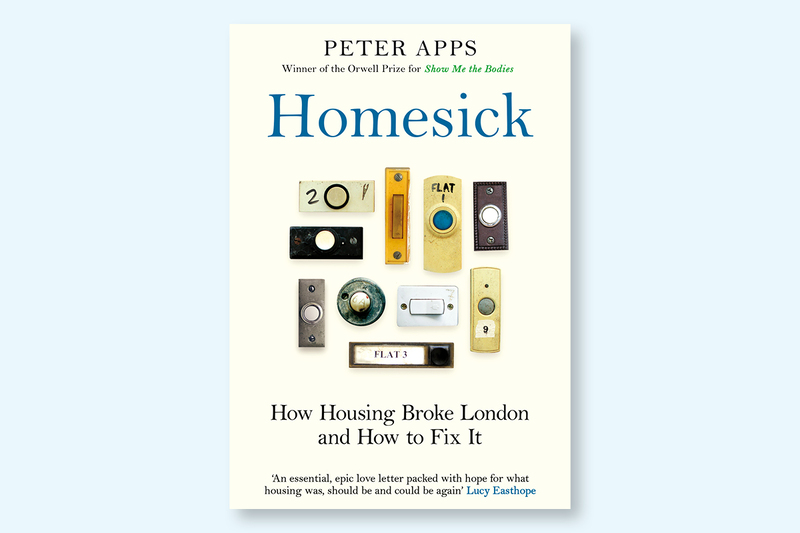
Homesick: how housing broke London and how to fix it is published by OneWorld and is out now. You can purchase a copy here