
FTSE 100 closes up around 11 points at almost 9,024
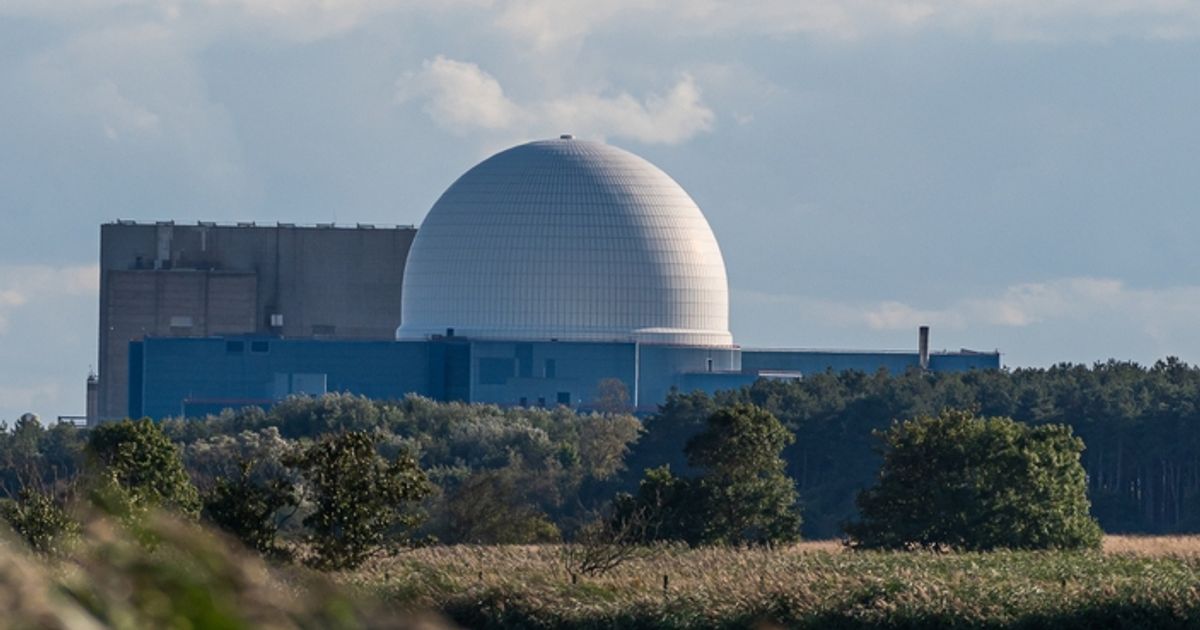
Centrica takes stake as UK govt green-lights Sizewell C
Government borrowing grows, tax hikes expected
Compass trading update impresses
4.45pm: Another record closing high
The FTSE 100 finished Tuesday’s session higher, adding 10.8 points at a new record closing high of 9,023.8, after notching a record intraday high above 9,035 earlier in the day.
Across the Atlantic, US equity markets remained subdued late morning ahead of highly anticipated earnings reports from Tesla and Alphabet expected after the bell on Wednesday.
4.11pm: FTSE lifted by miners as gold, copper prices rise, oil and gas drop
London’s blue-chip index remains modestly in the green, but that means it remains the leading index in Europe.
Other notable moves in markets, include energy and metals.
Oil prices are down, with Brent falling 1.4% to $68.23 a barrel, and natural gas prices are down too, with US gas prices down 2.75% to $3.23/MMBtu, while UK gas prices are only down 0.3%.
As well as silver (see below) gold and industrial metals are also highrr. Gold prices are up 0.8% to $3,426 per oz, copper is up 1.4% at $5.68 per lb and iron ore up 1.7%.
A fall in the dollar has led to gold leaping higher, says Chris Beauchamp at IG. “Tariff fears are never far below the surface, and gold remains one of the key ways to play this scenario. Early August may finally see gold hold on to $3500, after weeks of sideways trading.”
Gold is also in a “loading the spring” phase, setting the stage for a sharp upward move over the coming months, according to WisdomTree.
Copper has been rising since the second half of last week, having taken a break after Donald Trump threatened a 50% tariff.
Since the start of the year, copper prices are up from $4/lb.
John Meyer at SP Angel pointed out that the London Metals Exchange reported a further 2,775 tonnes of copper into warehouses, as expected, due to Chinese smelters delivering on their hedging commitments, while Antofagasta recently reported “remarkably strong” copper production numbers for the first half.
Meyer says the market “continues to await details on the Section 232 investigation into copper by the US Administration. Trump has threatened 50% tariffs on copper imports though this does not make sense as a broad policy.
“We expect the market to ban or discourage US scrap exports and for favoured copper producers such as Chile to see lower tariffs.”
3.38pm: Footsie head and shoulders above
The FTSE 100 has notched its own record high just above 9,035 in recent minutes.
It’s standing alone among European indices, with the DAX down 1.15% in Frankfurt and the CAC down 0.65% in Paris. London’s mid-cap FTSE 250 is also in the red, down 0.3%.
Mining stocks are boosting the London benchmark, with Glencore rising 3.8%, Antofagasta and Rio Tinto both up over 2%.
3.14pm: Silver back up at 14-year highs
Silver prices earlier topped $39 an ounce.
Nikos Tzabouras, market analyst at Tradu.com, said the metal hit a new “near fourteen-year high”.
Prices are being supported by “structural demand drivers that can sustain further gains”, while the metal also possesses “safe-haven qualities that provide a tailwind amid trade and geopolitical uncertainty, but its most potent driver comes from industrial consumption”.
He says demand is expected to outstrip supply again this year, driven by the metal’s use in semiconductors and data centres to fuel the AI boom, as well as in defence applications amid rising military spending, and clean energy infrastructure such as solar panels.
“However, the deficit is likely to narrow this year, while risks to the global economy from Trump tariffs could dampen industrial consumption.”
2.40pm: Mixed start for Wall St
It’s a mixed start for US stocks, though moves are minor at the moment.
The Dow Jones is up 0.1%, the Nasdaq Composite is down 0.1%, while the S&P 500 is flat.
Nvidia is down 1.5% to weigh on the Nasdaq, Palantir is down 1.1%, among big tech. Apple is up 0.3% and Amazon is up 0.1%.
Back in London and the Footsie has clambered back above water. Miners, utilities and consumer names with a US focus such as such as Rentokil, Entain, WPP and Diageo, seem to be the dominant themes.
1.29pm: Ringfencing – Bailey vs Reeves
Bailey also objected to proposals mooted by Rachel Reeves in her Mansion House speech about watering down financial crisis bank ringfencing rules, saying “it would not be sensible” to remove them at this point.
He said the ringfencing regime, which forces UK banks to separate their retail and investment banking activities, has “benefits, particularly, in terms of UK customers and UK consumers, businesses and households.”
And he said: “I don’t think it hinders banks fundamentally in terms of their business models.”
He said the regime is very detailed and he is “sure there are things that can be improved” to help banks, while keeping the main structure of the rule so that the economy is protected if a bank fails.
Last week, in her Mansion House speech, Reeves said she was committed to “meaningful reform of the UK’s ringfencing regime” in recognition that “now is the time to go further in tackling inefficiency and boosting growth…while retaining the aspects of the regime that support financial stability and protect consumer deposits”.
12.54pm: Bailey not convinced by digital quid
The Bank of England is pondering whether to abandon plans to create a ‘digital pound’, with governor Andrew Bailey suggesting he would need “a lot of convincing”.
Bailey was speaking to the House of Commons Treasury committee in Westminster on Tuesday about various subjects, and was asked about the launch of a central bank digital currency (CBDC) after a Bloomberg report that officials were mulling whether to set aside the plans amid growing scepticism about the project’s benefits.
The BoE governor suggested his preference was for Threadneedle Street to help banks and the market to improve digital payment technology, which could lead to “huge benefits”, such as smart contracts, reducing fraud, reducing costs, and improving the speed of payments to SMEs.
12.21pm: Stocks in the red
The FTSE 100 is back in the red, dragged down by banks, housebuilders, and defence groups.
Barclays and Lloyds, and Rolls-Royce and BAE Systems, are all down 1%, while Melrose Industries has dropped 2.75% and Babcock 2%.
Industrials Spirax, Croda and Intertek are down 2.7%, 2.7% and 1.7%.
US futures have also dropped into the red in the past couple of minutes.
Dow Jones and Nadaq futures are down over 0.1%, with the S&P 500 just below flat.
11.33am: UBS prefers UK midcaps over large-caps for the next phase of the cycle
UK profit trends are “a study in contrasts”, says UBS strategist Sutanya Chedda, with earnings revisions mostly negative and sending analysts off with their red pens to trim 2025 forecasts.
On average, consensus forecasts are now expecting only modest EPS growth of 2% for the FTSE 100, rising to 15% for the mid-caps of the FTSE 250 in 2025, with both picking up in 2026.
“This subdued outlook reflects pressure in key sectors, notably commodities. The energy and materials sectors have seen significant negative earnings momentum, a hangover from last year’s high base and softer commodity prices,” says Chedda.
She notes that more domestically oriented and defensive sectors such as financials and utilities are faring better, with relatively stable or improving earnings prospects, with “clear sector divergences”.
“Going into the Q2 reporting season, the profit outlook is one of cautious resilience: companies are still delivering earnings (no collapse in results), but guidance will be key amid an uncertain macro climate.”
In terms of valuations, while large caps have closed the valuation gap somewhat, by historical standards the UK’s valuation gap “remains wide, and there is still a lot of value in UK SMIDs”, with UBS preferring the FTSE 250 to the 100.
“Low multiples, combined with high dividend yields underline the UK market’s appeal, and there is room for further re-rating if earnings prove resilient and political risks abate.”
11.12am: What Budget tax hikes might we expect?
Tax hikes on alcohol and tobacco could come this autumn in Rachel Reeves’ Budget, while there could be tweaks on pensions tax.
These are ideas suggested by Pantheon Macroeconomics economist Rob Wood.
“We expect ‘sin tax’ and duty hikes, freezing income tax thresholds for an extra year in 2029 and a pensions tax raid – reinstating the lifetime limit on pension pots and cutting relief – to fill most of the hole,” he said, quotes by Sky News.
“The majority of those tax hikes would be backloaded to the end of the forecast horizon, avoiding fiscal tightening in the near-term.”
He said Rachel Reeves is caught between “a rock and a hard place”, wanting to avoid tax hikes but being unable to cut spending.
Another option is that she could tweak the fiscal rules to allow a forecast deficit of 0.5% of GDP, giving another £17 billion of headroom, Wood said.
“The fiscal pain will, however, continue beyond the autumn. Defence spending will almost certainly have to rise faster than the government currently plans, for instance, necessitating further tax hikes or rule tweaks.”
10.45am: Greencore and Bakkavor top mid-caps
Greencore Group PLC (LSE:GNC) shares, up 10.6%, are topping the FTSE 250 risers after the convenience food group reported a strong rise in quarterly revenue and lifted its profit outlook.
Bakkavor Group PLC (LSE:BAKK) also gained 6%, with investors encouraged by the strong sector performance and progress on Greencore’s planned takeover of its business.
Greencore’s update showed third-quarter revenue up 9.9% to £511.1 million, buoyed by strong demand in sandwiches, sushi and ready meals, favourable summer weather and new product launches, including poke bowls and a Japanese-inspired strawberry and crème sandwich.
Volumes outpaced the wider grocery market growth.
Mitie Group PLC (LSE:MTO) is next, up 2.27% after an AGM statement that guides to trading on track, with growth in all of the divisions, particularly Business Services, and despite weakness in Central Government as a contract ended.
10.27am: Ocado buzz
On the grocery data earlier, market analyst Victoria Scholar at ii highlights the acceleration in grocery inflation to 5.2% in July, from 4.7% in June and 4.1% in May.
“Supermarkets have been dealing with higher costs from national insurance and minimum wage increases which are being passed onto consumers in terms of higher prices on the shelves.
“Food price inflation has come through in recent months as a key driver of higher official ONS inflation data. Food prices have been rising for three straight months, piling on additional cost-of-living pressures to households.
“And Kantar’s data this morning suggests food price inflation will continue to push up official prices next month. Shoppers are switching to own brand products to save costs amid the heightened price sensitivity.”
With Ocado Retail, seeing the strongest growth, she said there is a “buzz around Ocado among investors at the moment” with this mpressive sales growth data providing further positive evidence.
“Shares have been performing very well over the last month partly thanks to a strong first-half earnings report.”
10.01am: FTSE and European peers all in red
The FTSE 100 is hovering just above 9,000, a little below flat for the day’s trading so far.
European stock markets are also generally down this morning, with the Euro Stoxx 600 falling 0.55% and Germany’s DAX and France’s CAC 0.7% and 0.4% lower respectively.
Among the fallers on the Footsie are banks, housebuilders and life insurers.
Russ Mould, investment director at AJ Bell, says builders have been knocked by the public sector finance figures, which has led to a rise in gilt yields, which “suggests the market believes interest rates could stay higher for longer”.
“Housebuilders are desperately waiting for rates to come down as that could make mortgages more affordable and help more people get on the property ladder.”
Banks, meanwhile, are down as the prospect of a tax hike is “negative for consumer and business sentiment, potentially leading to more hesitance around borrowing money”.
9.30am: JPMorgan’s crypto U-turn
JPMorgan Chase & Co (NYSE:JPM) is mulling whether to start offering loans backed by clients’ cryptocurrency holdings, according to a report in the FT.
This would represent a notable shift for chief executive Jamie Dimon, who previously criticised bitcoin as “worthless” and “the pet rock”, but has recently softened his stance.
Sources told the newspaper the bank could begin lending against assets such as bitcoin and Ethereum as early as next year, though plans remain under discussion, with the move reflecting how traditional banks are becoming more open to digital assets as US lawmakers push for clearer rules on stablecoins and crypto markets.
JPMorgan, which does not hold cryptocurrencies on its balance sheet, would likely use a third-party custodian for any crypto collateral.
8.54am: Contrasting the FTSE and UK economy
The contrasting fortunes of the UK economy and financial markets has been highlighted by Kathleen Brooks, research director at XTB, with the FTSE 100 reaching a record high above 9,000 despite worsening public finances.
UK Gilts, once outperforming, are now under pressure as yields rise on fiscal concerns, while so far this year, the Footsie has risen by 10% in US dollar terms, and 18% in sterling terms, outperforming the Eurostoxx index, the Dow Jones, the S&P 500 and the Nasdaq.
“However, the FTSE 100’s fortunes are not a reflection of the domestic economy. Earlier this morning we got more bad news about the UK’s public finances.”
However, while the UK borrowed much more than expected last month, borrowing in the first three months of the fiscal year of £57.8 billion, was in line with forecasts from the Office for Budget Responsibility.
The Office for National Statistics blamed the increase in borrowing on the rising costs of providing public sector services, this includes pay rises given to public sector workers in the past year, as well as the rising cost of servicing debts as the interest paid on index-linked gilts helped to push up overall spending.
“Index-linked gilts could be a problem for some time to come, as the UK’s inflation figures are the strongest in the G13,” says Brooks.
“The inflation differential is playing havoc with the UK’s public finances, at a time when financial markets are starting to keep a close eye on high levels of government borrowing.
“This is likely to lead to even more speculation that taxes will rise in the October Budget, for the second time under Labour.”
The pound is down 0.2% against the dollar and 0.1% versus the euro.
“The spotlight will be on UK gilts today, if there is a sharp rise in yields on the back of this data then we could see the pound start to sell off at a faster pace.”
However, there was not so far, with gilts up slightly, but only back to where they were at the end of last week.
8.27am: Sizewell’s sizeable impact expected
Building the new Sizewell C nuclear power station will support 10,000 jobs directly at peak construction, with thousands more estimated in the nationwide supply chain.
The Department for Energy Security and Net Zero has stipulated that 70% of the value of construction is set to be awarded to British businesses, with an anticipated 3,500 UK companies in the supply chain across the country.
Structuring the investment in construction between taxpayers, consumers and private companies “builds on lessons learnt from the construction of Hinkley Point C”, the department said, offering a saving of around 20% compared with Hinkley Point C.
“For the first time, the British people will be co-owners of a nuclear power plant alongside experienced private sector partners – with consumers to benefit from the government’s investment. This will ensure the impact on consumer bills is limited to an average of around £1 per month over the duration of Sizewell C’s construction, with the nuclear plant to deliver cheaper clean power for decades to come once operational. “
Chancellor of the Exchequer Rachel Reeves said the investments by Centrica, La Caisse and Amber/INPP are “a powerful endorsement of the UK as the best place to do business and as a global hub for nuclear energy”.
“Delivering next generation, publicly-owned clean power is vital to our energy security and growth, which is why we backed Sizewell C. This investment will create thousands of good quality jobs and boost the local economy as we deliver on our Plan for Change.”
8.22am: Grocery inflation keeps rising
UK grocery inflation hit 5.2% in the four weeks to 13th July, according to Kantar, or Worldpanel by Numerator as it now wants to be known, up from 4.7% in June and 4.1% in May.
With the highest level of food inflation since January 2024, annual grocery bills could jump by £275 as inflation continues to accelerate, the report says.
Ocado enjoyed stronges sales growth of 11.7%, followed by 6.3% for Aldi and 7.1% for Tesco, with Asda continuing to struggle, with sales down 3%.
“Just under two thirds of households say they are very concerned about the cost of their grocery shopping, and people are adapting their habits to avoid the full impact of price rises,” says Fraser McKevitt, head of retail and consumer insight at Worldpanel.
“Own label products, which are often cheaper, continue to be some of the big winners and, in fact, sales of these ranges are again outpacing brands, growing by 5.6% versus 4.9%.
“These inflationary worries aren’t just changing what we buy, but how we prepare it too. We often see people choosing to make simpler meals when they are trying to save money, and today, almost seven in ten dinner plates include fewer than six components.”
With budgets under pressure, supermarkets have been finding new ways to pique the interest of consumers, McKevitt adds.
He says innovation is vital for grocers as consumer behaviours and priorities shift, with drinks in particular seeming to be the centre of inspiration this summer, with iced coffee and kombucha drinks examples.
“No and low alcohol drinks continue their gradual march into the mainstream too with nearly seven in every 100 households buying a product this month, pushing sales up by 21%,” McKevitt said.
8.15am: Compass and Centrica lead FTSE higher
The FTSE 100 has been up and down in the first few minutes of Tuesday trading, currently sitting three points to the good at 9,016.
Compass is top of the early leaderboard, up 4.2% off the back of its quarterly trading update.
Next is Centrica, up 3.9% as it confirmed the £1.3 billion investment for a 15% stake in the new Sizewell C nuclear plan in Suffolk, which got final investment decision from the government.
7.58am: Compass nudges needle north
Compass Group PLC (LSE:CPG) has raised its profit guidance for the full year after reporting strong organic growth and better-than-expected performance from acquisitions in its third quarter.
Organic revenue for the FTSE 100-listed caterer rose 8.6%, and for the nine months of its financial year is up 8.5%. North America led with 9.6% growth in the quarter, while international revenues grew 6.6%.
“We now expect constant currency underlying operating profit growth to be towards 11%, driven by organic revenue growth above 8% and ongoing margin progression.”
It has also agreed to acquire Netherlands-based Vermaat Groep for an enterprise value of approximately €1.5 billion, adding the market leader in the Netherlands, with a growing presence in Germany and France, all of which are among Compass Group’s top ten markets.
7.46am: Sizewell C gets green light, with Centrica and INPP taking stakes
Downing Street has approved the final investment decision to go ahead with the Sizewell C nuclear plant, with British Gas owner Centrica PLC (LSE:CNA) agreeing to invest £1.3 billion for a 15% equity stake.
A funding model has been agreed that the government said spreads the estimated £38 billion cost of constructing the 3.2 gigawatt nuclear power station in Suffolk between consumers, taxpayers and private investors.
The UK government will make a contribution to own 44.9% of the plant, with Canadian institutional investor La Caisse taking a 20% holding, France’s EDF 12.5% and Amber Infrastructure Group, the adviser to International Public Partnerships Ltd (LSE:INPP), the final 7.6%.
With taxpayers contributing to the build cost, the government said it will ensure the impact on consumer bills is limited to an average of around £1 per month during construction, with the nuclear plant to deliver £2 billion of electricity system savings, on average, once operational.
Centrica said returns during construction and initial operations include a real return on equity of 10.8% and an internal rate of return above 12% under “moderate” scenarios.
7.27am: Public sector borrowing rises
UK public sector borrowing rose to £20.7 billion in June, up from £17.7 billion in May, with economists having expected it to remain little changed.
It was the second-highest June borrowing since monthly records began in 1993, after that of June 2020.
The interest payable on central government debt was £16.4 billion in June, reflecting interest on index-linked gilts led to a £8.4 billion increase o June last year and again the second-highest June figure since records began.
The current budget deficit – borrowing to fund day-to-day public sector activities – was £16.3 billion.
ONS acting chief economist Richard Heys said: “Borrowing in the month of June was over £6 billion higher than during the same time last year.
“The rising costs of providing public services and a large rise this month in the interest payable on index-linked gilts pushed up overall spending more than the increases in income from taxes and National Insurance contributions, causing borrowing to rise in June.”
7.15am: FTSE set to start lower
The FTSE 100 is poised to retreat at the start of Tuesday trading, along with other European benchmarks.
A 20-point decline is predicted for the London index on the futures market, after it added around 21 points to reach almost 9,013, an all-time closing high.
UK public sector net borrowing rose more than expected in June to £20.7 billion, up from £17.7 billion in May. More on that shortly.
On Wall Street overnight, the S&P 500 rose 0.1% to close at a record high, along with the Nasdaq, which gained 0.4%. The Dow Jones finished just below flat.
6.15am: FTSE 100 Live on Tuesday 22 July
Giant caterer Compass Group PLC (LSE:CPG) is the largest company reporting in London on Tuesday, with its shares down 12% since hitting an all-time high in February.
While long seen as a reliable operator, benefiting from steady contract wins and its scale in procurement, some analysts see more going on under the bonnet that could push profit margins higher than many expect.
However, interim results in May revealed a slight slowing in growth, with organic growth moderating to 8.5% for the half from 9.2% in the first quarter, with the outlook pointing to 7.5% growth over the full year.
Elsewhere, FTSE 250 companies in the diary include construction group Kier, facilities management firm Mitie and Goldman Sachs-backed private equity investment trust Petershill Partners.
Overseas, Europe’s largest listed company, software group SAP, will report earnings at 9am London time.
In macroeconomic news, there will be a release on UK public sector borrowing, plus fresh data on the supermarket sector from what used to be called Kantar but is now known as the Worldpanel by Numerator at 8am.
Announcements expected:
Trading updates: Compass Group, Evoke, Kier Group, Luceco, Mitie Group, Petershill Partners
Interims: ME Group International
Finals: TheWorks.co.uk
Overseas earnings: Baker Hughes, Coca-Cola, Philip Morris, Lockheed Martin (all premarket), Texas Instruments, (after close)
Economic announcements: Public Sector Borrowing (UK), API Crude Oil (US)