
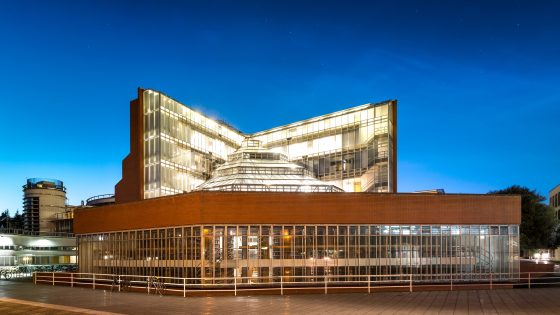
Full planning permission and listed building consent has been granted by the Greater Cambridge Shared Planning authority for the building, which houses the university’s Seeley Library.
One of the so-called Red Trilogy of iconic buildings, the library was designed by the famous post-war architect in the 1960s.
BDP was commissioned in July last year via the Cambridge University framework, beating up to five other practices on the framework during a competitive interview process.
The £60 million refurbishment is set to get under way early next year, and includes adding two pavilion extensions to house extra accessible library and reading spaces.
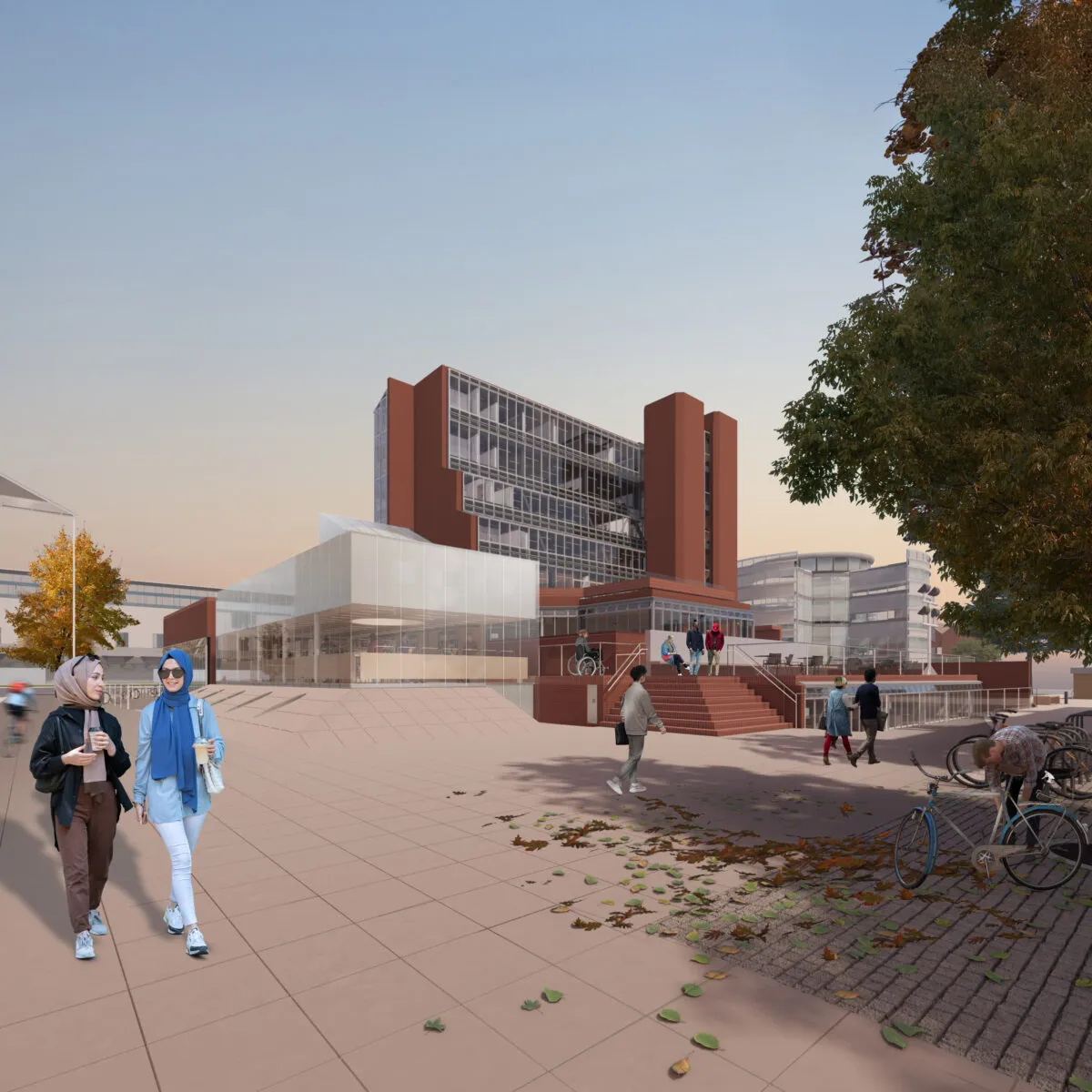
BDP’s vision for Cambridge University’s Grade II*-listed History Faculty Building
BDP said the extensions ‘respond to the original building scale, form and materials’, but have been ‘deployed in a simple, abstract way to differentiate them’.
The project will repair and upgrade existing building fabric, including extensive upgrades to its glazing, and replace services, to ‘safeguard [its] use and enjoyment’ and improve its carbon footprint and climate resilience.
It will include adapting the building’s communal areas to create ‘flexible and inspiring spaces’ which reflect the changing needs of Cambridge University, and ‘significantly improving’ step-free access throughout the building, including external terraces.
BDP has described sustainability as a major focus of its proposed scheme. Its upgrade is targeting BREEAM Excellent certification, with fabric-first and passive upgrades and a zero-gas approach.
Arup is delivering the heritage, civil, structural, façade engineering and access services on the project. BDP said heritage stakeholders including Cambridge City Council, The Twentieth Century Society and Historic England have all been consulted.
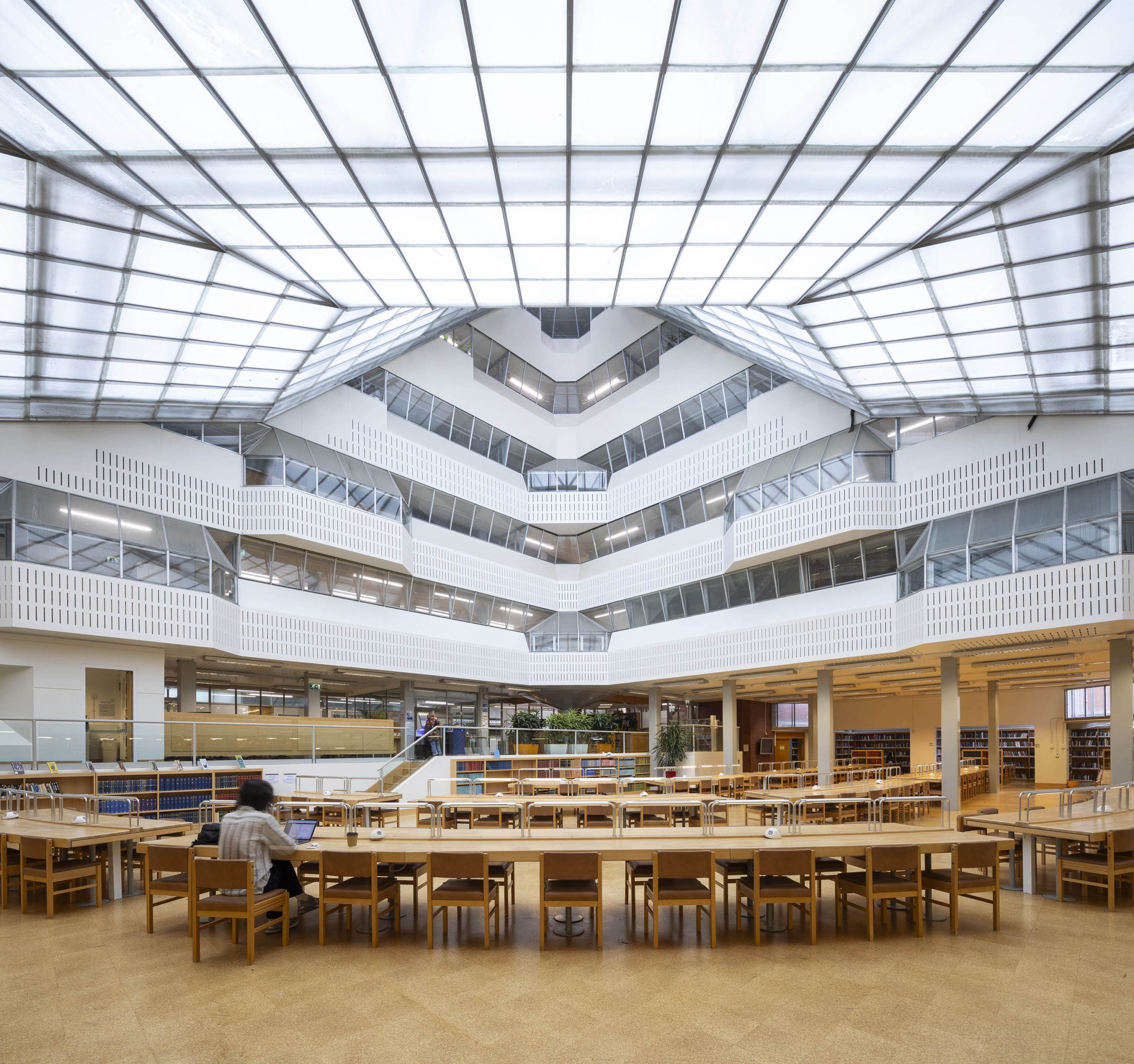
Cambridge University’s Grade II*-listed History Faculty Building designed by James Stirling
Bedford-based SDC has been appointed as the main contractor for the work with final university approvals expected later this year and a projected completion date in 2028.
The building has now been vacated with its collections moved to a ‘dedicated and newly designed space within the University Library’.
BDP architect director Jessica Mailey said in 2024: ‘We recognise that the Stirling building is a landmark in the history and development of architecture and needs to be treated as such.’
She added that BDP considered ‘multiple adaptations’ to the building, before making choices that ‘respect and respond to Stirling’s stylistic language’ while meeting the university’s needs to be ‘quite ambitious in terms of really getting some vibrancy out of the building’.
She told the AJ that Stirling’s building was being ‘retained in its diagrammatic form’, and that ‘visually, the form of the glazing transoms, the sizes of the glazing panels, the spacing between them, is all about retaining what the existing building does’.
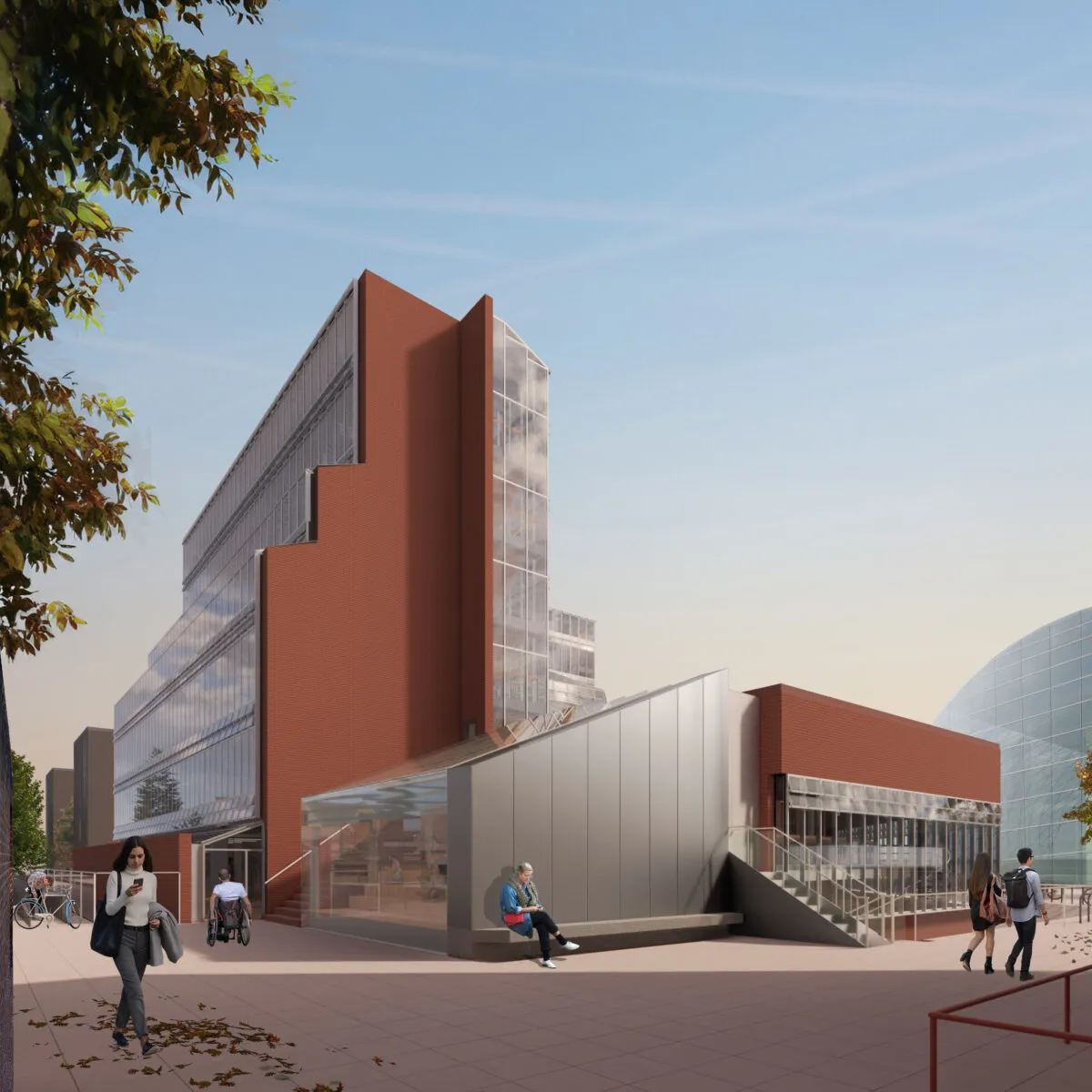
BDP’s vision for Cambridge University’s Grade II*-listed History Faculty Building
BDP architect director and heritage specialist David Artis added: ‘We want this building to be an active and enjoyable building to be in. Part of our remit is to make the interventions that allow that to happen, [without] undermining the fundamental concepts or the diagrams of the building.’
Arup senior architect Graham Epking-Crane had previously described the building as ‘a beautiful piece of engineering, with a visually expressed structure creating the unique volumes and distinct character that have made it synonymous with British post-war architecture’.
He said Arup’s conservation-led approach would ‘identify and distil the essential elements’ of the original design while ensuring the building is ‘sensitively yet robustly updated to secure its long-term survival’.
Dan Changer, director at contractor SDC, had described the History Faculty Building as an ‘architectural Modernist jewel’.
He added: ‘We look forward to the inherent challenge that the project presents: balancing the requirements of heritage conservation principles with the technical resolution of challenges in the fabric design.’