
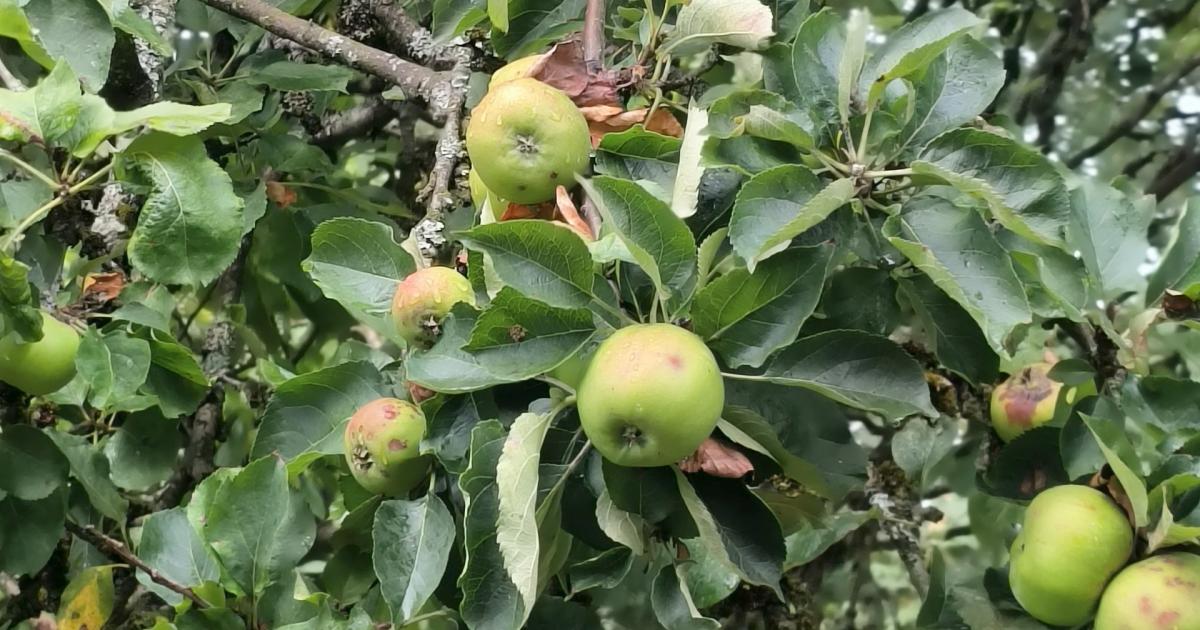
I think it’s been the best weather in Bolton of my life, such that we have great harvests of apples hanging from trees as I walk about.
Some seem smaller than usual, perhaps due to drought, but more numerous. Should we be eating, storing, stewing, baking our apples, or not be too bothered?
Apples can be up to 50p each, should we be buying them and just now cadging them off friends, neighbours, roadsides from harvests which have a glut?
Apples also have anticancer potential(Image: Supplied)
The answer is yes.
It turns out that apples have loads of benefits.
The amount of benefit depends on type, raw, cooked, organic, peeled, unpeeled, juiced etc. but in general benefits are very wide ranging.
Here’s a short summary.
Not surprisingly apples contain mainly water, making them a low calorie food and good fluid source, great for weight watchers and all of us on hot days.
They also contain numerous vitamins, minerals and fibres.
The peel turns out to be exciting too, as flavonoids in apple peel have, amongst other benefits, anti-inflammatory, antiviral, anticancer and antihypertension (blood pressure) properties, and give the apple its colour.
Apples reduce heart disease by lowering known risk factors for heart and vascular diseases.
These are lower blood pressure and lower cholesterol, especially LDL which is low density lipoprotein and the lipid type most strongly linked to heart disease.
Apples also have anticancer potential, which is being researched in the hope of separating out the active ingredients to make future medicines.
This again includes flavonoid natural compounds in apple peels.
Apples in experiments reduce cancer cell growth and increase cancer cell death. Apples are a good source of fibres, both cellulose and pectin.
The association of fibre with large bowel (also called colon) cancer has been well established.
Cancer research UK states ‘eating lots of fibre reduces your risk of bowel cancer.
Eating too little fibre causes 28 in 100 bowel cancers (28%) in the UK.’ It then goes on to recommend eating more fruit and veg.
Eating more fibre reduces constipation naturally and also stops the stomach emptying as quickly.
This slowing of digestion reduces blood sugar absorption and cholesterol absorption into the body and so again helps reduce obesity.
This slow digestion, combined with an apple’s low sugar content as fructose, also reduces the rapid rise in glucose often seen after eating in people with diabetes.
The sugars in apples are mainly fructose, glucose and sucrose (sucrose is a joining of glucose and fructose together).
The action of sunshine on the leaves (photosynthesis) causes starch formation as a long term food source for the plant, and us if we eat it, and is glucose derived.
As an aside, the apple tree also takes in carbon dioxide and releases oxygen into our air.
It is that carbon capture that creates these sugars and allows us to breathe. Apple trees also produce fructose which combines with glucose to create sucrose (a disaccharide).
Sucrose can travel more easily to different active parts of the tree.
Fructose receives bad publicity, as added to processed foods and drinks it encourages obesity. Eaten in natural amounts though it has benefits on glucose absorption.
Apples are a good source of vitamin C (ascorbic acid).
This acts to cross link collagen, the scaffold of our skin and connective tissues. Therefore vitamin C is known to maintain skin, gum and body lining ( mucosa) health and is essential for wound healing.
As an antioxidant it also improves the function of our immune systems.
Should we eat the pips?
In general no.
Firstly they are bitter and secondly they contain amygdaline which is turned into cyanide in the body, so large amounts are poisonous.
A few pips wont do any harm.
READ MORE:
Researchers have even found that some parts of pips have interesting compounds in, but as an overview my advice is avoid the pips.
So next time I bite into an apple I will be thinking about its health benefits, its more than a pipsqueak, in fact (apart from its pips) an apple outstrips its little size in health benefits.
An apple a day may not keep the doctor away, but it certainly has wide evidence of health benefit.