

Get the Well Enough newsletter by Emilie Lavinia and make sense of the wild world of wellnessGet our wellbeing editor’s newsletter: Well Enough by Emilie LaviniaGet the Well Enough email by Emilie Lavinia
The best multivitamin supplements are great for all kinds of reasons. Whether it’s to help with a deficiency, boost your gut health, or just keep everything in good working order, you’ll find all kinds of supplements to help with menopause, probiotics for gut health and supplements for healthier hair, skin, nails and joints.
It’s not just the typical health benefits that are targeted by supplements; you’ll also find some to aid with relaxation and sleep, too, such as CBD oils. Some take a whole host of pills and powders to optimise their wellbeing, but for others, taking 10 or more capsules a day can be confusing and time-consuming. This is where multivitamins come in.
When the body is lacking essential vitamins and minerals, either due to diet and lifestyle or a health issue, it can significantly affect all aspects of your health, from cognitive function to how often you’re likely to get sick. Multivitamins present a clever way of combining all the elements of varying supplement types in one capsule, and most people take them to hit their recommended daily allowance of vital nutrients.
Multivitamins can help to improve energy levels, immunity, brain health and bone strength. They can also be great for people with dietary restrictions and genetic or hormonal deficiencies, and for kids and teens, giving their growing bodies and brains the extra nutrients they need to thrive.
“I will often recommend a multivitamin for a prescribed duration, particularly if a person is time-poor and doesn’t have the bandwidth to remember to take a regimen of targeted nutrients. With a multivitamin, you get everything in one go,” says Emma Bardwell, a specialist menopause nutritionist.
When it comes to incorporating a multivitamin into your routine, Maz Packham, registered nutritional therapist, says that it’s “best to take a multivitamin with food, so getting into the habit of having it with your breakfast can be a good way to remember”. If your “meal contains some fat (think avocado, eggs or nuts), it will optimise absorption of the fat-soluble vitamins A, D, E and K”, she adds.
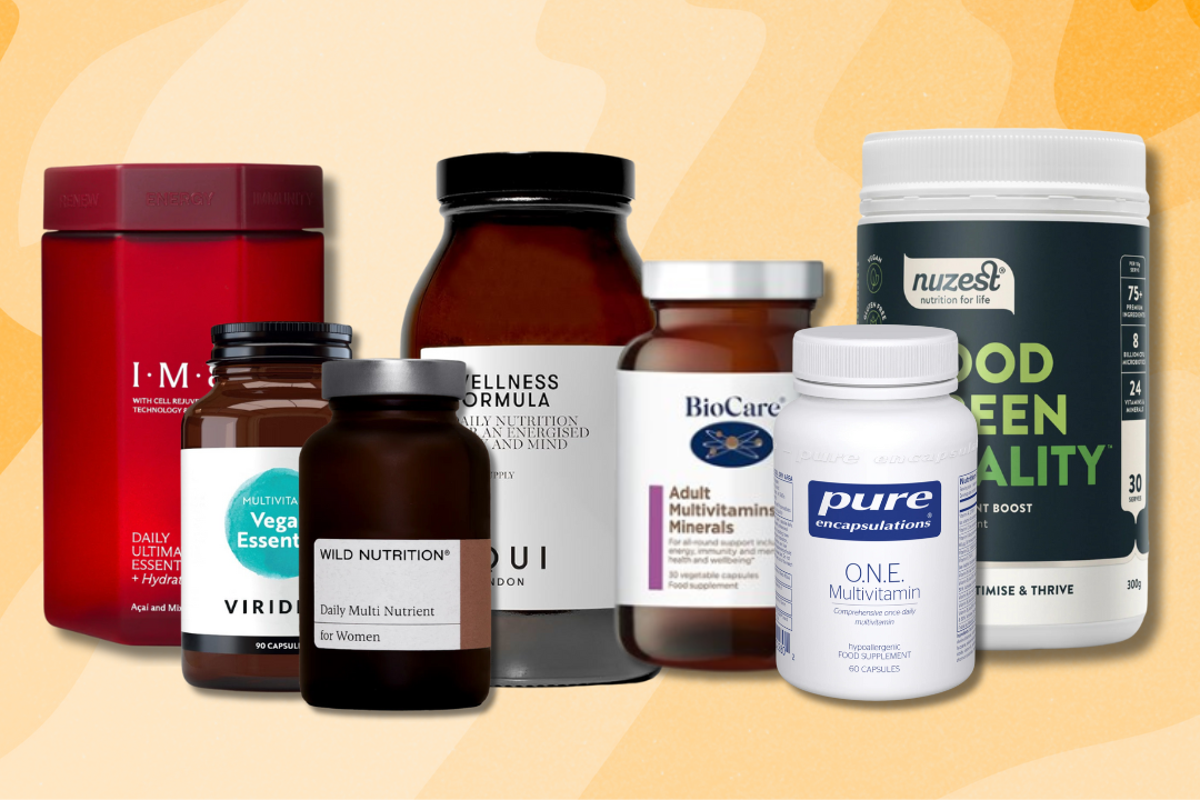
Though there are plenty of multivitamins to choose from, they’re not all created equal. You want to ensure you’re investing in a supplement with the right amounts of balanced, high-quality nutrients that will impact the body in the best way. Read on for our guide to the best multivitamin capsules and powders to boost wellbeing, approved and recommended by expert nutritionists.
Meet the experts
Emma Bardwell is a specialist menopause nutritionist and bestselling author with more than 100k on Instagram. Maz Packham is a registered Nutritional Therapist who studied at the College of Naturopathic Medicine. I sought the advice of Packham and Bardwell to find out which multivitamin products they’d personally recommend, how to take them and which might be best suited to differing diets and lifestyles.