
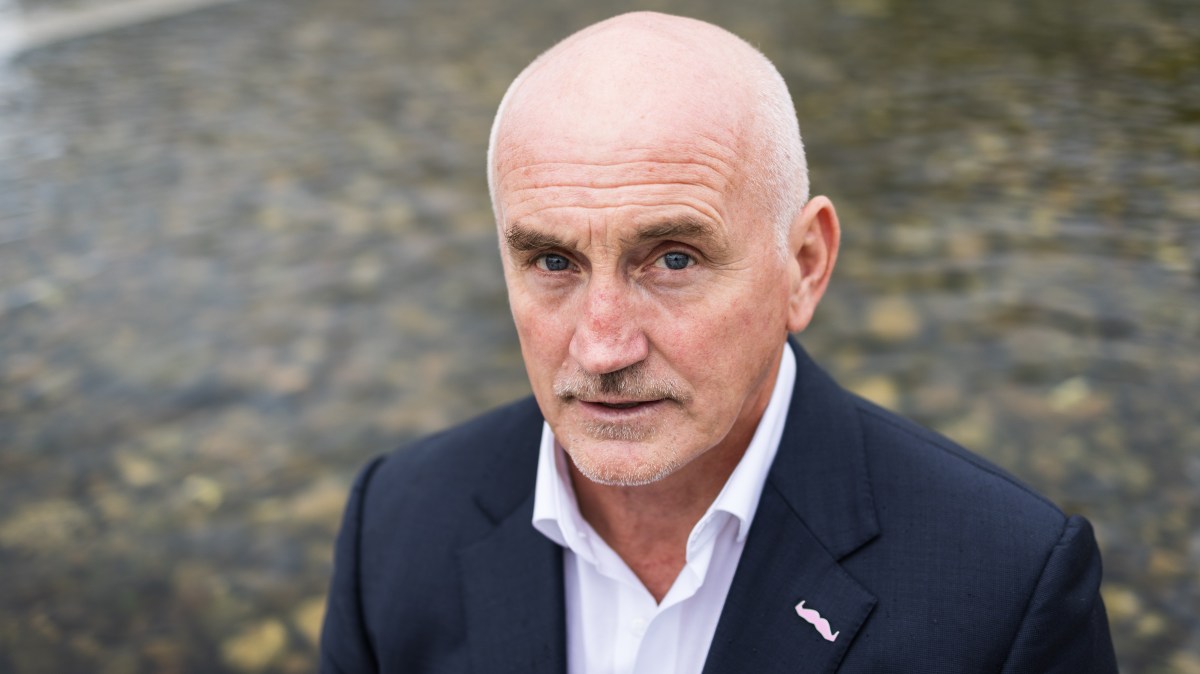
Barry McGuigan, the former world champion boxer, has told of his certainty that the net is closing on the organised crime boss Daniel Kinahan while warning that the gangster’s influence is still “looming large” over Irish boxing.
The Co Monaghan man said nailing the Dubai-based Dublin kingpin was a huge task “but it’s going to happen”.
Noting that sanctions were tightening around Kinahan, he said: “But he’s still there, looming large and it is worrying for the sport. I see the malign influence of the Kinahan gang manifesting in different ways in boxing.”
McGuigan believes influential figures linked to the Kinahan family continue to offer advice in the background on occasion, and that loyalties fractured as a result of the cartel’s involvement have not been fully resolved within the often lucrative sport.
“I still see the intermingling of the Kinahan gang … and it is is worrying for the sport,” he said.
“But I know the authorities are working hard to try to nail this guy, and I have every faith that they will eventually do that and eliminate him.
“But it won’t be easy. I never one minute imagined that it would be easy, but it’s going to happen.”
McGuigan’s comments came three years after US authorities designated Kinahan a significant transnational criminal in April 2022, offering a $5 million reward for information leading to his arrest.
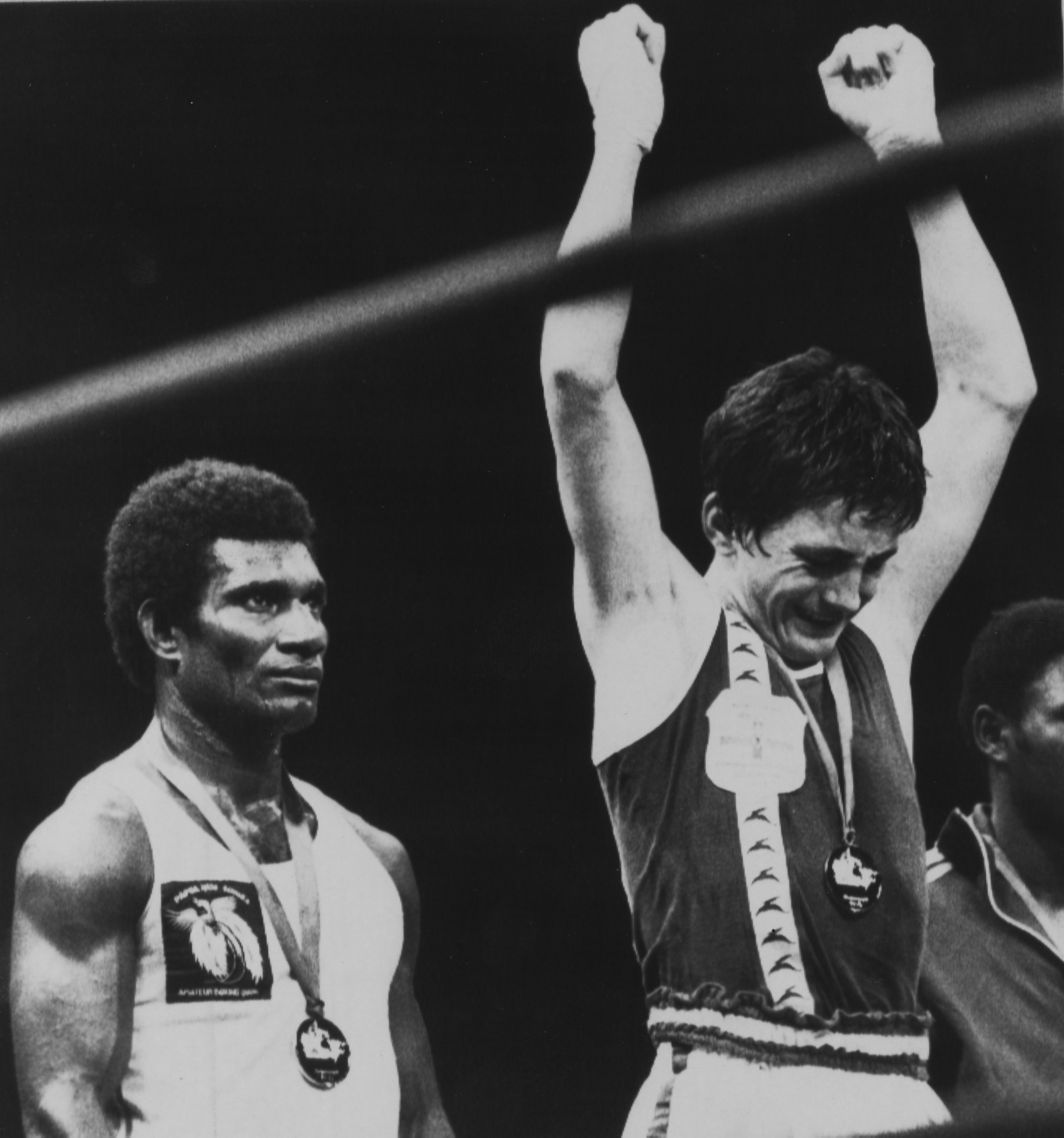
Barry McGuigan won gold in the 1978 Commonwealth Games in Edmonton
AP
Kinahan, 48, who founded the boxing management firm MTK Global, has been linked to the cartel responsible for at least 18 murders in Ireland’s gangland feuds.
Despite MTK’s closure in 2022 amid sanctions, McGuigan said the group’s shadow lingered and still affected the sport’s inner workings and reputation.
The comments came as McGuigan told movingly of being a “profoundly unlucky” man following tragedies that had devastated his family, adding he felt he would “never recover” from the loss.
Speaking while making a direct plea to the Irish government to invest more in mental health support, he told how his brother, Dermot, who killed himself aged 35 in 1994, “didn’t need to die”.
McGuigan suffered more heartache when his daughter, Danika, 33, died just weeks after being diagnosed with cancer in 2019.
• I’ll never recover from Nika’s death — but I owe it to her to go on
The 64-year-old Clones man, speaking at the launch of this year’s Real Face of Men’s Health report, commissioned by the charity Movember Ireland, told The Sunday Times that his family had “been unlucky, and I’ve just been unlucky, profoundly unlucky”.
In 2023 Ireland recorded a provisional 302 suicides, and data due from the Central Statistics Office is expected to show roughly 80 per cent, or about 240, of those deaths were male.
Encouragingly, figures indicate a sustained fall from the peaks in the early 2010s, with the overall suicide rate falling 28 per cent between 2000 and 2021.
Continuing prevention efforts, including a new post-2024 suicide strategy, focus on targeted outreach to men to address persistent risk factors such as a reluctance to seek help, but campaigners say more effort is required.
While McGuigan welcomed the declining suicide rate, he noted his plea for increased support for mental health services was timely following the death of fellow former boxer Ricky Hatton at the age of 46. The Manchester man, found dead in his home on September 14, had a well-documented history of personal struggle and suicide attempts.
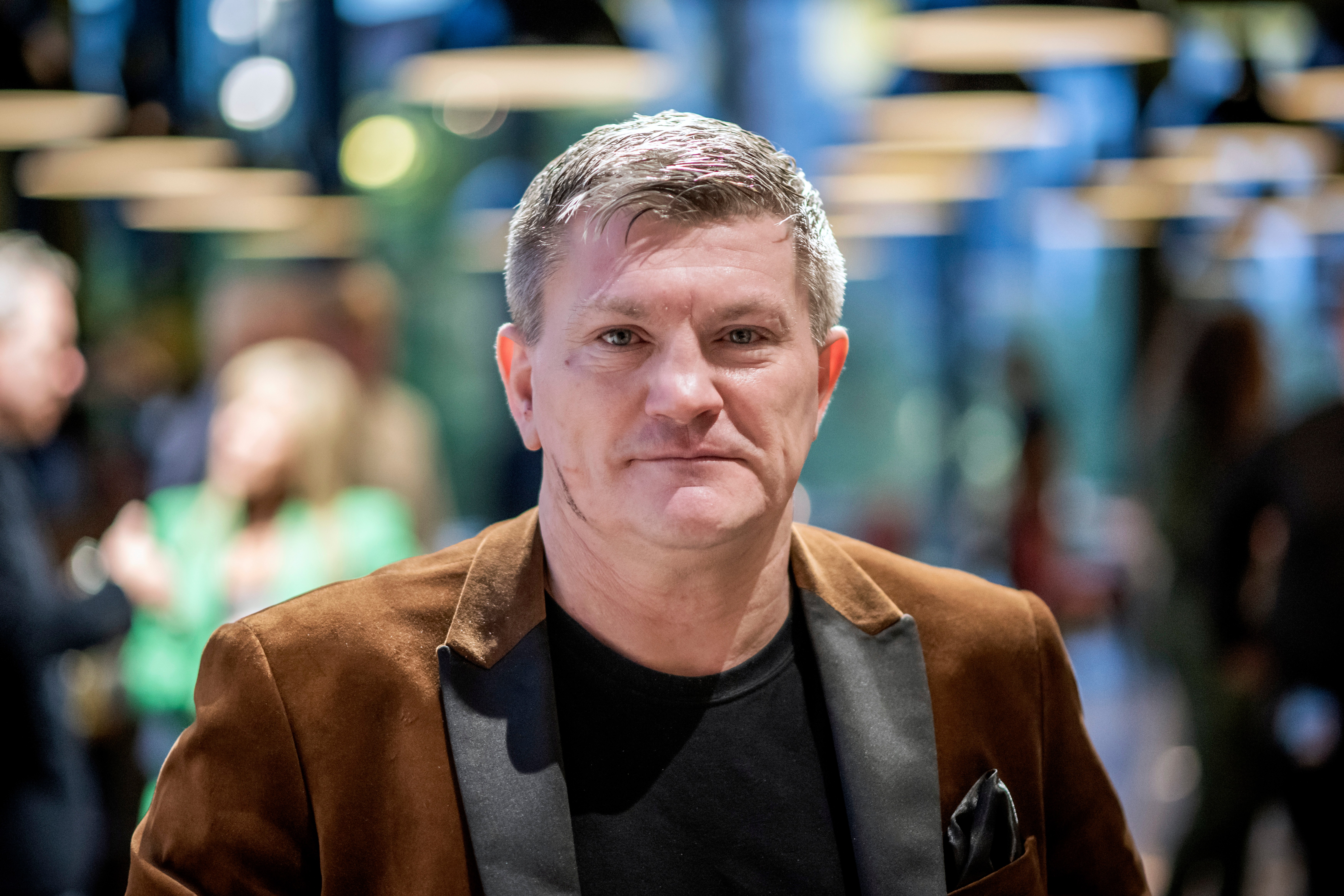
Former boxing world champion Ricky Hatton was found dead at his home in Manchester this month
ANTHONY DEVLIN/GETTY IMAGES
His death came as latest figures show that 97 per cent of doctors in Ireland saw male patients presenting with suicidal behaviour in the past year.
McGuigan said: “Ricky was a great fella, kind and generous and a good man. It’s terrifying when you think that he ended up like he did. But this is happening all the time and it’s getting worse. Each year it gets worse.”
He added: “Ricky brings all this to our attention because he was such a famous guy, and there are loads of guys, other good human beings, nice fellas, members of families, and they are dying all the time. This is a monumental problem in Ireland and in England too.”
McGuigan said that his brother, Dermot, died because “he was mentally unwell and he didn’t have the support system around him”.
“I’m not blaming anybody over that, but I am saying that he didn’t need to die. He shouldn’t have died,” he added.
• Me and my medals: Barry McGuigan
The loss, he said, shattered the family. “I could have my brother now with me, training with my son Shane. I should be in a great situation with him going on with him training fighters in Ireland and my son training fighters in London.
“And we could have had that but that was stolen away from me when he died. His whole life just vanished and it destroyed our family. My mother will never recover from it. Neither will I.”
Danika McGuigan died five weeks after a stage four bowel cancer diagnosis, having previously recovered from leukaemia at the age of 11.
Her father said: “My brother died, my daughter died, my sister got breast cancer. Danika had stage stage four bowel cancer. She died within six weeks in 2019.
“And that was an awful blow to us. I don’t know that we’ll ever recover from that. So, that’s what I mean about unlucky.”
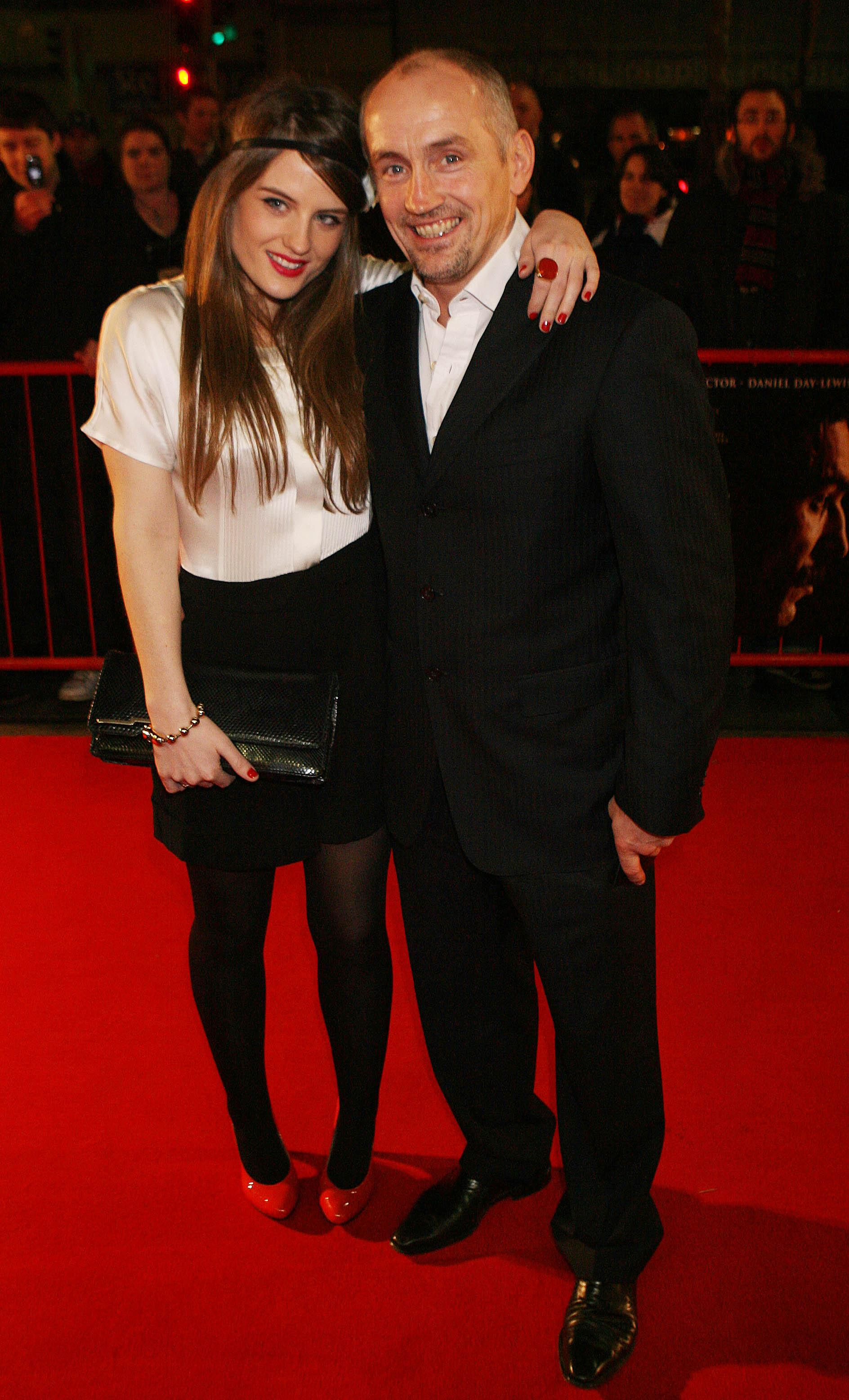
McGuigan with his actress daughter Danika, who died from bowel cancer in 2019
NIALL CARSON/PA
McGuigan, who became the WBA featherweight world champion in 1985, added: “I don’t want to wallow in my self-pity. Losing my daughter was the worst thing that’s ever happened to me and I don’t know that I’ll ever recover from that, but the point is I’m getting on with my life.
“But I see sadness and unhappiness all the time. I spend my life trying to encourage people and say, ‘Look, come on. It will be better. It will really get better. I promise you it will get better.’
“But people can be hard to reach, a lot of men and women too, but it’s predominantly a male problem.”
The Real Face of Men’s Health report, released as part of the campaign, highlights the scale of the crisis. It reveals that two in five (40.2 per cent) men die prematurely — before the age of 75 — and most of these deaths are preventable.
It says that men are 40 per cent more likely than women to die prematurely across Ireland’s five leading causes of premature death.
Men’s ill health cost Ireland more than €1 billion in 2023 alone, of which €716 million was preventable
And nearly all GPs (97 per cent) saw male patients presenting with suicidal behaviour in the past year — yet only 14 per cent felt very confident working with them.
The survey of 2,000 Irish adults finds that about 76 per cent express concern about the state of men’s health. The report urges the government to advance the National Men’s Action Plan with €10 million initial funding and cross-government support.
McGuigan, citing the figures, demanded immediate action. “We really and truly need to do something about it. We need to develop counsellors, bring more people in to help. It’s just about putting the right people and resources into place. We owe it to society to do it. Ireland has a lot of money and it needs to start spending money on developing in this area.
“Surely to goodness we can get a really good team of people that can get to the kids before it gets too late, because you reach a point where you cannot talk them down. We owe them not to allow it to get to that stage.”

McGuigan is a big supporter of the Movember movement
BEN BRADY/INPHO
In a direct message to Micheál Martin, the taoiseach, he said: “If I had the taoiseach right beside me, I would be saying to him, ‘It is a major problem and it needs to be addressed, like yesterday.’”
Dismissing any excuses around cost, he said: “It’s just not acceptable to say, ‘Oh no, we can’t afford it,’ that’s just bollocks.
“We need to plug that hole in the bath, stop all this life draining away because it is getting worse and worse and worse.”
McGuigan spoke highly of Movember’s mission, saying the charity had been founded 22 years ago in Australia after “two guys in a pub said this has got to stop”.
Movember, now a global charity event, focuses on raising awareness and funds for men’s health issues, including prostate cancer, testicular cancer and mental health. Participants grow moustaches and take on other challenges to highlight and support local programmes and research.
McGuigan said that meaningful action would save money in the long term and start saving lives right away.
He said: “I’m looking and seeing what’s happening with the amount of suicides, and it is becoming a huge, huge issue. And unless the governments of Ireland and Britain actually start putting some funding into that, getting to talk these kids through their difficulties, it’s going to cost stupid, stupid money [to address it later].”
He added that unless funding and support “comes from the government, it’s not going to work”.
“And they need to be willing to spend a lot of money on this. I know that Movember will need them halfway because they’ve got some funding. But Movember need funding and they need help from the government,” he added.
Optimistic about change, McGuigan said: “So it can be done. Things can improve. Of course it can be done. I’m one of these people that believe that if you work hard enough on anything, you’ll achieve your objective.
“We just need dedicated people, professional people committing to it. And we need to be able to pay them. Once the proper people get to those that are affected by depression and mental health, they can be helped enormously. And they can certainly seriously reduce the suicide numbers and we need to just get on with it.
“And there are lots of things like that out there and we’re all here just trying to say, ‘Look, come on. Let’s get it going. Let’s make Ireland an example to the rest of the world.’ So I am asking that we help resolve this problem, that we embrace it, because I don’t want the situation to get worse and worse and worse. Wherever I need to go to help put that message across, I will go.”
• If you are affected by any of the issues in this article, please contact the Samaritans on 116 123