
Weight loss jabs Mounjaro and Wegovy are so effective they should be the number one treatment for obesity ‘in almost all cases’, leading doctors say.
In new guidance to medics, the European Association for the Study of Obesity praised the drugs’ effectiveness and significant health benefits.
It describes them as powerful slimming aids that can reduce the risk of associated complications, such as high blood pressure and type 2 diabetes.
Three in ten Britons -16million adults – are obese but only 1.5million use fat jabs, with most bought privately for around £200 a month.
Studies have shown adults using injections containing semaglutide, the active ingredient in Wegovy and Ozempic, lost 14 per cent of their body weight over 72 weeks.
And those taking tirzepatide, known as Mounjaro or the ‘king kong’ of weight-loss jabs, lost 20 per cent of their body weight over the the same period.
Dr Andreea Ciudin, the co-first author of the guidance and from the Autonomous University of Barcelona, said the drugs were ‘completely transforming care of obesity and its complications’.
She added: ‘Even though there are several options on the market, the reality is that semaglutide and tirzepatide are so effective that they should be the first choice in almost all cases.’
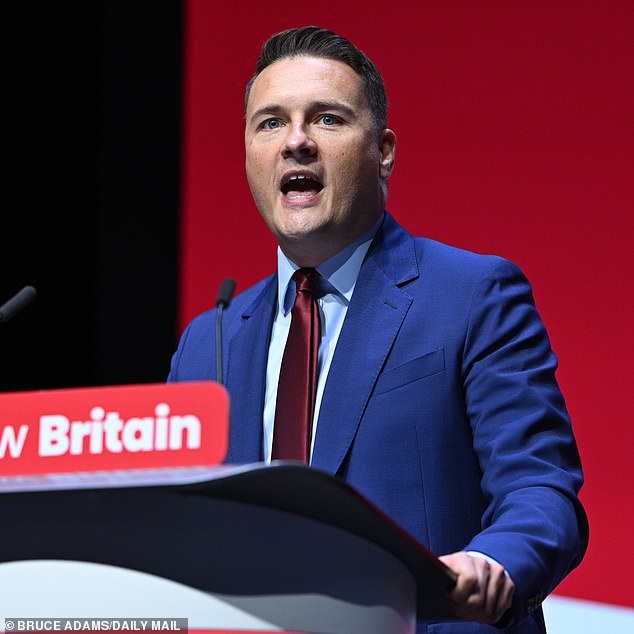
Health and social care secretary Wes Streeting
The guidelines have been published in the journal Nature Medicine and were produced by an international team of experts, including contributors from the UK.
The experts analysed existing studies and produced an algorithm that can advise doctors on the best weight loss treatment to use based on a patient’s weight and associated conditions.
They conclude that tirzepatide and semaglutide should be considered the ‘medications of choice’ when a ‘substantial’ total body weight loss is required.
When a lesser degree of weight loss is the target, other medications can be considered, including liraglutide, naltrexone–bupropion, and phentermine-topiramate.
It comes after Wes Streeting, this week pledged to roll out the injections to millions more patients on the NHS to ‘defeat obesity’.
The health secretary told the Labour Party conference in Liverpool it is unfair that the wealthy have been able to benefit from the ‘transformative’ effects the drugs have had ‘on their health, their confidence and their quality of life’ while those who cannot afford to buy them privately go without.
He added ‘Weight-loss jabs could help us finally defeat obesity.
‘Our mission is to ensure that the best science, the best healthcare and the best innovations are available not just to some, but to all.’
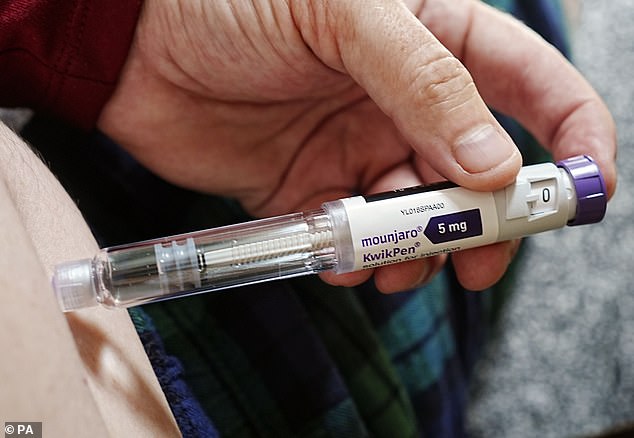
A 5 mg Mounjaro KwikPen injection
The guidance notes there is growing evidence that the jabs have health benefits for a number of diseases beyond the weight loss itself but more studies are needed.
Summarising the algorithm, the authors say: ‘It is important to note that most medications have not been specifically evaluated for the treatment of individual complications, resulting in gaps in our understanding of their full therapeutic potential.
‘Although some benefits may be inferred based on the degree of total body weight loss — given the well-documented positive effect of total weight loss on various complications — direct evidence for many conditions remains limited.
‘Nevertheless, there is growing potential for medications to positively influence a broader range of complications, including chronic kidney disease, neurodegenerative disorders, polycystic ovary syndrome, certain cancers, and mental health conditions.’
Business secretary Peter Kyle has said Britain’s obesity crisis costs the NHS more than £11 billion a year and the economy billions more in lost productivity and benefits.
However, rolling weight loss jabs out to everyone all at once could bankrupt the NHS and overwhelm staff, so it needs to be done gradually.
At the moment, the powerful injections are only available on the health service for the very fattest patients and those with several linked diseases.
Others have to buy them privately at a cost of around £200 a month.
The authors note the complex economic considerations, which vary across different countries, but say: ‘The cost of not treating obesity and adipose tissue dysfunction at early stages — thus enabling the progression to complications and end-organ damage —should be weighed equally in health policy and clinical decision-making.’
Professor Barbara McGowan, one of the guideline authors and from Guys & St Thomas‘s Hospital NHS Foundation Trust, London, said: ‘It is the first framework guided by the presence or absence of obesity-related complications, since weight loss is not the only goal of treatment when complications are present.
‘Tailoring treatment to the individual is a complex task that must consider several factors, including the severity of adiposity, the presence and extent of complications, comorbidities and concurrent therapies.
‘Socioeconomic context, patient values, expectations, and personal goals must also be considered.’
The algorithm will be regularly updated as new drugs come to market and as new research shows which are most effective at tackling different diseases.