

The growth in AI text tools
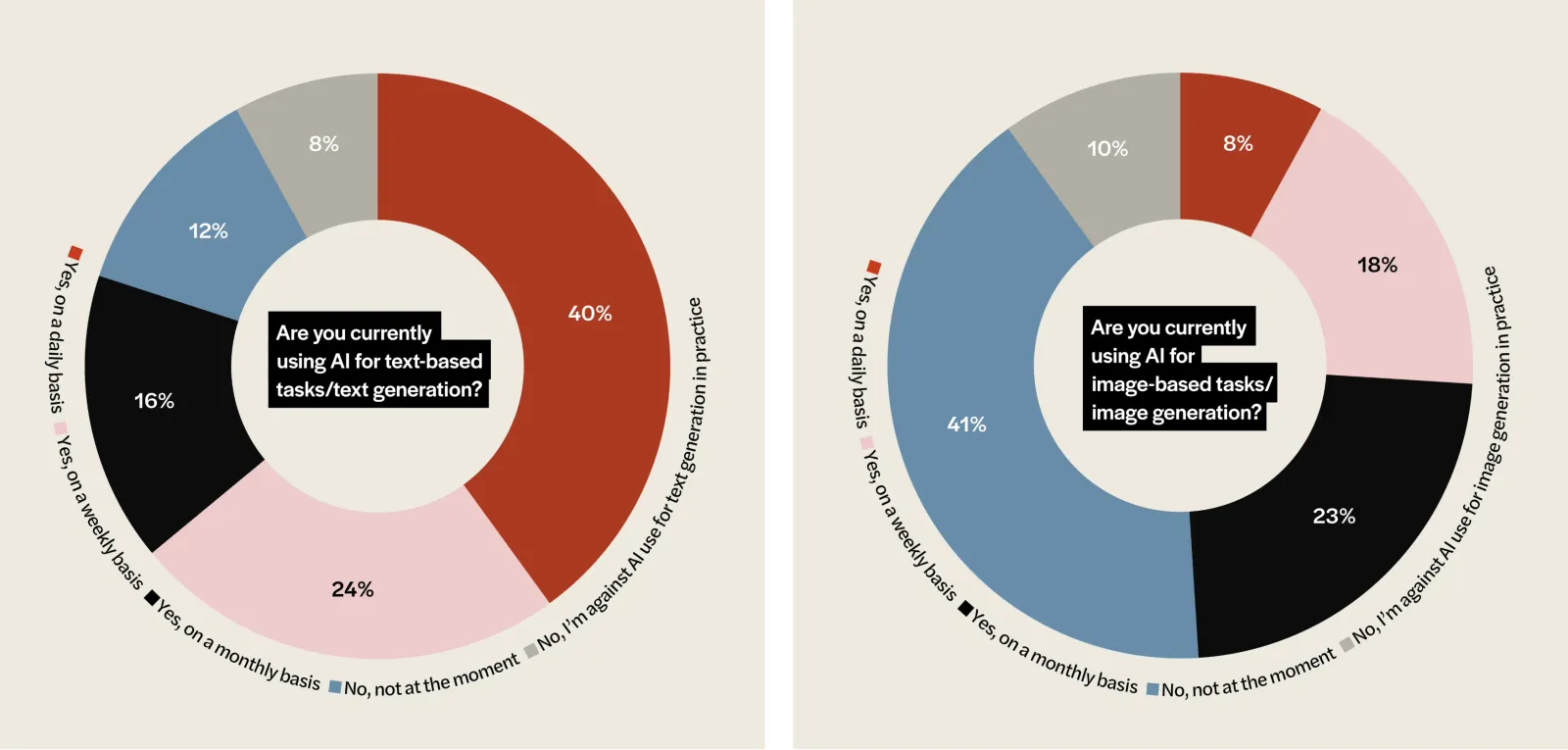
The use of artificial intelligence (AI) tools and, in particular, text-based generative AI continues to rise. Nearly two thirds (64 per cent) of those polled were using text-based tools on at least a weekly basis. In fact, the AJ’s Changes in Practice survey, which was taken by almost 200 mainly UK-based architects and students, revealed that 40 per cent were using the large language models daily.
As one respondent said: ‘I use ChatGPT regularly for simple text-based tasks – for bid documents, presentations, planning documents and building control statements.
‘These are all very common uses, and in no way innovative, but it does allow for a more efficient approach, saving time and reducing the need for a larger team.’
In comparison, just 26 per cent said they were using AI for image-based tasks or image generation on at least a weekly basis – and only 8 per cent relied on them on a daily basis. This contrasts with just 11 per cent of respondents in the 2024 survey who said they were using any sort of AI on a daily basis.
How, when and why do architects use AI?
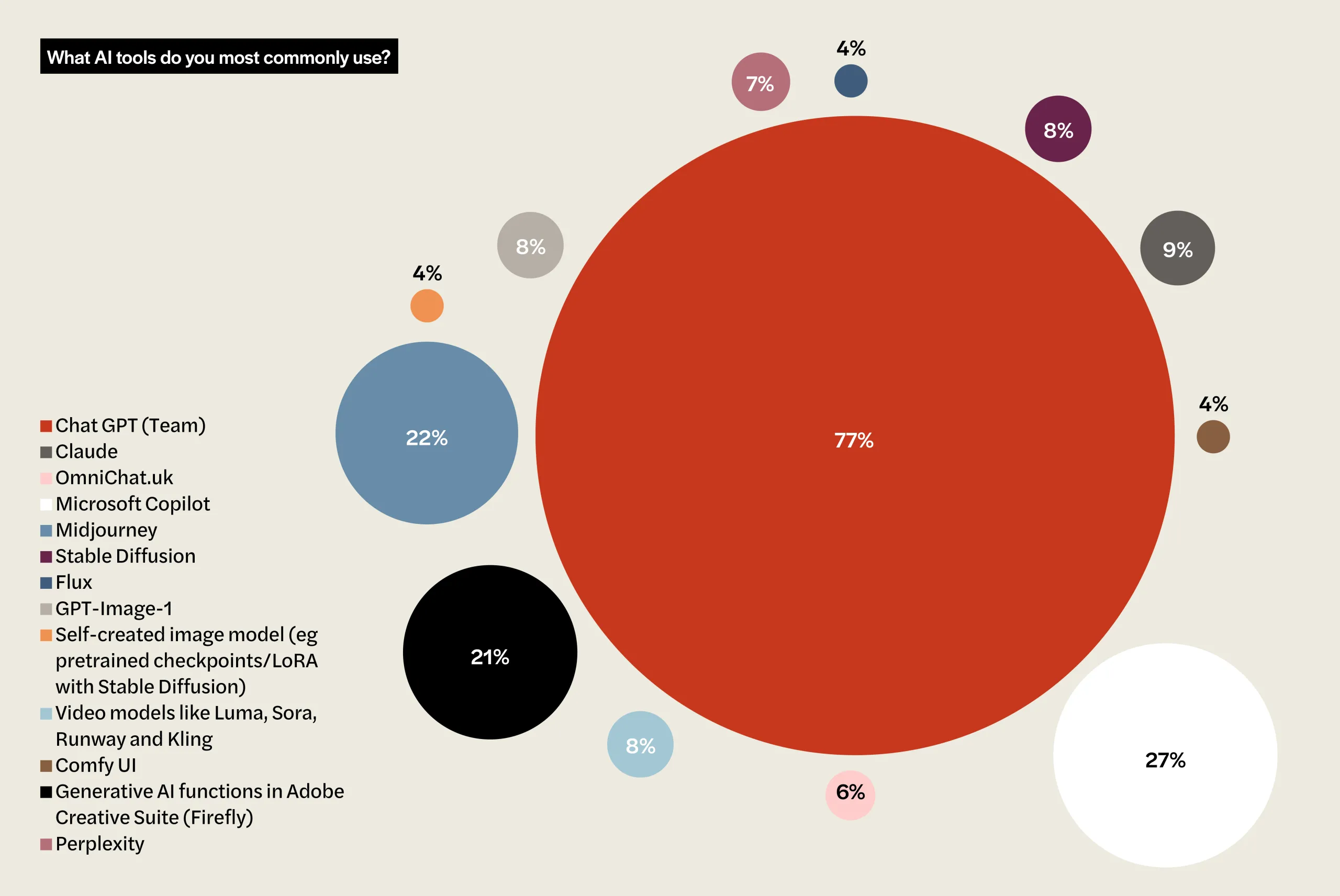
The rise in AI as a text generator is reflected in which tools are most popular among AJ readers and the tasks most regularly performed. Chat GPT is now being used by 77 per cent of respondents while the use of Microsoft Copilot has doubled to 27 per cent from 13 per cent in 2024.
Interestingly, compared with last year, the use of two text-to-image models has fallen markedly: Stable Diffusion dropped from 21 per cent to 8 per cent and Midjourney from 42 per cent to 22 per cent.
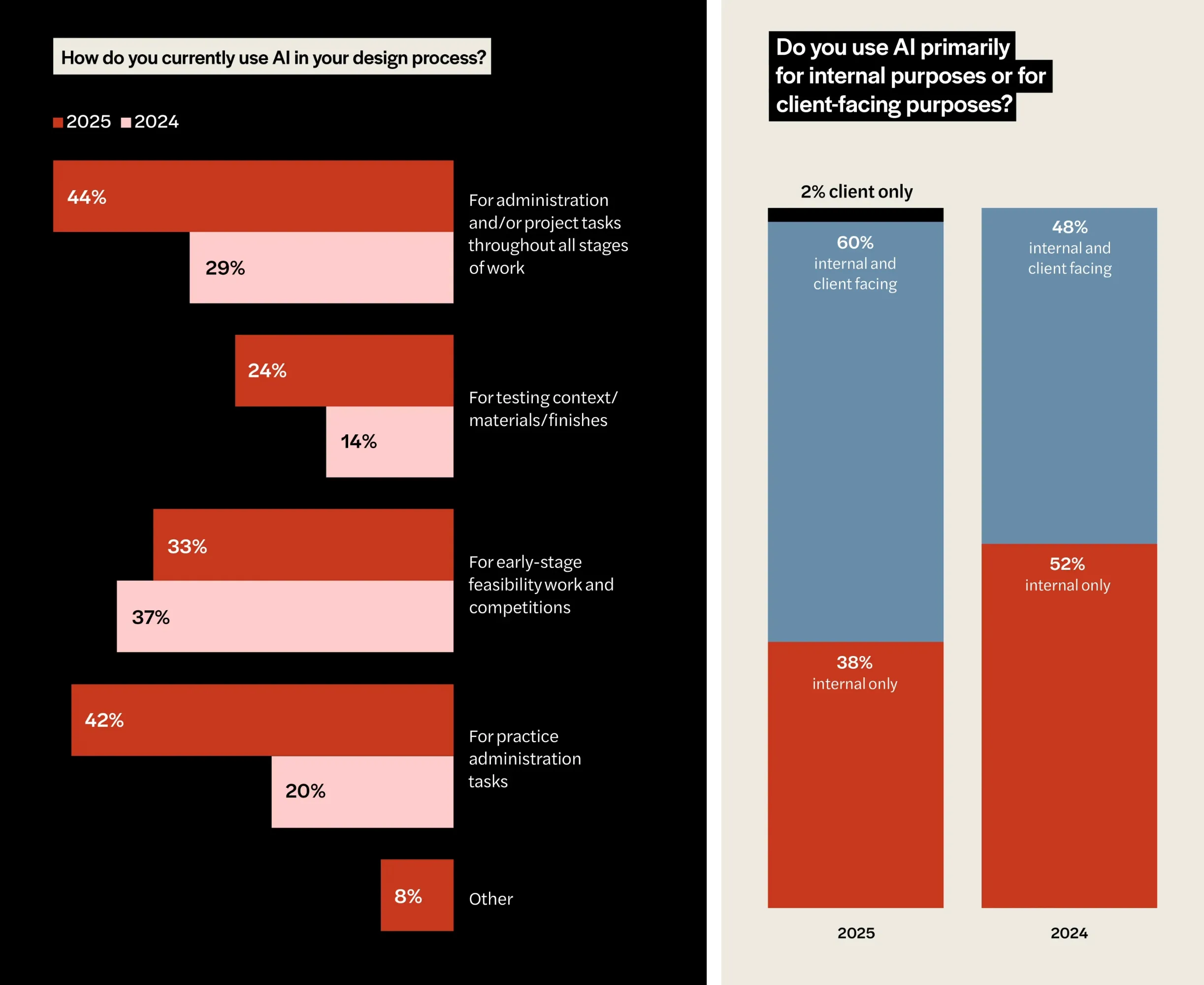
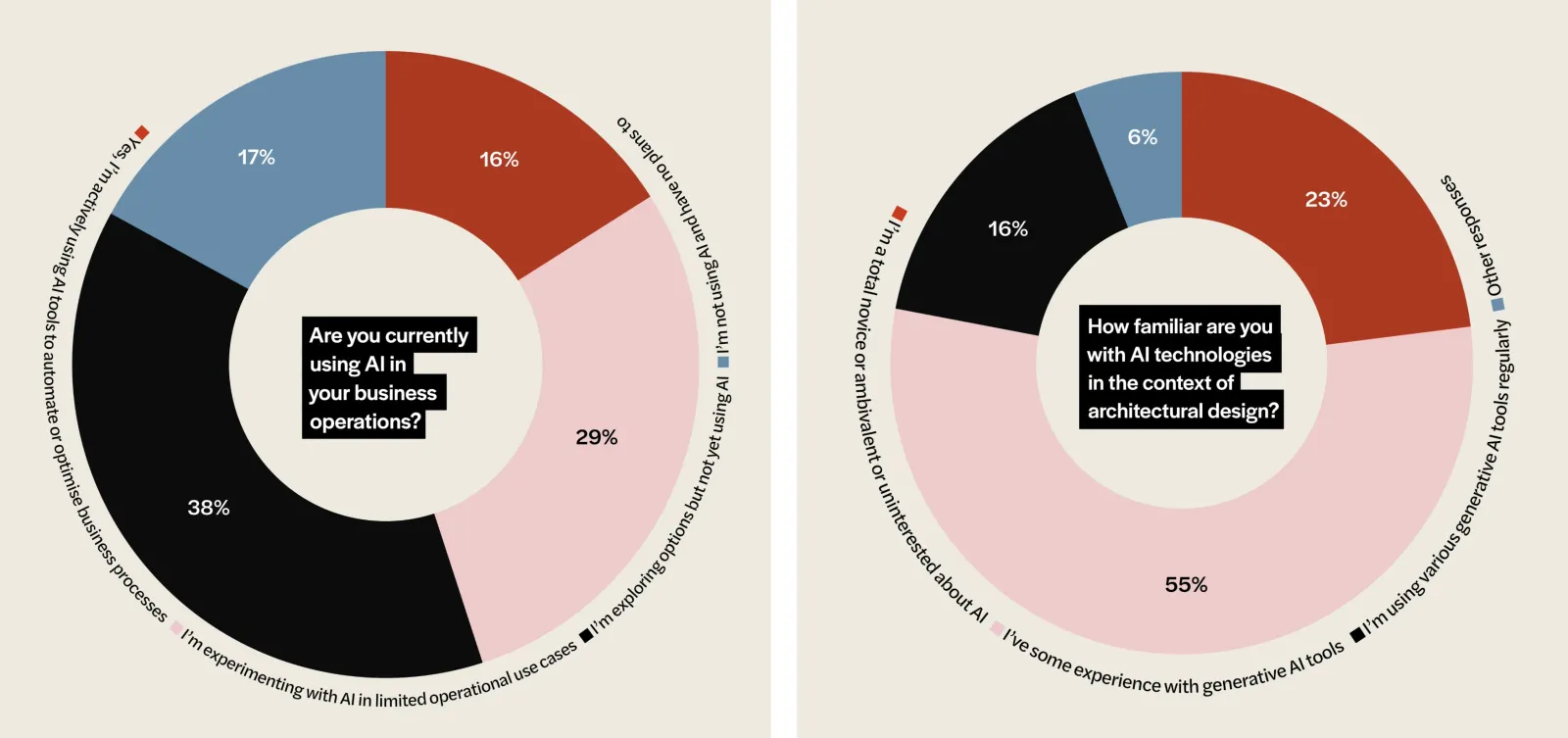
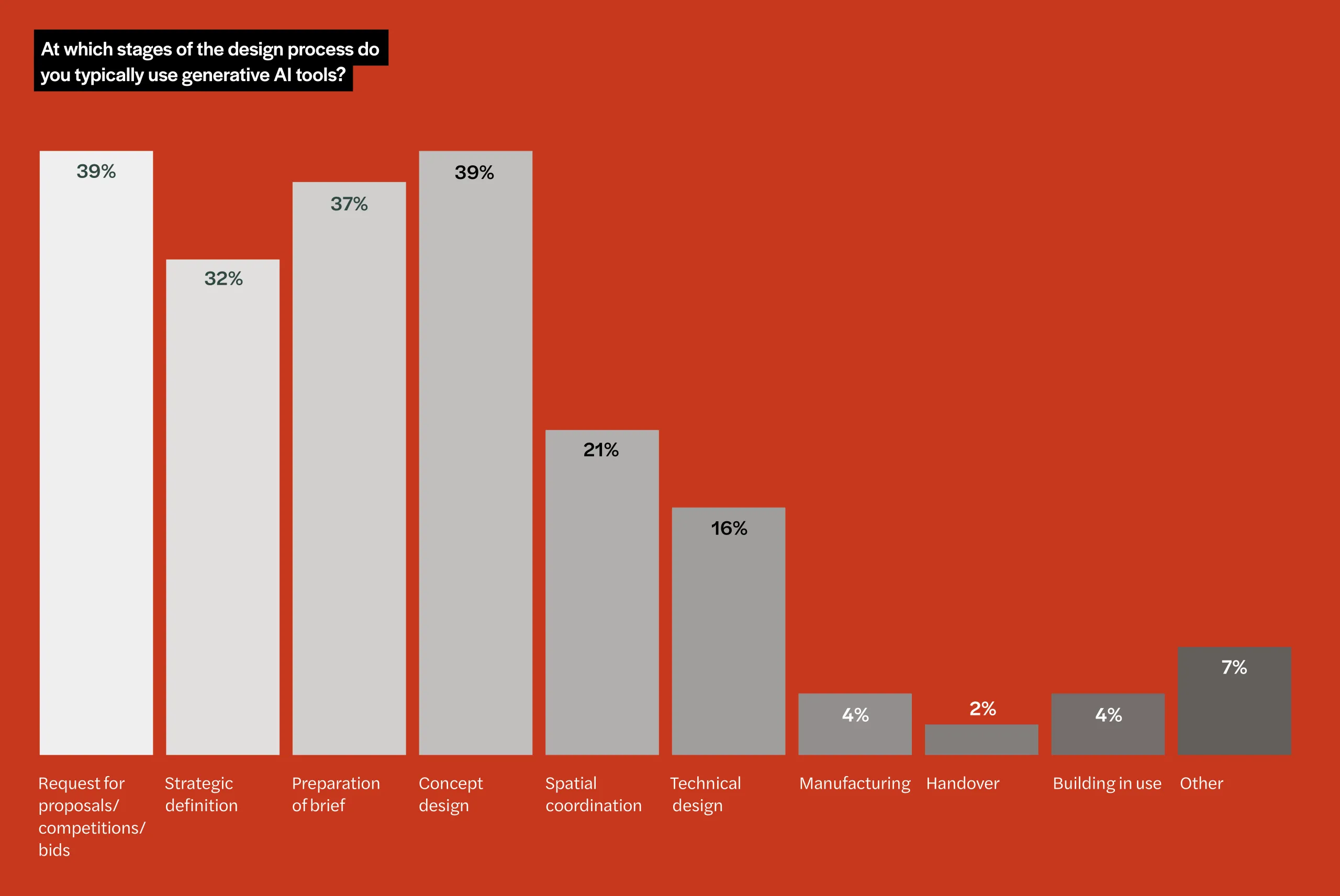
In terms of when architects turn to AI, the survey shows a substantial proportion (39 per cent) used it at the request for proposals or bids stage – the same percentage as use it for concept design. Similarly, more architects are using AI for practice administration tasks (just over 40 per cent) than for early-stage feasibility work and competitions (33 per cent). AI’s application in business applications looks set to grow too – 38 per cent said they were ‘exploring options’ with AI in this area.
AI is increasingly being used for both in-practice and client-facing purposes – not just for architects’ own benefit. The percentage of those who said AI was being rolled out for ‘internal and client facing’ reasons rose from 48 per cent in 2024 to 60 per cent this year.
The barriers to using AI
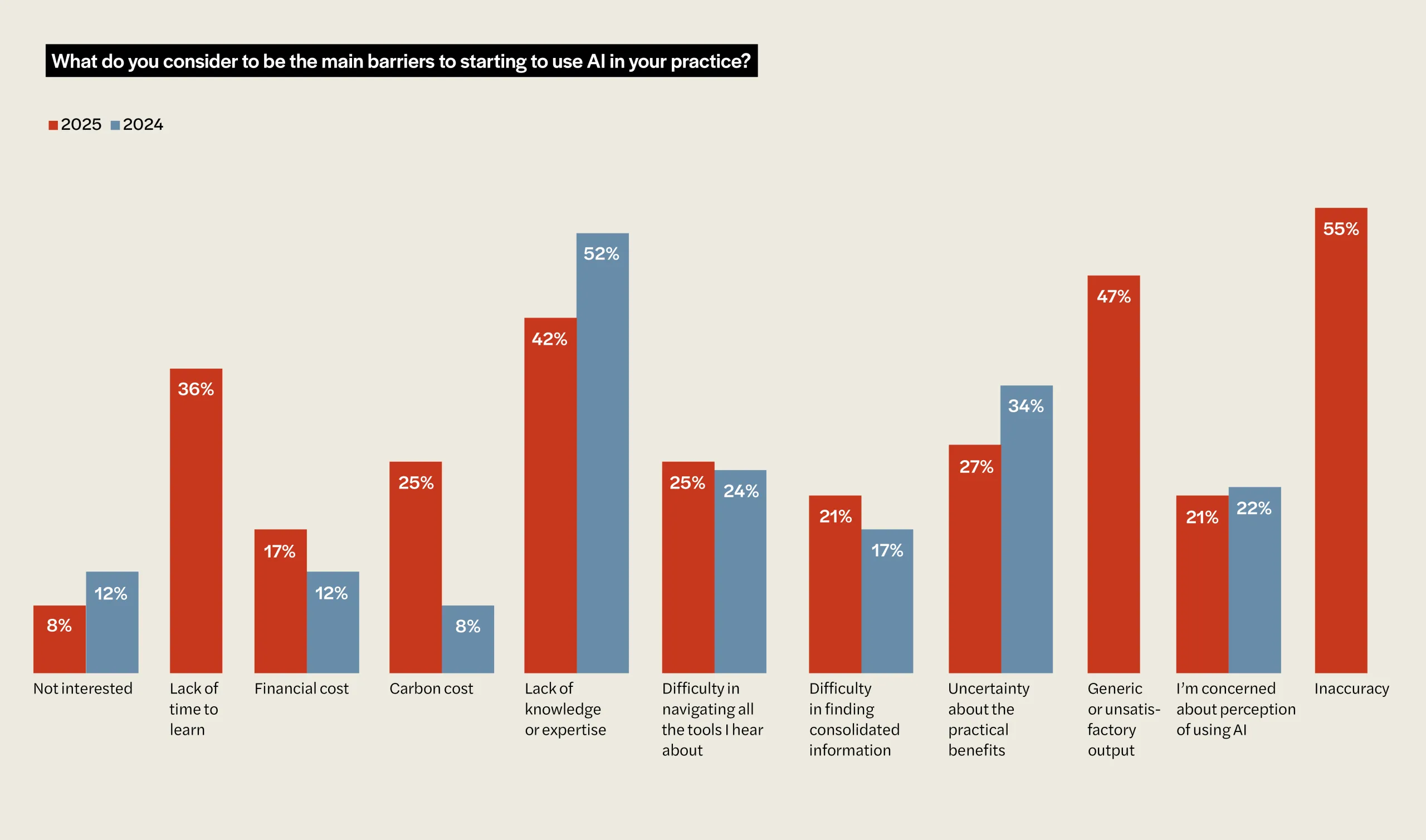
Inaccuracy was the most commonly cited barrier to using AI in practice – 55 per cent of respondents said it was blocking uptake, with many saying they had to thoroughly check any materials produced. This was followed by ‘generic or unsatisfactory output’ (47 per cent).
A lack of knowledge or expertise (42 per cent) – the top blocker last year – was also a significant concern, as was the lack of time available to learn, uncertainty about the practical benefits, and carbon costs.
Financial cost was cited as a barrier by 17 per cent of those polled. One respondent said: ‘The costs of trialling the tools can be prohibitive to even testing.’
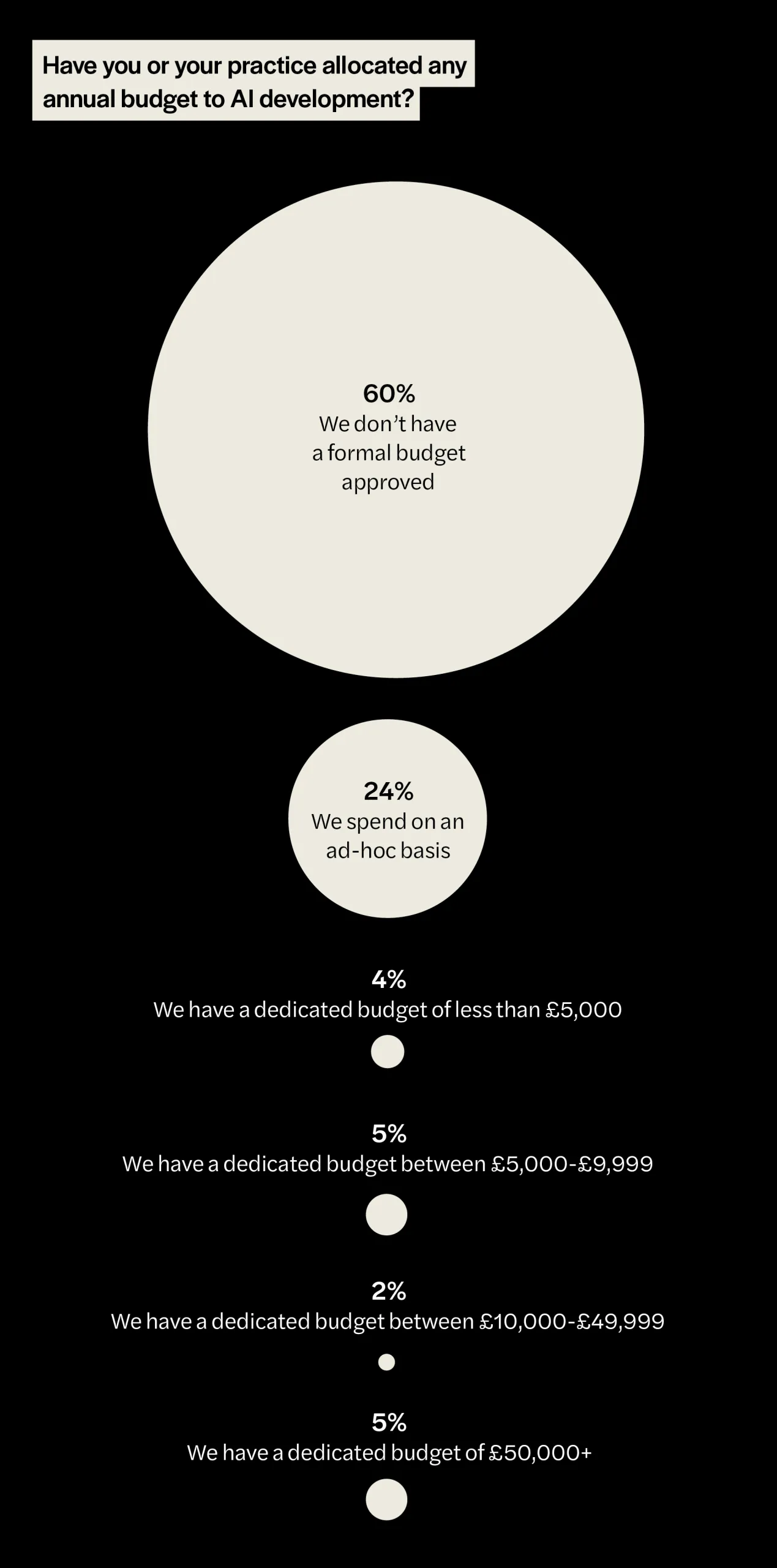
Yet 60 per cent of those polled said their practice didn’t have a formal budget approved for AI spending (rising to 69 per cent in practices employing fewer than 10 people).
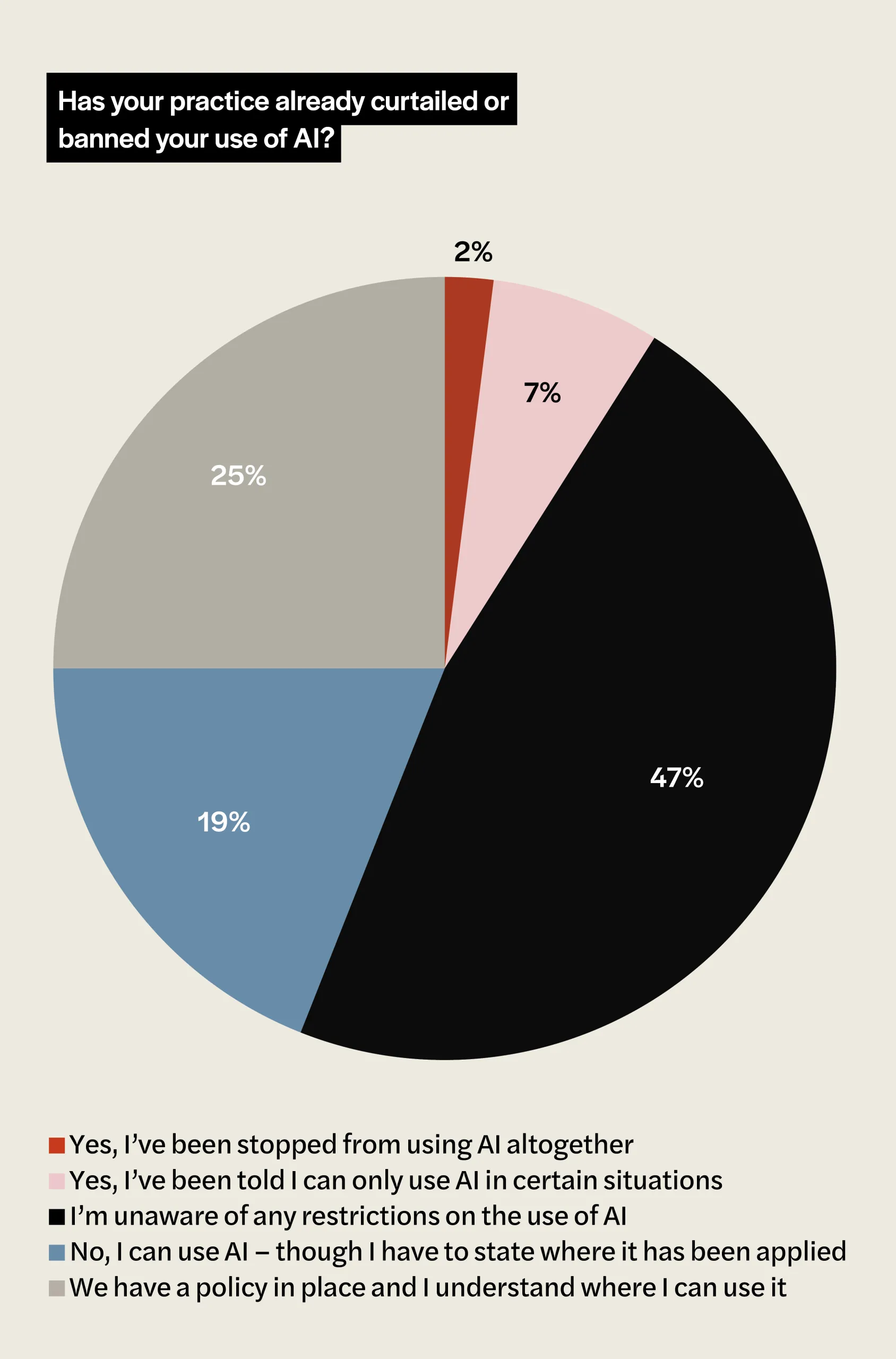
In terms of whether practices themselves are stopping staff from exploring generative tools, 47 per cent said they were unaware of any restrictions on their AI use. This suggests firms are becoming more open to experimentation – the figure in 2024 was 32 per cent. Only 2 per cent said they had been banned from using AI.
Future uses in practice and higher education
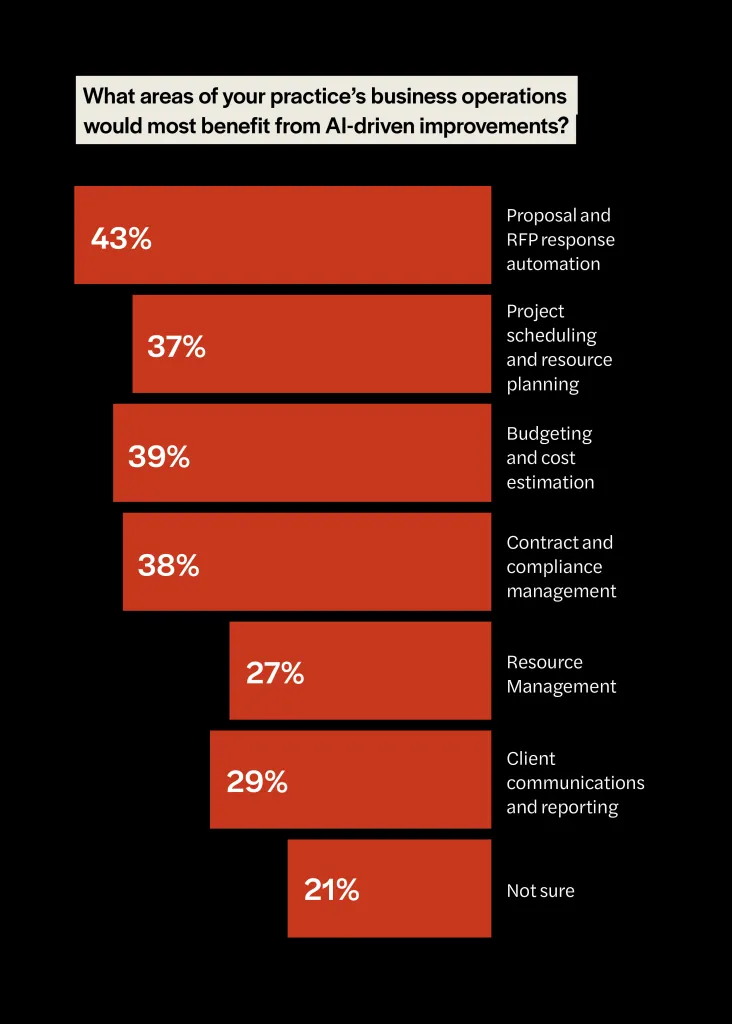
Planning ahead, many architects are looking at how AI can help assist with tasks such as budgeting, contract compliance and the automation of requests for proposals.
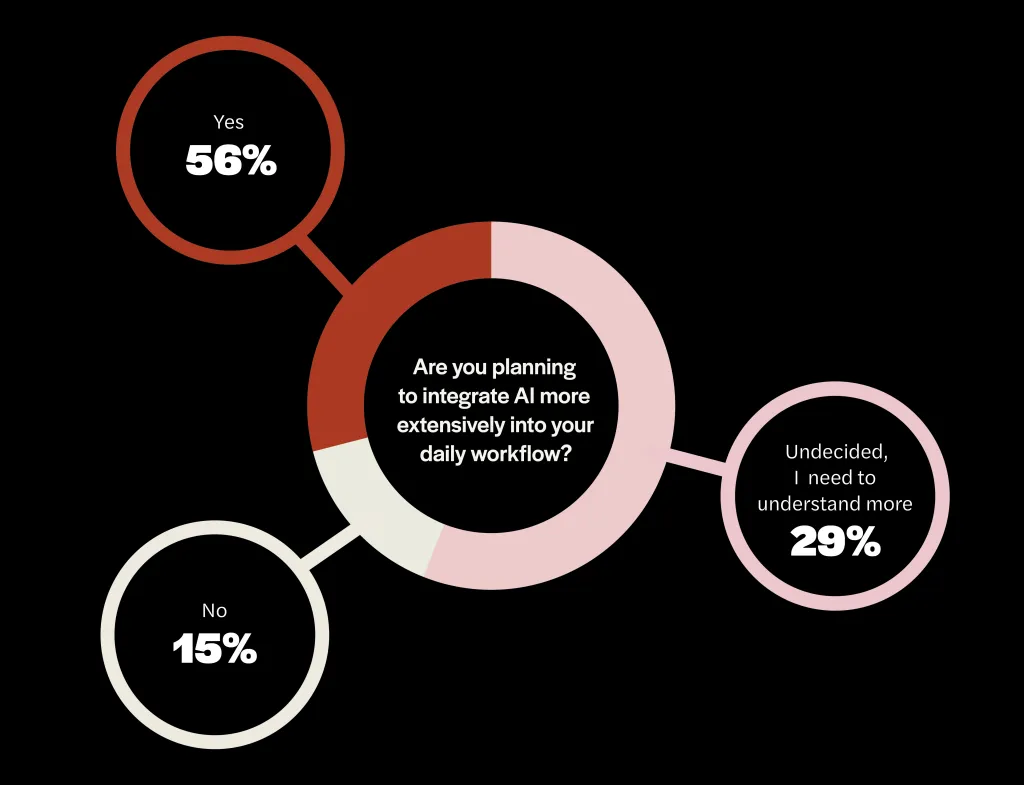
Though there appears to be little strategic thinking, given the lack of investment promised for AI development, more than half (56 per cent) of respondents said they were planning to integrate AI more extensively into their general, daily workflow. This is up from 49 per cent in 2024.
Most recognise too that these advances – and the uptake of text-based tools in particular – will influence how future architects are taught. Over three quarters (78 per cent) of those surveyed said that AI would have an impact on architects’ education.
Stephen Parnell, a former senior lecturer at Newcastle University and an AI consultant, said that AI ‘was going to have an impact on every walk of life’ and ‘fundamentally change higher education’.
He told the AJ: ‘Various surveys I’ve seen suggest that up to 90 per cent of students regularly used generative AI last year, whereas only around 60 per cent of teachers had even tried it.
‘The essay as assessment is already as good as dead, and teachers will need to focus more on process and less on product. Perhaps architecture education doesn’t really belong in university after all?’
Opportunities, dangers and productivity impacts
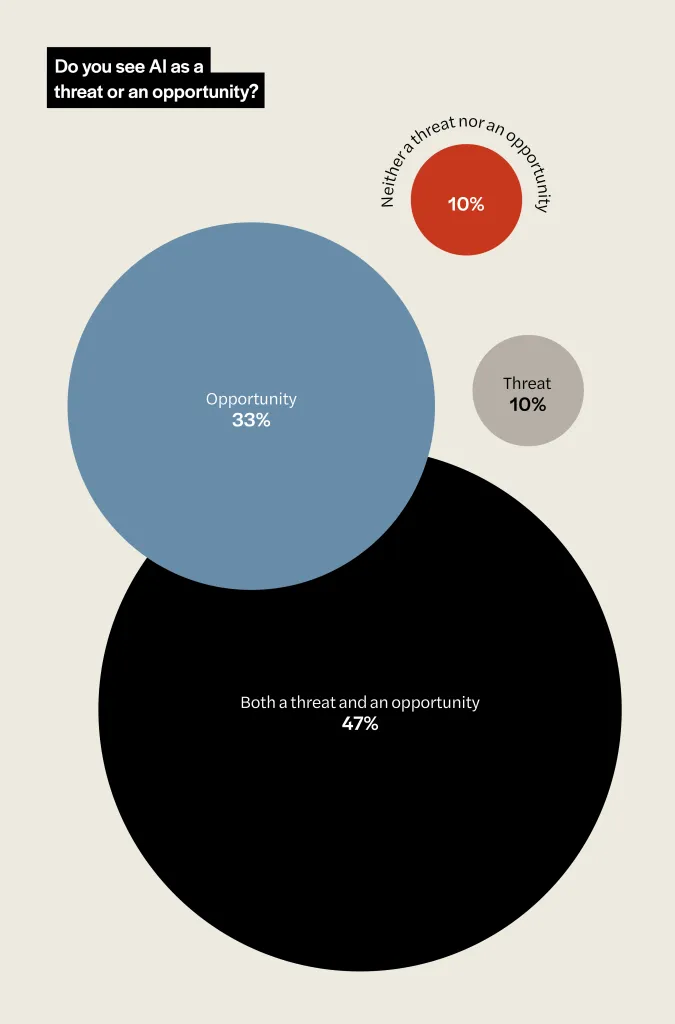
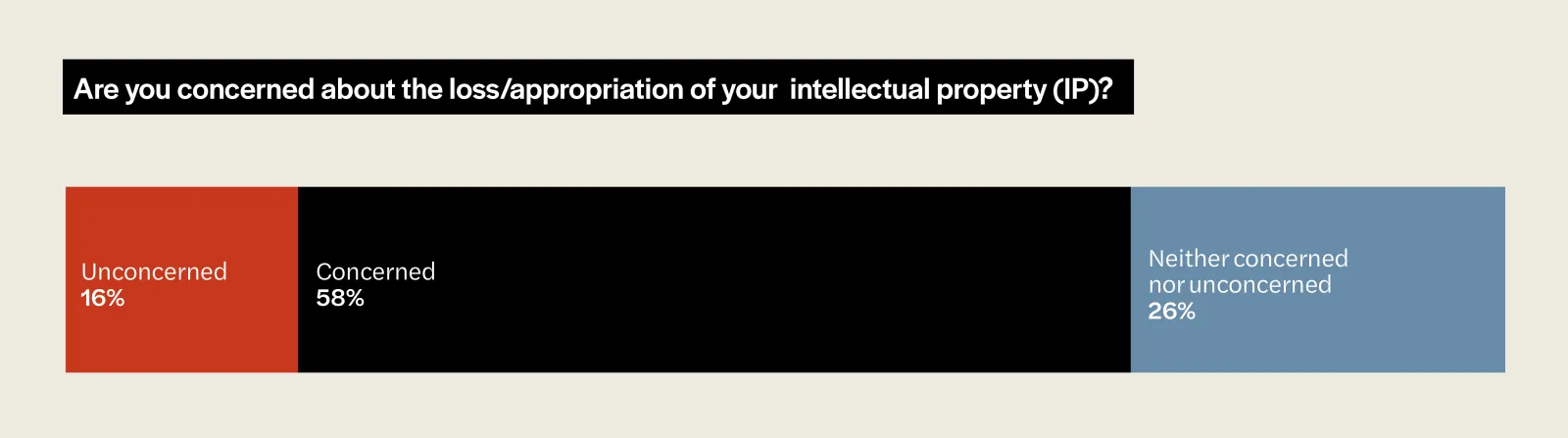
Respondents were split on whether they saw AI as a threat or a chance to move the profession forward. There was genuine concern about the loss or appropriation of their intellectual property. However, architects were generally more optimistic than gloomy about how AI could improve their prospects and in new, more productive ways.
Again, a notable difference appeared between how they viewed the benefits of language-based tools compared with generative visualisation applications.
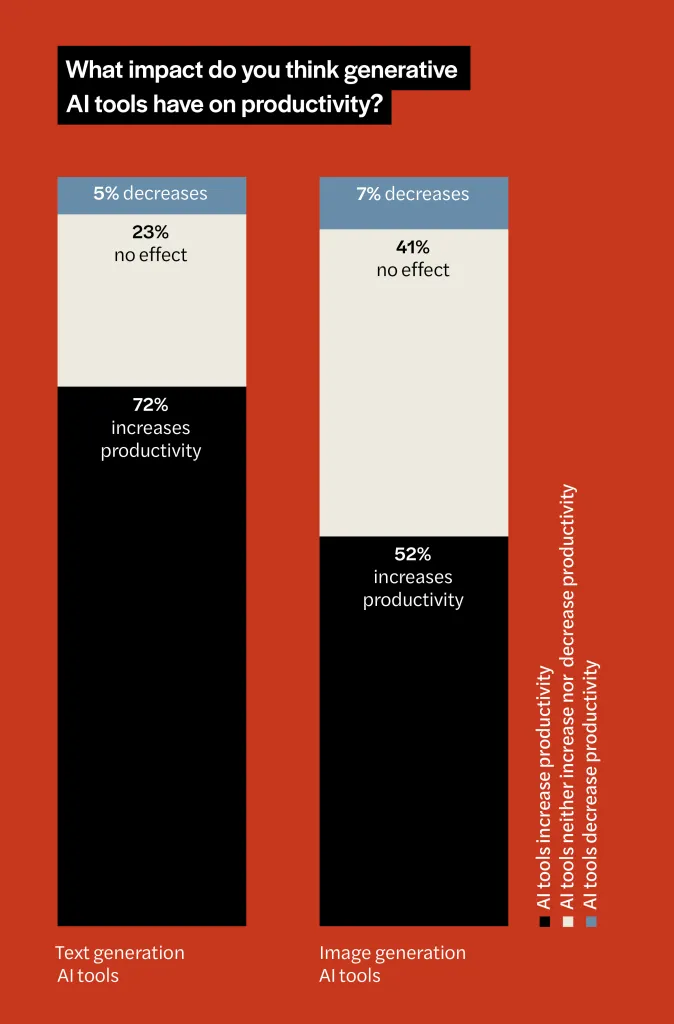
Asked what impact they thought text generation AI tools have on productivity, 72 per cent said AI would increase productivity. This dropped to 52 per cent for image generation.
It was widely acknowledged that AI’s unstoppable forward momentum would result in changes in how architects worked. Though a quarter (26 per cent) thought AI’s emergence would lead to ‘fundamental change to the practice of architecture’ – rising to 35 per cent in practices under 10-strong – just over half (53 per cent) opted instead for the less eyebrow-raising ‘there will be notable changes to several parts of architects’ roles’.
One respondent said: ‘It’s no different to when CAD came in. People will be expected to be more productive, so in the short term the practices that take it up will have a commercial advantage. But once it becomes ubiquitous those that don’t use it will fall by the wayside.’
Comment: Keir Regan-Alexander, director, Arka Works
 The AJ’s survey reveals a telling paradox: while a remarkable 64 per cent of architects use text-based AI weekly, 60 per cent of practices have no formal AI budget.
This disconnect between massive grassroots adoption and a lack of institutional strategy explains what I call the ‘washing machine of pain’ – a cycle where teams get excited by AI’s potential, frustrated by ad-hoc results, and then retreat to familiar methods.
The survey data validates several key trends we’re observing on the ground.
The decline in Midjourney usage (from 42 per cent to 22 per cent) versus the growth in dominance of ChatGPT (77 per cent) shows a clear flight to utility.
Text-based tools solve immediate, daily problems like drafting reports or analysing briefs, while image generation requires significant skill to move beyond generic results and integrate into professional workflows.
Similarly, the finding that AI is used as much for requests for proposals and bids as for concept design highlights where real, tangible value is being found: in the back-office processes that form the bedrock of practice management. This organic adoption is happening in a governance vacuum, creating a ‘shadow AI’ economy where staff use personal or free tools to fill a strategic void. This isn’t just a risk in terms of privacy and accuracy; it’s the clearest possible signal of proven demand that leadership is failing to harness.
The practices pulling ahead are not those with the most advanced software but those with a plan
This brings us to the crucial point: the primary barrier to realising value from AI is not about procuring the right technology. The market is saturated with tools. The real challenge is one of behavioural change and the gradual, systematic adaptation of our existing workflows.
The practices pulling ahead are not those with the most advanced software but those with a plan. They are methodically mapping opportunities to identify simple, high-impact, low-risk applications. They are building repeatable, quality-controlled prompt workflows that turn individual experimentation into reliable team assets. They are creating a culture of integrated change, where new capabilities are woven into the fabric of how they work.
The survey shows that a grassroots AI revolution is already underway. The question for leadership is no longer whether AI will be used in practice, but whether its adoption will be strategic and value-driven or remain accidental and chaotic. The technology is no longer the bottleneck; our willingness to adapt our systems is.

Deltek – trusted partner to architecture firms globally – powers innovation through software design and its AI-powered business companion, Dela
Learn more at deltek.com