
Your support helps us to tell the story
From reproductive rights to climate change to Big Tech, The Independent is on the ground when the story is developing. Whether it’s investigating the financials of Elon Musk’s pro-Trump PAC or producing our latest documentary, ‘The A Word’, which shines a light on the American women fighting for reproductive rights, we know how important it is to parse out the facts from the messaging.
At such a critical moment in US history, we need reporters on the ground. Your donation allows us to keep sending journalists to speak to both sides of the story.
The Independent is trusted by Americans across the entire political spectrum. And unlike many other quality news outlets, we choose not to lock Americans out of our reporting and analysis with paywalls. We believe quality journalism should be available to everyone, paid for by those who can afford it.
Your support makes all the difference.Read more
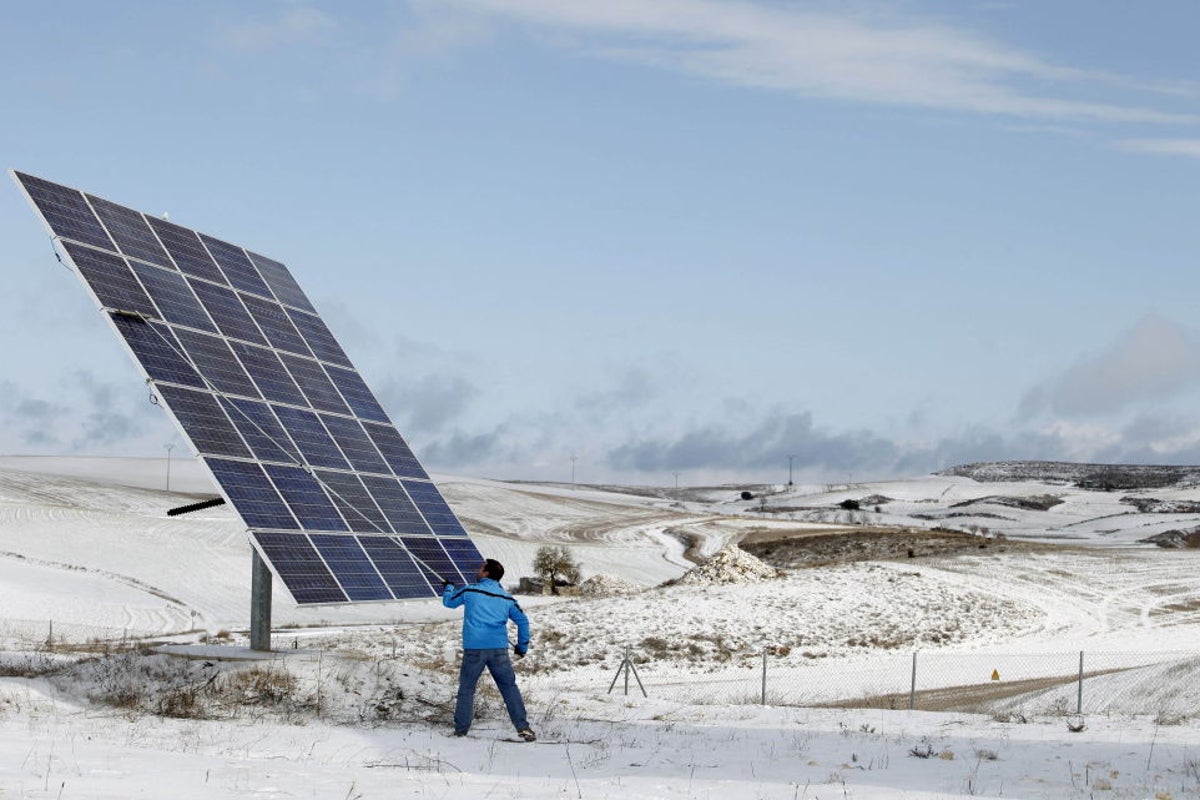
Solar energy was the main source of electricity in the European Union for the first time in history in June, according to new figures.
The renewable energy source accounted for 22 per cent of the electricity generated in the EU, overtaking nuclear energy, which produced 21.6 per cent of the electricity.
The data from Eurostat, the statistical office of the EU, showed that more than half of the EU’s electricity in the second quarter of 2025 came from renewables.
Three countries in Europe managed to generate more than 90 per cent of their electricity from renewable energy sources, while 15 countries were able to increase the renewables share in their energy mix compared to the same period last year.
“Denmark, with 94.7 per cent, had the highest share of renewables in net electricity generated, followed by Latvia (93.4 per cent) [and] Austria (91.8 per cent),” a Eurostat report noted.
“The largest year-on-year increases were recorded in Luxembourg (+13.5 percentage points (pp)) and Belgium (+9.1 pp), both of them due to the increase in solar energy.”
Solar energy is anticipated to be the world’s main source of energy by 2050, according to a 2023 study, with its uptake expected to increase as costs fall and efficiency increases.
The technological progress with renewables will also mean that fossil fuel-generated power will no longer be economically viable in the coming decades.
Two United Nations reports in July found that a the global switch to renewable energy has passed a “positive tipping point”, with UN Secretary-General Antonio Guterres describing it as “the dawn of a new energy era”.
Despite the positive trend, there has been pushback from the world’s largest economy to revert to polluting power sources.
Speaking at the UN general assembly last week, US President Donald Trump criticised the clean energy transition that is occurring throughout most of the world.
“I’ve been right about everything, and I’m telling you that if you don’t get away from this green scam, your country is going to fail,” he said.
Analysis from environmental advocacy group Climate Power estimates that the oil and gas industry spent $450 million to influence Mr Trump and other Republicans during the presidential elections last year.