
Microplastics used in food packaging may be damaging the gut raising the risk of bowel cancer and depression, shocking research has suggested.
The discovery was made by Austrian researchers who examined the stool tissue of healthy volunteers and found the tiny particles could alter microbial activity in the gut.
Some of the changes, they claimed, reflected patterns previously linked with depression and bowel cancer.
Experts today, who labelled the findings ‘significant’, said it was the first human study showing microplastics could alter the human gut microbiome.
But, they cautioned, further research was vital to explain exactly how the microplastics cause such damage.
Microplastics are plastic fragments as small as two micrometres, or two-thousandths of a millimetre.
These particles make their way into food, water supplies and even into the air when plastic products degrade naturally.
Recent studies have identified microplastics in human lung tissue, in maternal and fetal placental tissues, in human breast milk and in human blood.
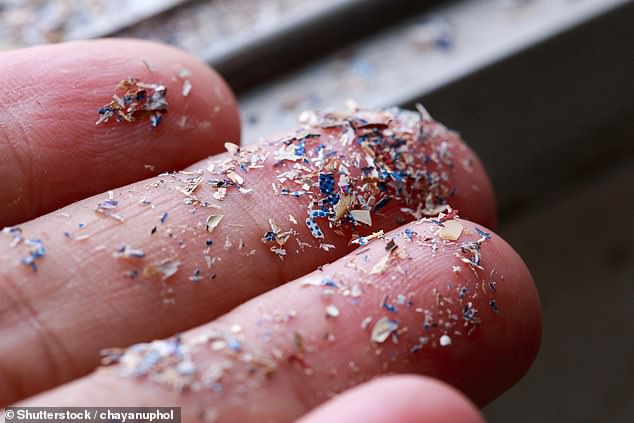
Experts today, who labelled the findings ‘significant’, said it was the first human study showing microplastics may alter the human gut microbiome
A growing body of research has already linked them to the development of cancer, heart disease and dementia and even lower-quality sperm.
Christian Pacher-Deutsch, a microplastics researcher at the University of Graz and study lead author, said: ‘These findings are significant given how pervasive microplastic exposure is in everyday life.
‘Microplastics have been found in fish, salt, bottled water, and even tap water, meaning that most people are exposed daily through ingestion, inhalation and skin contact.
‘The key takeaway is that microplastics do have an impact on our microbiome.
‘While it’s too early to make definitive health claims, the microbiome plays a central role in many aspects of well-being, from digestion to mental health.
‘Reducing microplastic exposure where possible is therefore a wise and important precaution.’
In the study, researchers used stool samples from five healthy volunteers to grow gut microbiome cultures.
They were then exposed to five common microplastic types — polystyrene, polypropylene, low-density polyethylene, poly(methyl methacrylate) and polyethylene terephthalate.
Your browser does not support iframes.
All were exposed at concentrations reflecting estimated human exposure, as well as higher doses to investigate any potential dose-dependent effects.
The scientists found that while total bacterial cell counts remained largely unchanged, microplastic-treated samples showed a consistent and significant increase in acidity compared to the samples that weren’t.
This indicated altered microbial activity, the researchers said.
Further analysis showed certain bacterial groups saw changes in their composition depending on the microplastic type.
The majority occurred within the phylum Bacillota — a key group of gut bacteria important for digestion and overall gut health.
The researchers also discovered that some of these microplastic-induced changes in microbial composition reflected patterns previously linked to diseases such as depression and bowel cancer.
Scientists said they could not be sure exactly why this was the case ‘but several plausible explanations are emerging’.
Mr Pacher-Deutsch added: ‘For instance, biofilms can form on microplastic surfaces, providing new niches that some microbes colonise more rapidly.

Experts say you can cut your exposure to microplastics by swapping out plastics in your home for natural materials, metal and glass
‘Microplastics may also carry chemical substances that directly influence bacterial metabolism.
‘This can lead to changes in acid production, which may serve as a bacterial stress response, unintentionally altering the gut’s pH.’
The research will be presented in full at the United European Gastroenterology annual congress in Berlin on October 7.
There are around 44,000 cases of bowel cancer every year in the UK and 142,000 in the US, making it the fourth most common cancer in both countries.
Symptoms often include changes in bowel movements such as consistent and new diarrhoea or constipation, needing or feeling the need to poo more or less frequently and blood in the stool.
Stomach pain, a lump in the stomach, bloating, unexpected weight-loss and fatigue are among other signs.
Anyone experiencing these symptoms should contact their GP for advice.
Although the vast majority of bowel cancer diagnoses affect those aged over 50, rates in older age-groups has either declined or held stable while diagnoses in younger adults have risen by 50 per cent over the last 30 years.
Cancer Research UK estimates that over half (54 per cent) of bowel cancer cases in the UK are preventable.