
“I have friends [on the tour] that worry a lot about money and the financial side of things, so I think being on tour and trying to make a cheque to pay the rent or pay for your expenses is quite stressful, and it can affect your golf quite a lot,” Ms Dryburgh said.
Read more:
“I think over a whole career I’ve been able to kind of put that in the back of my mind and focus on the golf, but don’t get me wrong, it has affected me at times.”
At the crux of the matter is exposure, most specifically, the amount of airtime given to coverage of women’s events. The knock-on effects reverberate throughout a player’s potential earning streams.
“We’re not shown as much on TV, so people don’t necessarily know we are on [[TV]],” Ms Dryburgh said. “They don’t know where to look for us. We might be on recorded, later in the day, [so] not on prime time [[TV]], whereas the men are on consistently every week and people know where to find them.”
She added: “It’s still not easy for a women to get sponsorship because of the TV thing.
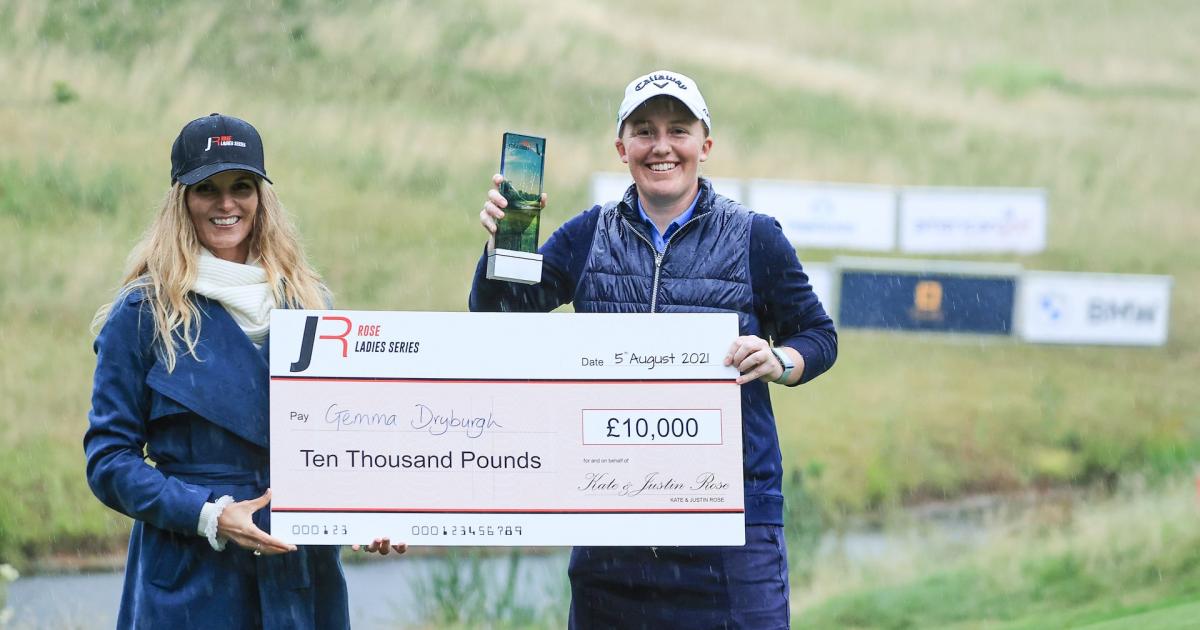
Gemma Dryburgh says the pressure to earn money has affected her golf at times
“Week-to-week it’s kinda the same five to 10 [female] players that are on TV, and I would say those players are probably doing pretty well on sponsorship. But for example, for myself to get on TV, I have to be in the top 10 or the top 15, trying to contend, to get some TV time.”
Less airtime means less exposure for sponsors and their brands, pushing down the value of contracts. This has been alleviated to a degree by social media, which some players have successfully used to build a following that bypasses traditional media. Still, large disparities remain.
Born in Aberdeen, Ms Dryburgh played at Tulane University in Louisiana before turning professional in 2015, playing on various circuits including the Ladies European Tour (LET) before joining the LPGA Tour in the US in 2018. Now based in New Orleans, she’s back in the UK to compete in the ISPS Handa Women’s Scottish Open before moving on next week to the AIG Women’s Open at Royal Porthcawl in Wales.
The total purse for the Women’s Open has roughly tripled since AIG became the title sponsor in 2019, reaching $9.5m in 2024. Last year’s winner, Lydia Ko, walked away with $1.42m.
Read more:
By comparison, last week’s Open winner Scottie Scheffler left Royal Portrush with a paycheque of $3.1m from a total purse of $17m.
Ms Dryburgh’s biggest financial win to date was a first place finish in the 2022 TOTO Japan Classic, earning her $300,000. This stacks up against annual outgoings ranging from $180,000 to $200,000 for expenses such as her caddie, travel, accommodation and tournament entry fees.
“We have the same expenses as men,” she said. “Obviously sometimes if they’re making that much money they can fly private, etcetera, but on a base rate they are the same expenses and we’re not making as much.
“It can be a discouragement but I would say on a positive note that since I turned pro, which was 10 years ago now, the prize money [for women] has gone up massively, especially the majors.”
Read more:
As a player director at the LPGA, Ms Dryburgh is among those representing the interests of her fellow competitors on the tour. She believes there are “big opportunities” to make further progress on financial parity under new LPGA commissioner Craig Kessler, who officially took over on July 15.
“The more you can see us, the more you know who we are,” she said. “I think women’s sport has shown that, like recently in women’s football.
“If you actually get the eyes on it, people want to watch, and I think especially with women’s golf because it’s such a good product – you don’t have to compare it to men’s golf, it’s its own product. I’ve heard from lots and lots of people who really, really enjoy watching us play, and I think they can learn a lot from the way we play the game.”