
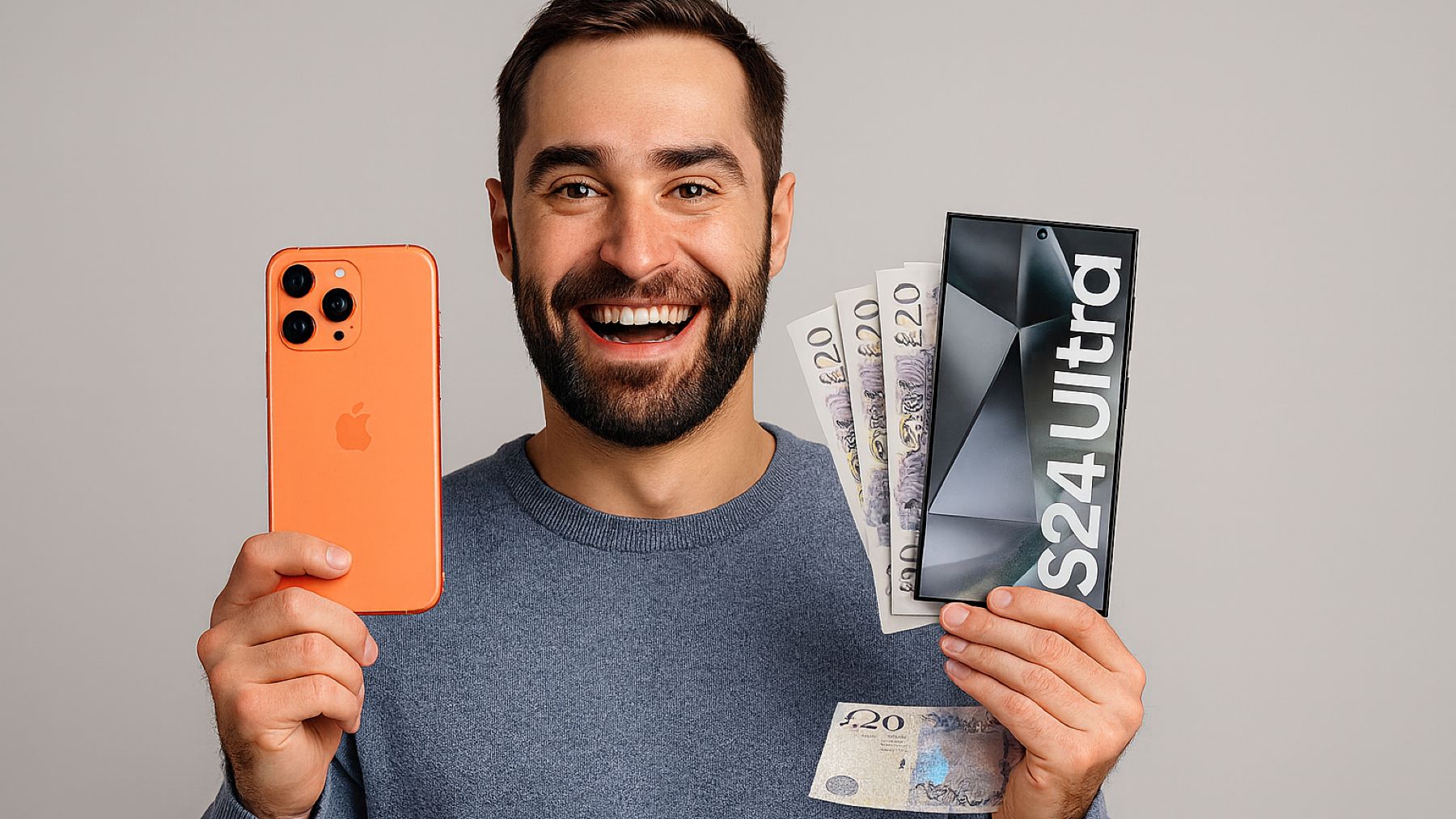
The rise in smartphone popularity truly began in the late 2000s and early 2010s. Apple iPhone was launched in 2007, revolutionising the market and initiating the widespread transition to smart devices. Competitors, such as Samsung, have managed to keep up the pace since then. Now, these smartphone buyers could be eligible for a payout, but only if they bought one of the smartphones within the specified dates. Find out today whether you are eligible for a payout, as there’s £480 million on the table.
There’s £480 million on the table, and this is why
Samsung and Apple iPhone are the two most popular mobile phone brands in the UK. According to a report by Vertu, Apple had a 45.19% market share and Samsung a 33.25% market share as of August 2025, securing their top two positions. As they are high in demand, these smartphones tend to be expensive, but there is another reason why, and that is due to their components.
An American corporation headquartered in San Diego and incorporated in Delaware is responsible for the supply of vital handset components for these two brands in the UK. The company is called Qualcomm Incorporated and has recently become the focus of the UK-based consumer organisation Which?.
According to Which?, Qualcomm was involved in anti-competitive practices. The company allegedly urged Apple and Samsung to pay expensive fees and licensing charges for vital handset components, which, as a result, increased the purchasing price for those smartphone buyers, as per a report by Yahoo! News. A trial is underway, and should it be successful, there could be £480 million on the table for the nearly 29 million impacted UK smartphone owners.
Only these mobile phone buyers are eligible
Should justice prevail in the Which? versus Qualcomm legal battle, eligible Apple or Samsung buyers could each receive an approximate payout of £17. As with any trial, to be deemed eligible for the potential compensation, some criteria must be met. In the case of this trial, only buyers who purchased within certain dates will qualify to receive compensation.
According to a report by Sky News, the following buyers will be eligible for compensation:
All affected Apple and Samsung smartphones purchased between 1 October 2015 and 9 January 2024
If you are eligible, then we know you will appreciate the compensation, especially as times are tough economically. For those Britons who are facing inflation, now could be the time to start saving, no matter how small you start.
The latest update on the trial status
Which? brought the tech corporation before the Competition Appeal Tribunal in London on Monday, 6 October 2025. During the trial, which will run for five weeks, will determine whether Qualcomm dominated the market during that time period and, if confirmed, whether the corporation exploited its position, as per Yahoo! News.
“This trial is a huge moment. It shows how the power of consumers – backed by Which? – can be used to hold the biggest companies to account if they abuse their dominant position.” – Anabel Hoult, chief executive of Which? in a statement to the BBC.
In contrast, Qualcomm maintains that this trial has “no basis.” Yet, it is not the first time the corporation has been in the midst of a legal battle.
In Canada, a similar lawsuit is underway against Qualcomm, and the EU has penalised the corporation for competition violations before as well. In addition, Qualcomm has also faced prior accusations concerning anti-competitive practices. In the US, the Federal Trade Commission took legal action against Qualcomm for unfair practices in 2017; however, the case was dismissed in 2020. Hopefully, justice will prevail this time. As you await the results of this trial, have a look at the change that awaits pensioners next month.
Disclaimer: You should not submit false or inflated claims under penalty of perjury, as class‑action claim forms historically required declarations signed “under penalty of perjury” to ensure authenticity. Submitting a fraudulent claim not only carries legal exposure—including potential civil and criminal sanctions—but also harms other eligible class members by diluting the available settlement pool.