
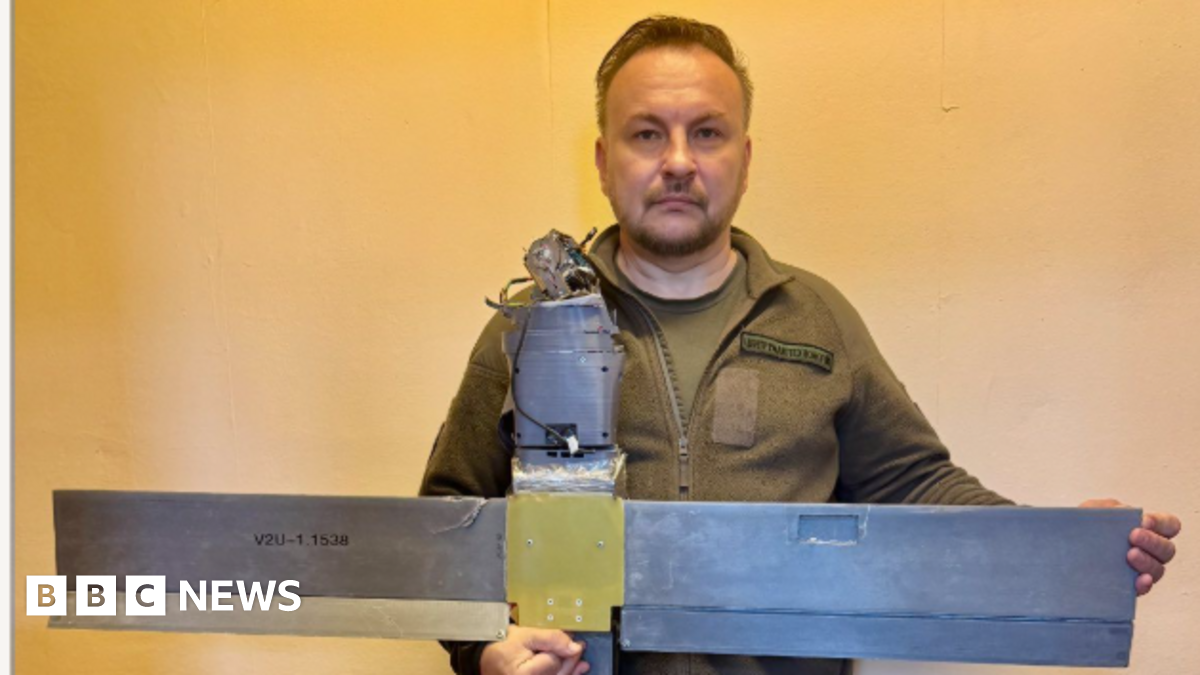
Interceptor drones with that kind of automation could significantly strengthen air defences against Russian long-range attack drones, such as the notorious Shaheds.
“A computer-guided autonomous system can be better than a human in so many ways,” says Azhnyuk. “It can be more perceptive. It can see the target sooner than a human can. It can be more agile.”
Yuriy Myronenko says that kind of system does not exist yet, but he suggests Ukraine is close to finishing its development. “We have partly implemented it in some devices,” says the deputy defence minister.
There could even be thousands of such systems in place by the end of 2026, claims Azhnyuk.
But Ukrainian developers are cautious about fully making use of defence systems that rely entirely on AI, with no human involvement. The risk is that AI may fail to distinguish a Ukrainian soldier from a Russian, as they may be wearing the same uniform, says Vadym, who declined to give his surname.
His company DevDroid makes remotely controlled machine guns, that use AI to automatically detect people and track them. Because of concerns over friendly fire, he says they don’t have an automatic shooting option.
“We can enable it, but we need to get more experience and more feedback from the ground forces in order to understand when it is safe to use this feature.”