
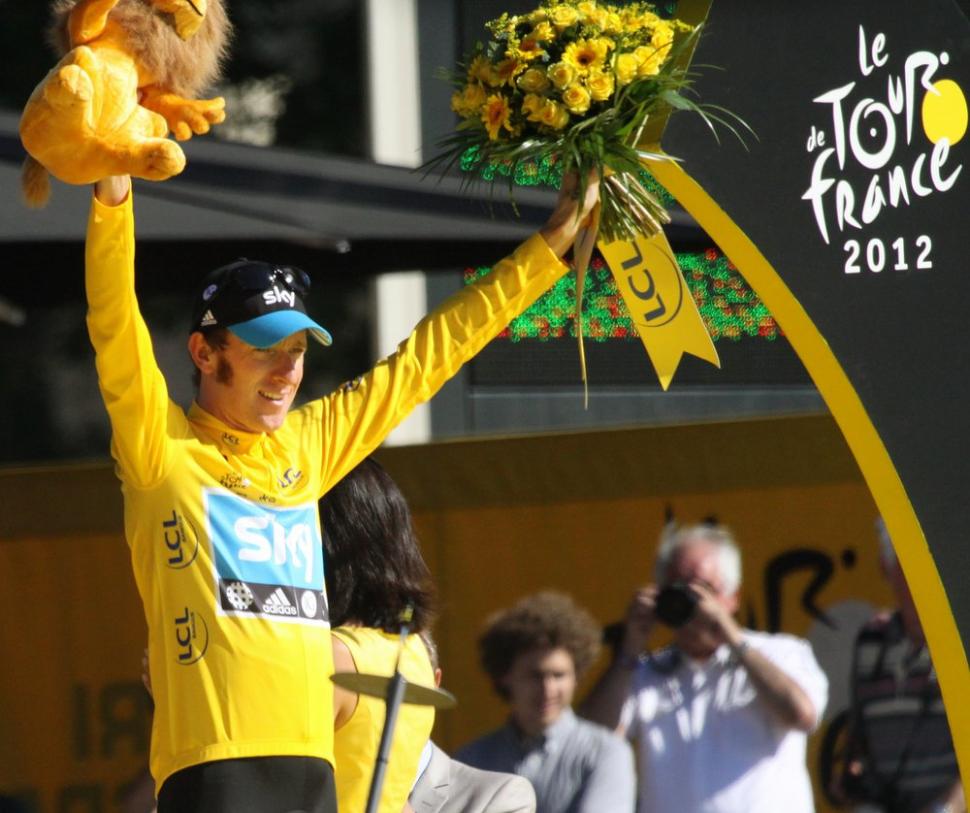
Sir Bradley Wiggins has claimed that Team Sky “chucked me under a bus” concerning the doping allegations levelled against him, the 2012 Tour de France winner insinuating that the resulting scandals were manipulated to protect someone else and that the truth “will come out” eventually.
Wiggins made the claim during an in-depth interview with the Times, published on Friday, ahead of the release of his new autobiography, The Chain.
Speaking to the Times, the five-time Olympic gold medallist discussed the cocaine addiction which marred the years following his retirement from cycling, and from which he’s only just emerged, his 2024 bankruptcy, his friendship with Lance Armstrong, and the sexual abuse he suffered as a teenager at the hands of coach Stan Knight.
And, when asked about the persistent doping allegations, centring on his most successful years at Team Sky, Wiggins was scathing of the British squad’s approach to the controversy, while also insisting that he did not break any anti-doping rules.
“There was something greater going on,” he told interviewer Polly Vernon. “They [Team Sky] chucked me under a bus.”
Vernon then asked Wiggins if that decision was made to protect someone else, to which the 45-year-old replied: “Yes.”
“Do you have your suspicions about who?” Vernon then asked.
“Yes. It’ll come out,” Wiggins said.
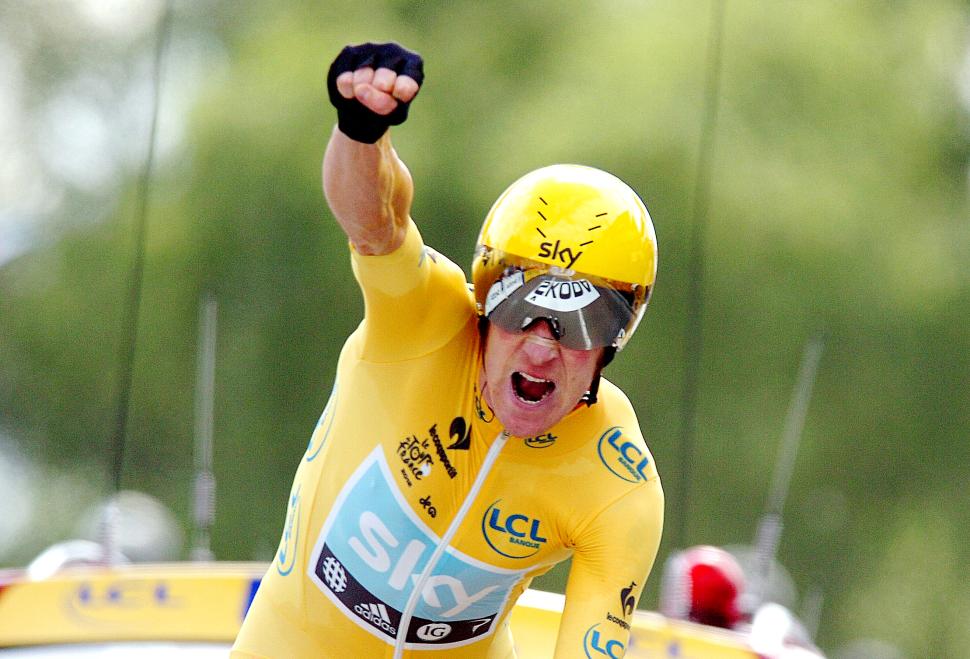 Bradley Wiggins, 2012 Tour de France (credit: ALAIN BORDAUX/ICON SPORT/SWPIX.COM)
Accusations related to alleged doping offences have plagued Wiggins since his retirement from the sport.
In October 2016, shortly after Wiggins had won his fifth and final career Olympic gold medal in the team pursuit at Rio, the Fancy Bears hacking group published details of the therapeutic use exemptions (TUEs) for triamcinolone obtained on three occasions for the British rider by Sky ahead of the 2011 and 2012 editions of the Tour de France and the 2013 Giro d’Italia.
The second of those Tours saw Wiggins become the first male British winner of cycling’s biggest race, with Sky and GB teammate Chris Froome finishing second. Froome was also featured in the Fancy Bears hack, the four-time Tour winner later claiming that he had arranged the TUEs to treat his asthma.
Meanwhile, triamcinolone, a powerful corticosteroid, was ostensibly obtained by Team Sky doctor Richard Freeman under the TUE system to treat Wiggins’ hay fever, but is also known for its performance enhancing qualities.
The allegations swirling around Wiggins intensified when details of a jiffy bag delivered to Freeman immediately during the 2011 Criterium du Dauphiné, which Wiggins also won, emerged, the package and its contents becoming the subject of both a parliamentary enquiry and a UK Anti-Doping (UKAD) investigation.
In 2016, Team Sky principal Sir Dave Brailsford told the parliamentary enquiry that the package, taken to France from Manchester by a British Cycling employee, contained the decongestant fluimucil, to treat Wiggins’ hay fever.
> Chris Froome distances himself from former carer under investigation for link to doping doctor
UKAD’s inquiry into possible wrongdoing in the wake of the revelations was scuppered the lack of records kept by Freeman during his time at British Cycling and Sky – not helped by the destruction of laptops from that period – leaving the anti-doping agency unable to determine what exactly was in the package.
In 2021, Freeman was struck from the medical register when it was ruled that his ability to practise medicine had been impaired by misconduct, having been found to have ordered banned testosterone in 2011 “knowing or believing” it was to help dope an unnamed professional cyclist.
During the lengthy medical tribunal, Freeman admitted ordering 30 packets of Testogel to the Manchester Velodrome in 2011 and subsequently lying about the order – which he initially claimed he was bullied into by Sky coach Shane Sutton – to cover his tracks, though he vehemently denied being a “doping doctor”.
Under cross-examination, he also revealed details – such as pouring the Testogel sachets down the sink at his home – which he had not admitted either in an interview with UKAD in 2017 or in statements submitted to the medical tribunal.
Following the tribunal, Freeman was then charged by UKAD with two anti-doping violations and in 2023, after a series of delays, was banned from sport for four years for taking possession of Testogel for unnamed riders as well as lying to the anti-doping authorities.
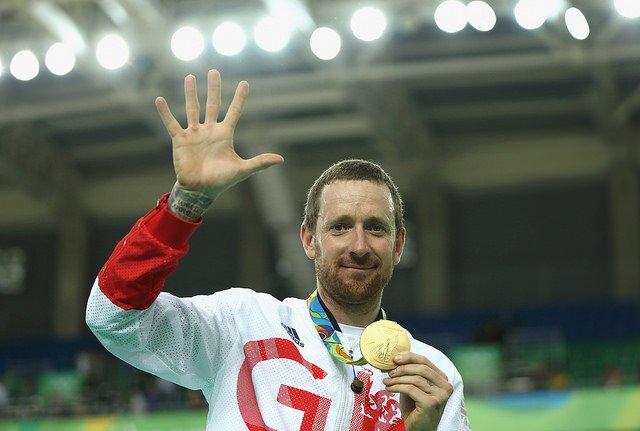 Sir Bradley Wiggins with his fifth Olympic gold medal (credit: SWpix.com)
This week’s interview with the Times, of course, isn’t the first time that Wiggins has criticised Team Sky’s management for its handling of the doping allegations which have swirled around the squad on a consistent basis, including at the most recent edition of the Tour, which saw the team’s head soigneur, David Rozman, come under scrutiny for his links to a convicted doping doctor.
In 2018, speaking to the Guardian’s Donald McRae, Wiggins criticised Sir Dave Brailsford’s role in the way Sean Yates – his sports director when Wiggins won the Tour and a former team-mate of Lance Armstrong at Motorola – departed Team Sky in the immediate wake of Armstrong’s lifetime ban from the sport.
“They said his health was the reason but they got rid of him because of the association with Lance,” he said. “That’s typical Dave and Sky. As long as it looks good on paper, fuck what it’s actually like behind the scenes.”
Elsewhere in his interview with the Times, ahead of the publication of his new book The Chain, Wiggins spoke about his recovery from the cocaine addiction which he says dominated the years following his retirement from the sport and saw him spend time in a “crack house” in Middlesbrough, sleep in his car and on park benches, and leave him bankrupt.
In an excerpt from The Chain, Wiggins details a particular dark period in 2018, when he smashed up his 2012 Sports Personality of the Year trophy.
“I did that in front of my kids,” he wrote. “No wonder there were times when they talked about trying to put me in rehab. The desecration of my Olympic medal might have happened away from their gaze but it’s equally sad to reflect on.
“Hundreds of thousands of people roaring me on, millions more watching at home. One of the great moments of London 2012, and there I am in a wardrobe, snorting cocaine [off my gold medal], mocking my achievement, hating it for what I believed it had brought me.
“It was the equivalent of pissing on someone’s grave, and in that moment I was pissing on my own. The gold medal, the Tour de France… All of it was dead to me. The person I’d been in Paris and London was dead to me too.”
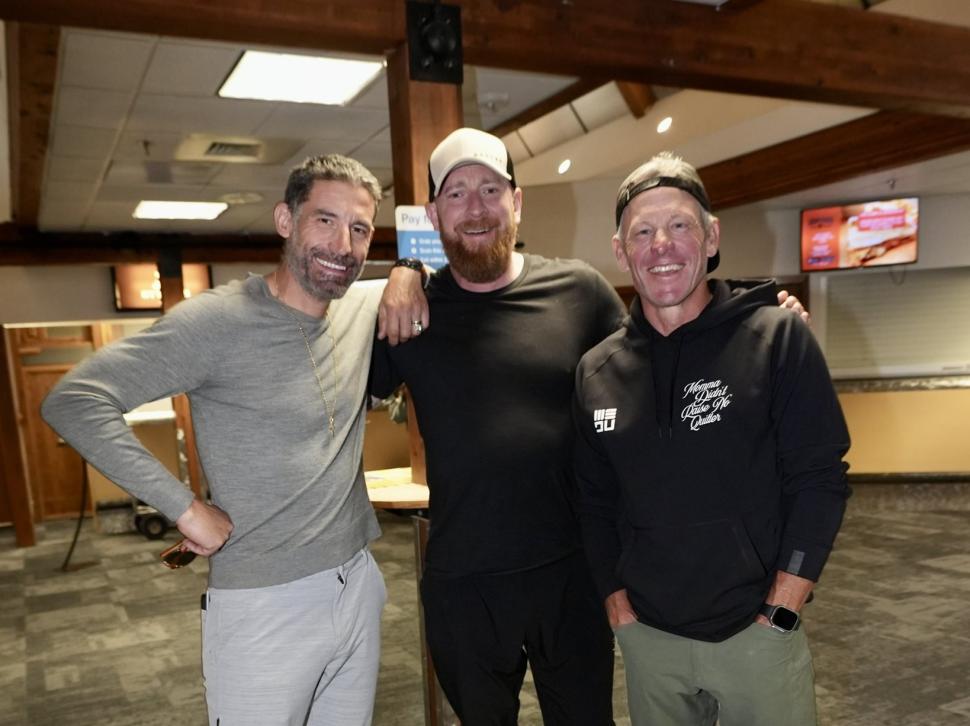 Bradley Wiggins, Lance Armstrong, and George Hincapie (credit: Liz Kreutz)
Speaking to the Times, Wiggins praised Armstrong for flying him to the US and checking him into rehab, allowing him to finally turn the corner on his addiction this year.
“He’s lovely. I mean, he’s Lance Armstrong,” Wiggins says. “He does have an ego, but he was the one who reached his hand out and invited me to America at my lowest ebb, said, ‘We’ll look after you.’ Despite the colourfulness in his life…”
“On a human level, he’s great. When he read about the bankruptcy he said, ‘Look, I’ll write you a cheque if you want.’ I said, ‘You don’t have to do that.’ He was in London at the weekend. He asked me to come to the Oasis concert with him.”
Describing the book as part of his ‘apology and accountability’ phase of Narcotics Anonymous – “I want to be the teller of my own story, good and bad” – Wiggins also says he’s enjoying cycling again, something he hated due to its association with Stan Knight, the coach who Wiggins says abused him and other cyclists as teenagers.
“I associated every aspect of it with Stan. If I hadn’t taken up cycling, I’d never have met that man,” he says.
However, Wiggins’ decision to open up about the abuse he suffered two years ago, prompting many of his contemporaries to also come forward, has now changed his perspective on cycling.
“I love going on my bike at the weekends. It’s phenomenal. That sense of escapism I had as a kid. Freedom. Yes.”