
Unlock the Editor’s Digest for free
Roula Khalaf, Editor of the FT, selects her favourite stories in this weekly newsletter.
Alphabet posted another quarter of double-digit growth in revenue and profit, as the search giant’s efforts to integrate artificial intelligence start to bear fruit and demand for cloud computing surged.
Net income rose 19 per cent to $28.2bn in the second quarter, beating analysts’ expectations for $26.6bn, according to a filing on Wednesday.
Google’s closely watched core search and advertising business grew 12 per cent to $54.2bn, beating expectations for a 9 per cent increase. Cloud computing revenue jumped by almost a third, leading the company to boost its AI spending plans by $10bn to $85bn this year.
The performance will soothe concerns that AI chatbots such as OpenAI’s ChatGPT and Anthropic’s Claude are taking significant market share from Google. Its dominant search engine still handles about 90 per cent of online queries around the world, and accounts for 56 per cent of the company’s revenue.
Investors also feared that the introduction of “AI mode” and “AI overviews” — which produce written answers versus a list of links — would cannibalise advertising revenue, but there is little evidence of this so far.
“Our new AI experiences significantly contributed to an increase in usage . . . users search more as they learn that [it] can meet more of their needs. That’s especially true for younger users,” said chief executive Sundar Pichai.
The company said AI mode, rolled out in May, had 100mn monthly active users in the US and India. AI overviews had boosted search volumes by 10 per cent and now reached 2bn users, it added.
It is experimenting with targeted ads in both AI features, and chief business officer Philipp Schindler said “we see monetisation at approximately the same rate” as traditional search.
Google’s Gemini AI app was also growing, with more than 450mn monthly active users, up from 350mn in March, Pichai said. However Gemini is still trailing ChatGPT, which had more than 600mn earlier this year.
Pichai has been criticised for moving slowly to release Google’s own chatbot, which was initially riddled with bugs, allowing OpenAI to capture the public imagination in a technology that his company incubated.
Alphabet’s total revenue rose 14 per cent to $96.4bn versus the average estimate of $94bn, according to Visible Alpha.
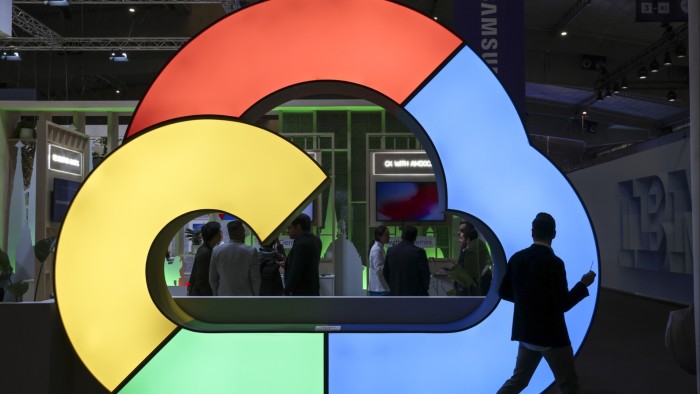
Cloud computing revenues rose 32 per cent to $13.6bn, up from 28 per cent growth in the first quarter, as demand for data centre services to train and run AI models continues to escalate.
Pichai said the division was on track to make $50bn this year; however, it remains a distant third in the sector to Microsoft and market leader Amazon.
Second-quarter capital expenditure almost doubled to $22.4bn from $13.2bn last year. Google said its spending on data centres, servers, chips and other AI infrastructure would reach $85bn this year, $10bn more than previously forecast and up from $53bn last year.
“We are encouraged by the results and like Google’s leading-edge AI infrastructure,” said Angelo Zino, an analyst at CFRA Research.
However, investors have questioned the wisdom of the vast ramp-up in spending given the lack of imminent pay-off on these investments.
The scepticism has done little to damp the enthusiasm of Google and its peers Amazon, Microsoft and Meta, which are spending historic amounts to win market share in what they believe is a transformational technology.
This week analysts at Morgan Stanley increased their estimates for Big Tech capex to $325bn this year and $392bn in 2026.
Google also faces increased costs from retaining AI staff as a talent war erupts in Silicon Valley. Rivals such as Meta are offering pay packages in the hundreds of millions to poach some researchers and engineers.
Recommended

Alphabet shares rose about 2 per cent in after-hours trading, helping it rebound to positive territory for the year from a nadir in April when US President Donald Trump’s trade war sparked fears of disrupted supply chains and softening consumer spending.
Google’s outlook is clouded by the threat of a break-up after it lost three antitrust cases that found it ran illegal monopolies in search, advertising and its app store.
A federal judge will soon announce what he will require of the company to resolve the search case. It could be forced to see its Chrome browser end an exclusive agreement with Apple to be its default search engine and share more user data with rivals. It may also have to sell its crucial ad exchange business.