
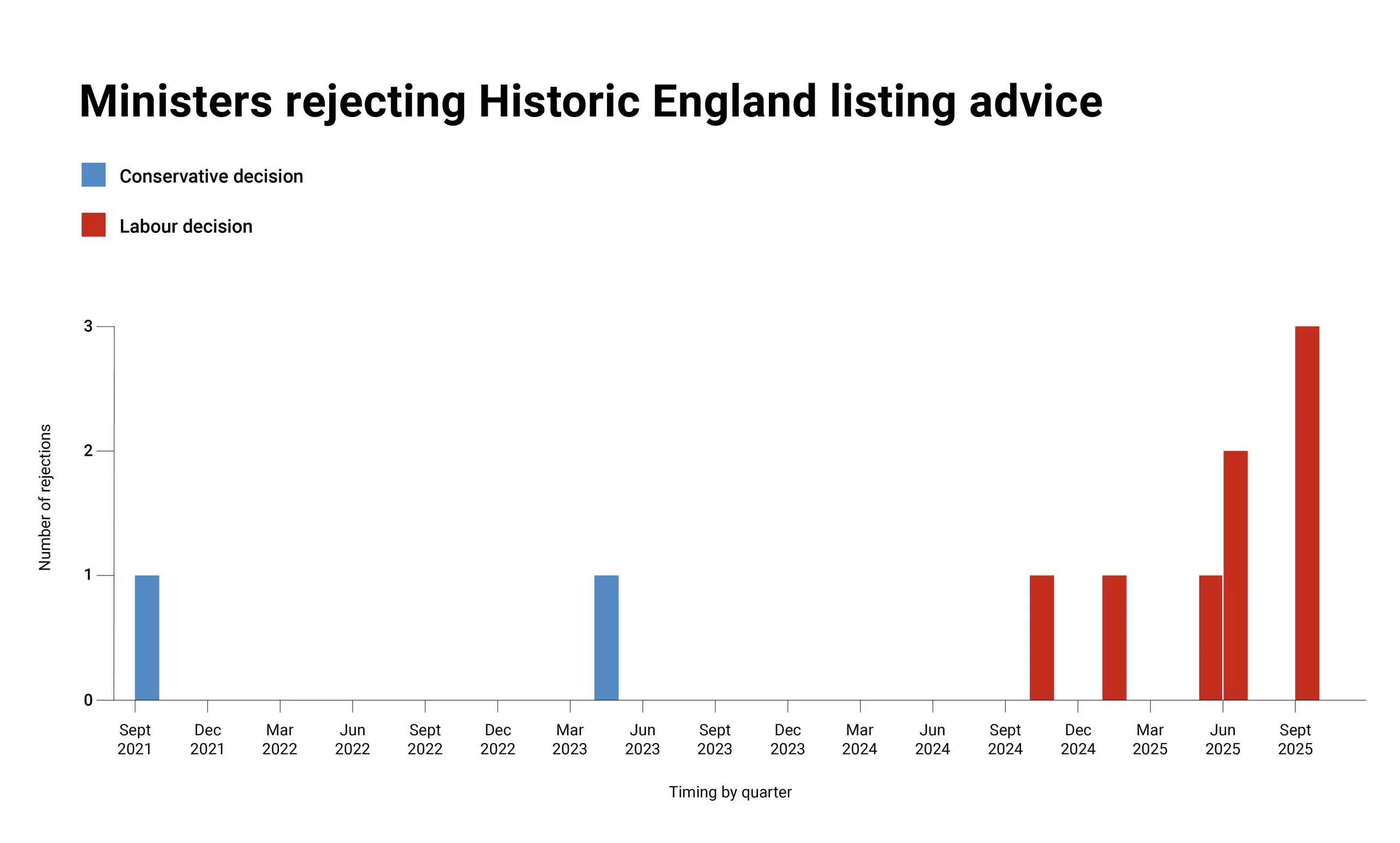
Analysis carried out by the AJ using Freedom of Information showed that, over the past five years, ministers rejected Historic England’s advice to list buildings 10 times. Of these rejections, eight have taken place in the last year under Labour (see graph below).
In most cases, listing recommendations from Historic England are waved through by the Department for Culture Media and Sport (DCMS), its sponsor department, which is led by secretary of state Lisa Nandy.
However, in almost every one of the 10 cases of rejection, the site in question was subject to development proposals (see table bottom), raising the question of whether the government’s drive to remove the ‘blockers’ to economic growth is now imperilling England’s heritage.
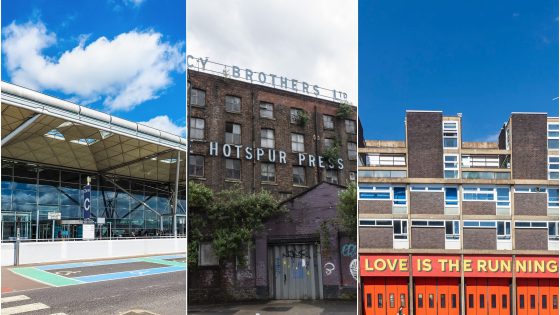
The buildings rejected for listing in recent months include two 20th-century fire stations, in Bath and Shoreditch, and the Georgian Medlock Mill, one of the oldest mill buildings in Manchester, which was largely destroyed in a subsequent fire in June.
Victorian Society president Griff Rhys Jones questioned the reasoning behind the decisions.
‘If there is a belief that heritage conservation and the recycling of buildings are in any way responsible for holding up growth or stopping development, then that is a very sorry state of affairs, because it’s wrong,’ he said.
‘Heritage is a real spur to growth. King’s Cross is a prime example of an area which, by using the existing buildings and integrating new architecture, has become a new and wonderful place to visit.’
While ministers’ rejections in recent months include one Victorian and one Georgian building, Modernist designs from the 20th century have proved particularly vulnerable. This is despite them being as eligible for listing as any other period of architecture, providing they are more than 30 years old.
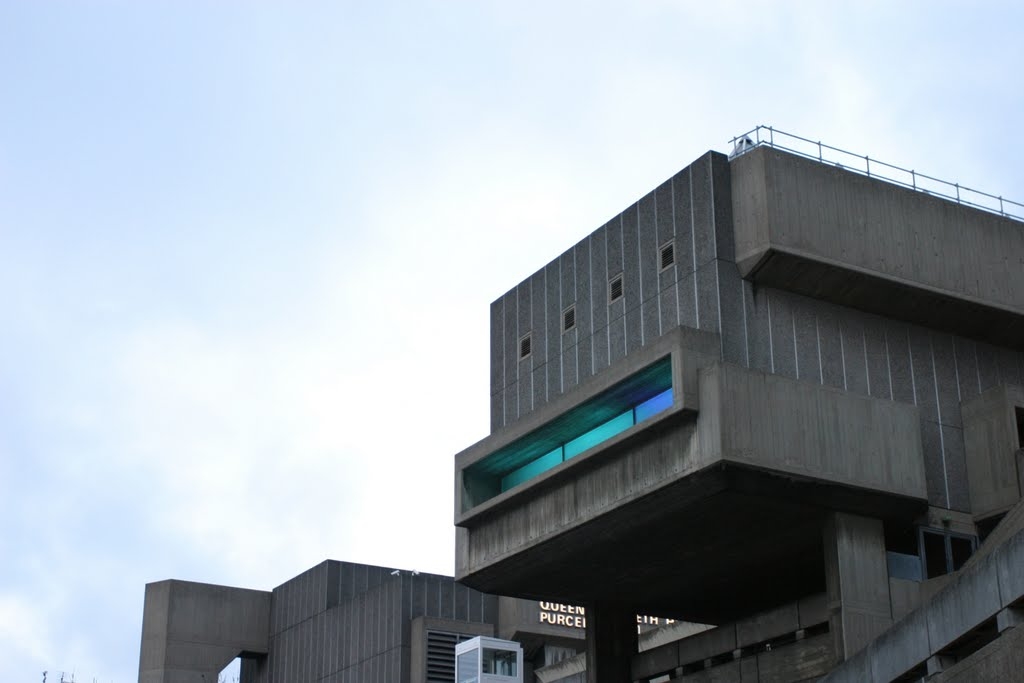
Successive governments, for example, have resisted calls for almost 35 years to list London’s Southbank Centre, the famous 1960s complex, which includes the Hayward Gallery, the Purcell Rooms and Queen Elizabeth Hall.
Former RIBA president Sunand Prasad said: ‘Ministers’ rejections have often been controversial, because the reasoning lacked the clarity and transparency of [Historic England’s] original advice.
‘What is newly concerning about the AJ’s findings is the apparent acceleration in these rejections and the implication that they result from a combination of development pressure and opinions based on style and taste, none of which should decide which piece of history we should ensure is passed on to future generations.’
Other leading figures also suggested the government’s ‘Build, baby, build’ housebuilding rhetoric and recent attacks on Historic England by the likes of the City of London Corporation were having a chilling effect on building conservation.
Twentieth Century Society director Catherine Croft said: ‘Historic England is the government’s official adviser on heritage, paid for by the taxpayer. So, if the minister wants to not follow its advice, I’d hope that they were doing it with the sound backing of some alternative and superior source of advice. But I don’t know where that would be coming from. There doesn’t seem to be any evidence that there is such a source of advice.’
A DCMS spokesperson said: ‘We are absolutely committed to protecting and championing our national heritage.
‘All decisions on listings are based on the Planning Act and Principles of Selection for Listed Buildings with the rationale published by Historic England.’
Historic England declined to comment.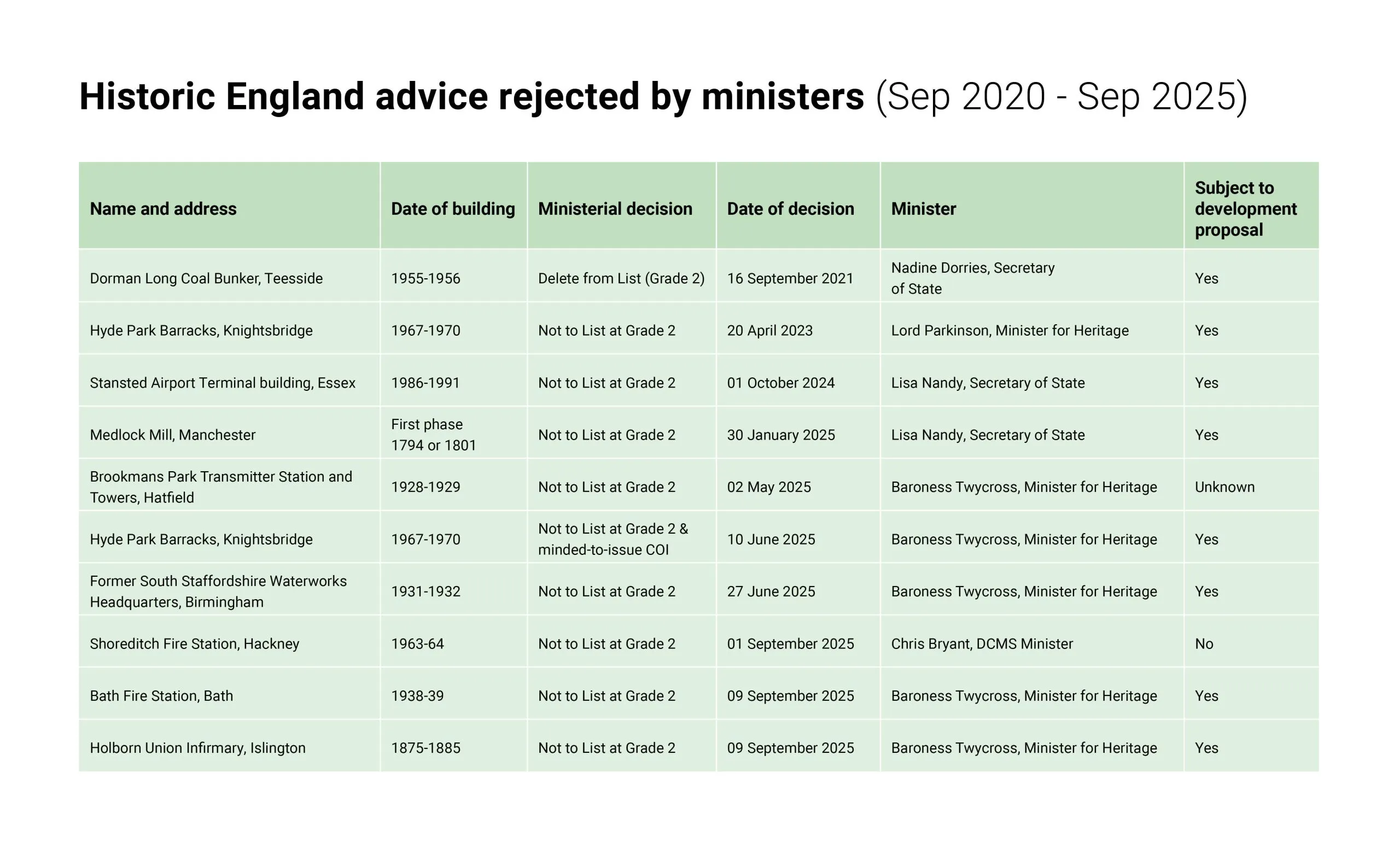
Further comments
Catherine Croft, director, Twentieth Century Society
Listing definitely doesn’t mean that nothing can happen to a building. What it means is that its architecture and historic interest are taken into account in the decision-making process.
We want to see good growth and good new development. From our point of view, that’s development that preserves the best of the historic environment and integrates it into an economically viable new future.
We have reviews pending for both those fire stations [Bath and Shoreditch] at the moment, specifically asking on what grounds the government has for not following the advice [of Historic England and the Twentieth Century Society].
Stuart Lipton, property developer and former chairman of government design watchdog, CABE, a quango wound up in 2011
My experience of Historic England is good. They are pro-development. But at the same time, I think a new conversation is required with ministers, and that debate is urgent.
We need a new CABE (Commission for Architecture & the Built Environment) because that used to be the sort of balancing factor in terms of who was advising government.
Henrietta Billings, director, SAVE Britain’s Heritage
These figures are concerning. The listing system exists to protect and celebrate England’s irreplaceable buildings – many of which lie at the heart of communities and are the backdrop to our daily lives. They are the ingredients for interesting and unique town and city centres.
Far from being ‘blockers to growth’, they are so often the catalysts for successful regeneration schemes. Listed buildings make up approximately two per cent of the country’s buildings. The guidelines on what constitutes listed buildings are clear: architectural or historical special interest. Planning applications or development pressures are not part of the listing criteria.
Decisions around what makes the grade for listing must be guided by the experts, not political agendas. Otherwise, we undermine the whole process designed to protect and celebrate them.
Nicholas Boys Smith, chairman, Create Streets, and former interim chairman of Office for Place
It’s hardly a surprise that a Labour government is less well disposed to heritage than a Conservative one. The clue’s in the name. And I remember telling friends in the heritage world that they would never get as supportive a minister as Stephen Parkinson, who was thoughtful, knowledgeable and superb. I think I was correct.
Heritage is categorically not a barrier to development, which is why Historic England needs to be really careful about provocative post-war listing requests. It is risking turning heritage into a ‘problem’ from a ministerial perspective, which it does not need to be.
I find the fact that the government refused to list Medlock Mill despite the advice of Historic England depressing beyond words. The proposed high-rise insertion is cancerous and barbaric, barcode architecture of the very lowest mettle.
James Hughes, director, Victorian Society
The notion that heritage is somehow a block to development, growth and progress is an age-old argument. Ever since the Victorian Society was set up in 1958, we’ve faced this.
I think I hear that argument more now, certainly in the 15 years I’ve been at the society, than I’ve ever heard it before. And that is deeply troubling because historic buildings and heritage don’t need to stand in the way of development and progress. All these buildings, and certainly the two buildings that we’ve been involved in trying to get listed, are perfectly reusable.