
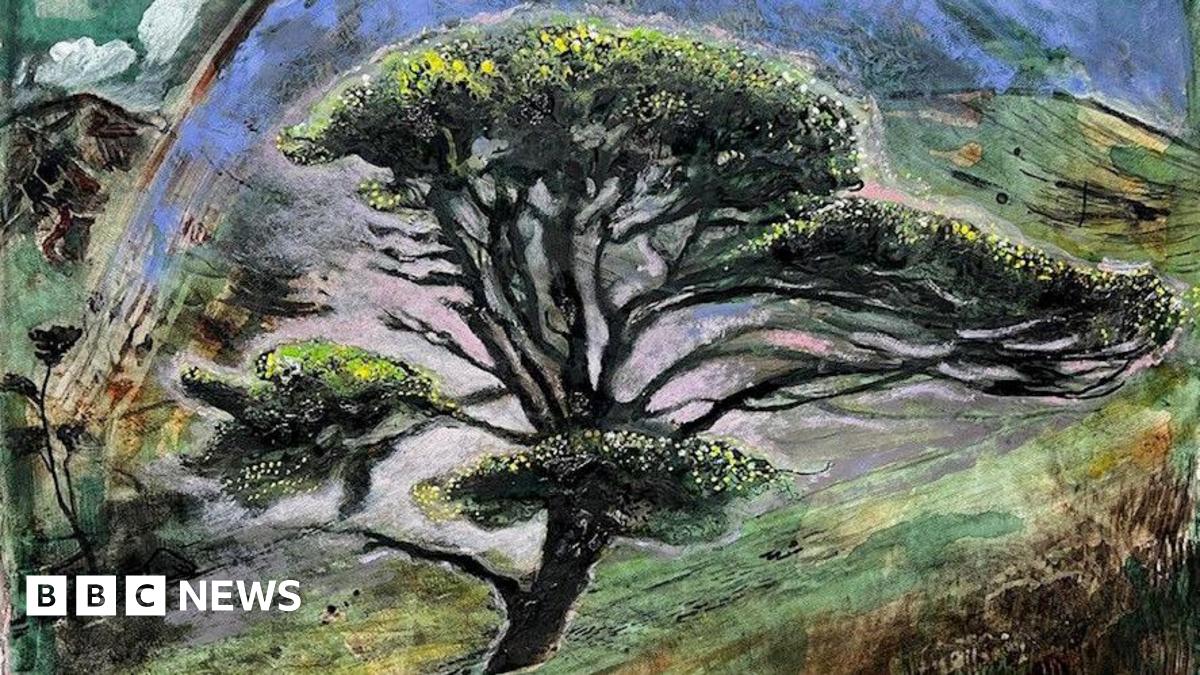
The Charter of the Forest, which Llywelyn Hall described as the “first bit of environmental legislation”, ultimately paved the way for the right to access woodland.
Some elements of the forest laws remained in force until the 1970s.
The trees in Llywelyn Hall’s works are:
An ancient tree close to the ruins of St Mary’s Priory in Surrey which is believed to be 1,400 to 2,500 years old.
Some people believe the sealing of the Magna Carta took place by the tree.
The yew is also said to be one of the places where Henry VIII courted Anne Boleyn.
Descended from the first pines to arrive in the country in about 7,000BC, the surrounding woodland is at risk from overgrazing by deer. The number of pine trees has dropped to just 57.
More than 1,000 years old, the oak in Wentwood Forest in Monmouthshire is the oldest in Wales.
Llywelyn Hall described it as “sitting squat, nestled in a dense pine forest and oozing with atmosphere and an otherworldly presence”.
The beech trees near the Lost Pond in Epping Forest are some of the oldest of that species in the world.
The artist described the “vast sprawl” of the Lost Pond Beech as like an “ominous guardian”.