
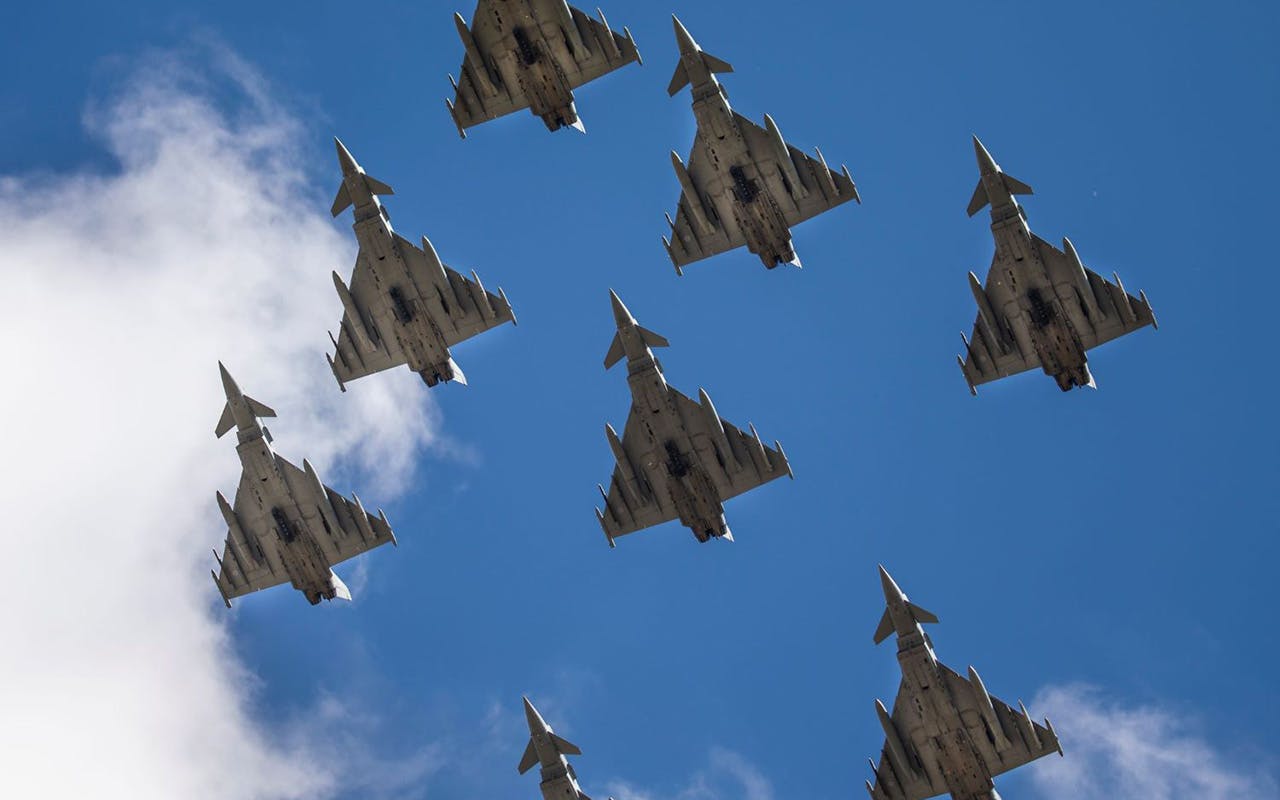
The United Kingdom and Turkey have signed a deal worth up to £8 billion for 20 Typhoon fighter jets, securing around 20,000 British jobs and marking the largest UK fighter export agreement in nearly two decades, the government stated.
The deal was finalised during Prime Minister Keir Starmer’s first official visit to Ankara, where he met with President Recep Tayyip Erdoğan. It is the first new order for UK-built Typhoons since 2017 and is expected to sustain production lines in Warton, Samlesbury, Bristol, and Edinburgh for years to come. The agreement also strengthens NATO’s air power and interoperability between the UK and Türkiye, according to the government.
Starmer described the agreement as “a win for British workers, a win for our defence industry, and a win for NATO security.” He added that the deal delivers “highly skilled, well-paid jobs” across the country and demonstrates the government’s “Plan for Change in action.”
The Typhoon programme currently supports thousands of jobs across the UK, including nearly 6,000 at BAE Systems sites in Lancashire, over 1,100 at Rolls-Royce in Bristol, and more than 800 at Leonardo’s radar manufacturing facility in Edinburgh. The UK is responsible for 37 percent of each aircraft’s production, with the remainder divided among the Eurofighter consortium partners in Germany, Italy, and Spain.
Defence Secretary John Healey, who accompanied Starmer to Ankara, said the export marks “the biggest jet exports deal in a generation.” He added that it will “pump billions of pounds into our economy and keep British Typhoon production lines turning long into the future,” while enhancing NATO’s collective deterrence.
Charles Woodburn, Chief Executive of BAE Systems, said Türkiye’s procurement “marks the start of a new chapter in our longstanding relationship with this important NATO ally.” He called the deal “an export success story” that would preserve sovereign defence skills and extend Typhoon production well into the next decade.
The first aircraft deliveries to Türkiye are expected in 2030. Typhoon jets currently form the backbone of the Royal Air Force’s combat air fleet, supporting missions including NATO air policing, homeland air defence, and Operation Shader in Iraq and Syria.