
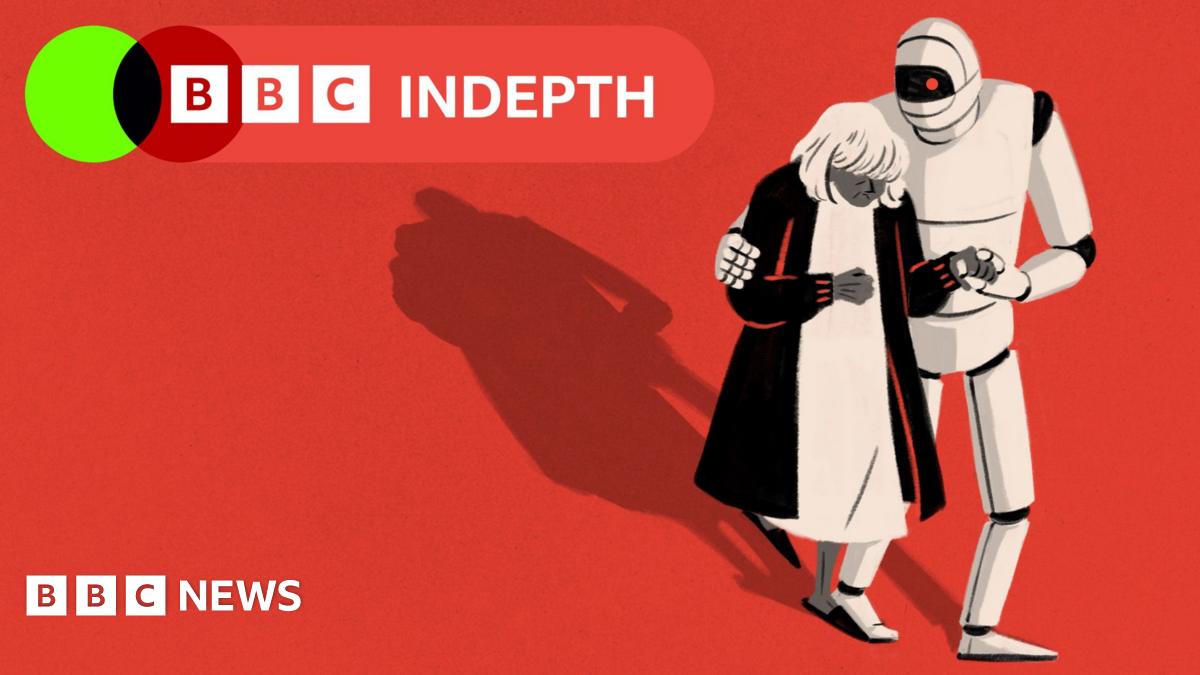
Dr Wright, who observed the robots in Japan, has one final concern. That is, if they catch on, robots could end up making life worse for human carers.
“The only way that economically you can make this work is to pay the care workers less and have much larger care homes, which are standardised to make it easy for robots to operate in,” he argues.
“As a result, there would be more robots taking care of people, with care workers being paid a minimum wage to service the robots, which is the opposite of this vision that robots are going to give time back to care workers to spend quality time with residents, to talk.”
Other experts are more positive. “It’s going to be a huge industry, given the deficit we have in the workforce right now. The demand for carers as our population ages will be huge,” argues Gopal Ramchurn, a professor of artificial intelligence at the University of Southampton.
He is also CEO of Responsible AI, which is involved in trying to ensure that artificial intelligence systems are safe, reliable, and trustworthy.
But he cites Elon Musk’s Optimus humanoid robot, which served drinks and mingled at a Tesla event last year, as a sign that – like it or not – the robots are coming.
“We are trying to anticipate that future, before the big tech companies come in and deploy these things without asking us what we think about them,” he adds.
So now is the time to develop the right regulations to ensure that the robots work for us, he argues, rather than the other way round.
“We need to be ready for that future.”