
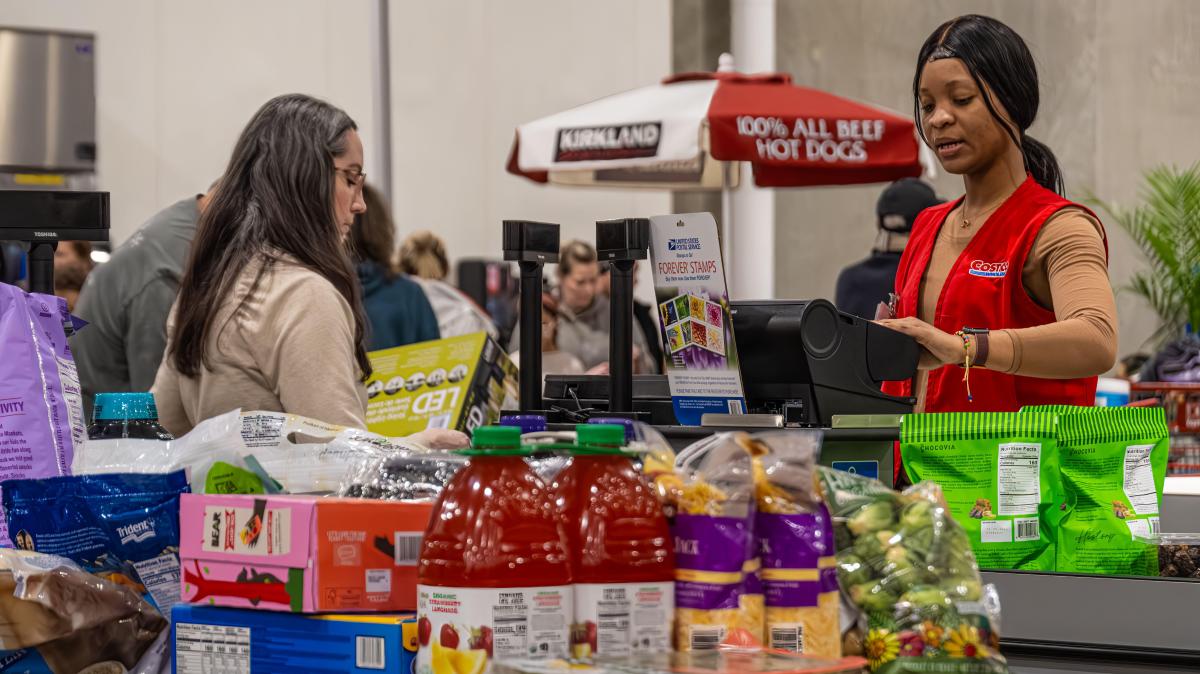
About 42 million Americans will lose their food benefits from November 1 because of the government shutdown.
The Supplemental Nutrition Assistance Programme (Snap) helps low-income families buy groceries. It is relied upon by one in eight Americans.
Eligible families use an Electronic Benefit Transfer (EBT) card much like an ordinary debit card to purchase food. They are usually reloaded by the federal government at the beginning of every month. But on Saturday, this might not happen.
• Sign up for The Times’s weekly US newsletter
The Department of Agriculture, which runs Snap, says it does not have $9 billion to cover the cost of benefits in November.
Democrats argue the government should use a $6 billion contingency fund to cover the payments — and 25 states have filed lawsuits against the federal government to make that happen.
What are Snap benefits and who qualifies for them?
The Snap programme is run by the Department of Agriculture
LINDSEY NICHOLSON/UCG/UNIVERSAL IMAGES GROUP/GETTY IMAGES
Households with monthly incomes of 130 per cent below the poverty line are eligible for Snap. For a family of three, that equates to an income of less than $2,221 a month.
To be eligible, you must have savings of less than $2,750. If you are over 60 years old or disabled, you must have savings of less than $4,250.
The cards used by recipients of Snap may not be topped up from November 1.
Which states are suing over Snap benefits?
There are 25 Democrat-led states suing the Trump administration in an effort to keep the benefits flowing.
They want the Department of Agriculture to use its contingency fund to help low-income families during the government shutdown. The contingency fund is meant for emergencies such as hurricanes or tornadoes.
California, New York and Texas have the highest number of people on Snap, but the programme disproportionately benefits Republican states. In Louisiana, 18 per cent of the population receives food benefits, 17 per cent in Oklahoma and 16 per cent in West Virginia.
• Reclusive billionaire revealed as mystery donor who gave $130m for troops
How long could the payment delay last?
It depends on how long the government shutdown lasts and whether Democrats are successful in their efforts to force the Department of Agriculture to use contingency funding.
The longest shutdown in history was 34 days during President Trump’s first administration. The present shutdown will surpass that record on November 4.
Even if the shutdown ends before November 1, low-income families will still be able to use Snap benefits left over from previous months. Once the shutdown ends, benefits will be topped up to compensate for the payments missed.
But if the shutdown continues beyond November 1, it could be several weeks before the payments resume.
• US inflation data clears path for more interest rate cuts
What has Trump said?
President Trump has given no specifics on how his administration will make up the cost
FRANCIS CHUNG/POOL VIA CNP/ADMEDIA/NEWSCOM/ALAMY
Trump has said “we’re going to get it done” — but not specified how he intends to resolve the problem.
The administration has said it will not use contingency funding to pay for Snap in November. The Department of Agriculture has confirmed that payments will cease on November 1.
“Bottom line, the well has run dry,” a notice from the Department of Agriculture reads. “At this time, there will be no benefits issued November 1.”