
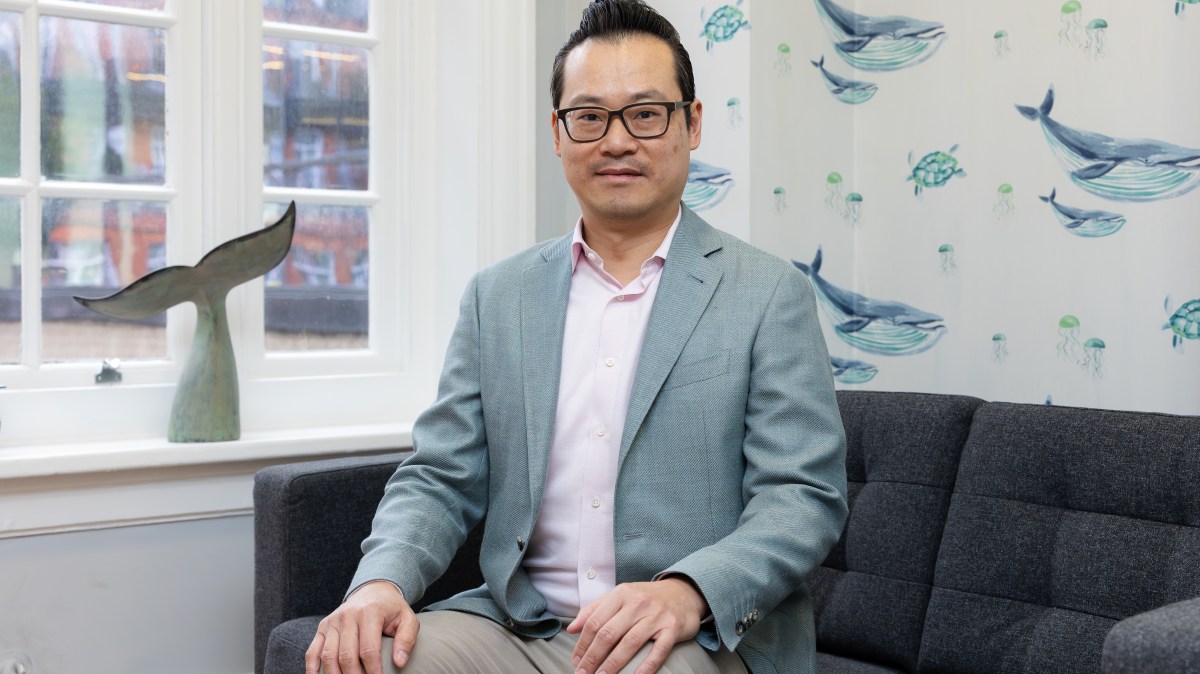
Stephen Yiu is, he says, “a true believer” in the power of artificial intelligence in general, and in Nvidia in particular. As well he might be. Few, if any, professional stockpickers have so consistently bet their shirt on the Silicon Valley chipmaker, whose shares this week powered to new highs, making it the world’s first $5 trillion company by market value.
Yiu, manager of the London-based Blue Whale Growth Fund, first alighted on Nvidia in June 2021, putting 10 per cent of his fund into it. Since then he has rarely strayed from that meaty position, a rarity in fund management, where most people like diversification and are allergic to big concentrated bets.
Nvidia shares were trading at about $18 at the time of his first investment. Today they are over $200. Yiu has repeatedly had to sell some of his Nvidia shares as they have soared and he has bumped up against the 10 per cent ceiling, the maximum he is allowed to own in a single stock.
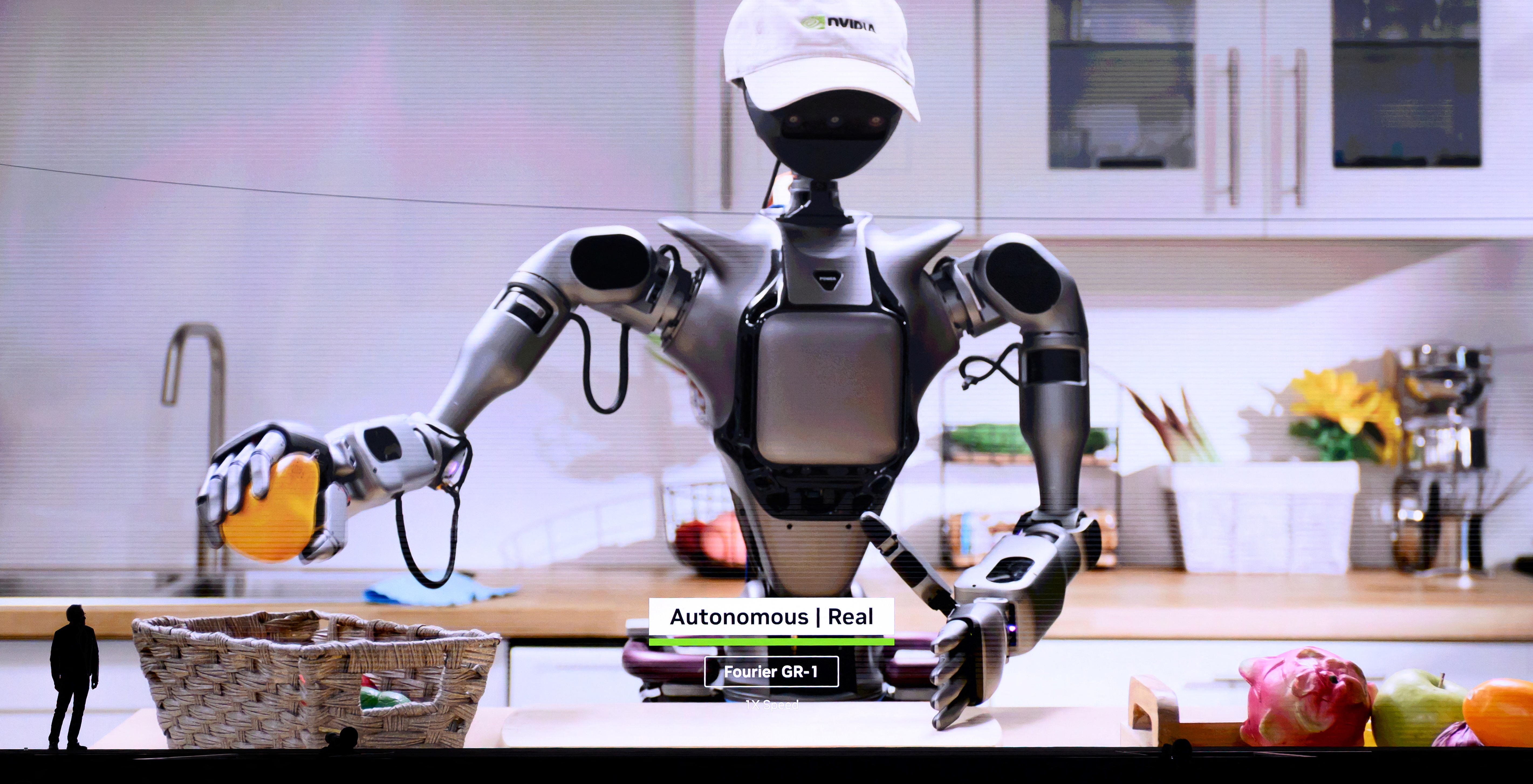
Nvidia robotics on display at its AI conference in March this year
JOSH EDELSON/AFP/GETTY IMAGES
Nvidia has made a small fortune for Blue Whale, which has realised more than £100 million from past Nvidia sales and still holds about $200 million worth in the portfolio today, according to Yiu, a 47-year-old Hong Kong Chinese who came to Britain aged 16 and studied electronic engineering at Imperial College London.
Other fund managers running larger portfolios will have had bigger positions, but surely few if any will have been so proportionately exposed to the one company. “No single fund manager in the entire UK that I have come across…would have made the same amount of performance from Nvidia throughout the last three years,” he muses. “Yeah. That would be true.”
• Wall Street bulls keep faith with Nvidia’s dizzying rise
The position has helped Blue Whale produce a 213 per cent return since its launch in 2017, beating its benchmark, which delivered 99 per cent, according to official figures to September. So far this year it is up 18 per cent. A strong October has already put those figures out of date: they now stand at more than 240 per cent since launch and more than 30 per cent year-to-date, Yiu says. The performance has attracted new clients to the fund, which now weighs in at £1.7 billion, compared with £40 million at launch.
The humungous valuation of Nvidia — now about one third more than the entire GDP of the UK — continues to divide opinion. No one doubts the efficacy of the complex graphics processing units (GPUs) it makes. But many raise their eyebrows at the spicy price/earnings ratio, now touching 59, and the string of circular deals it is negotiating, often with its own customers.
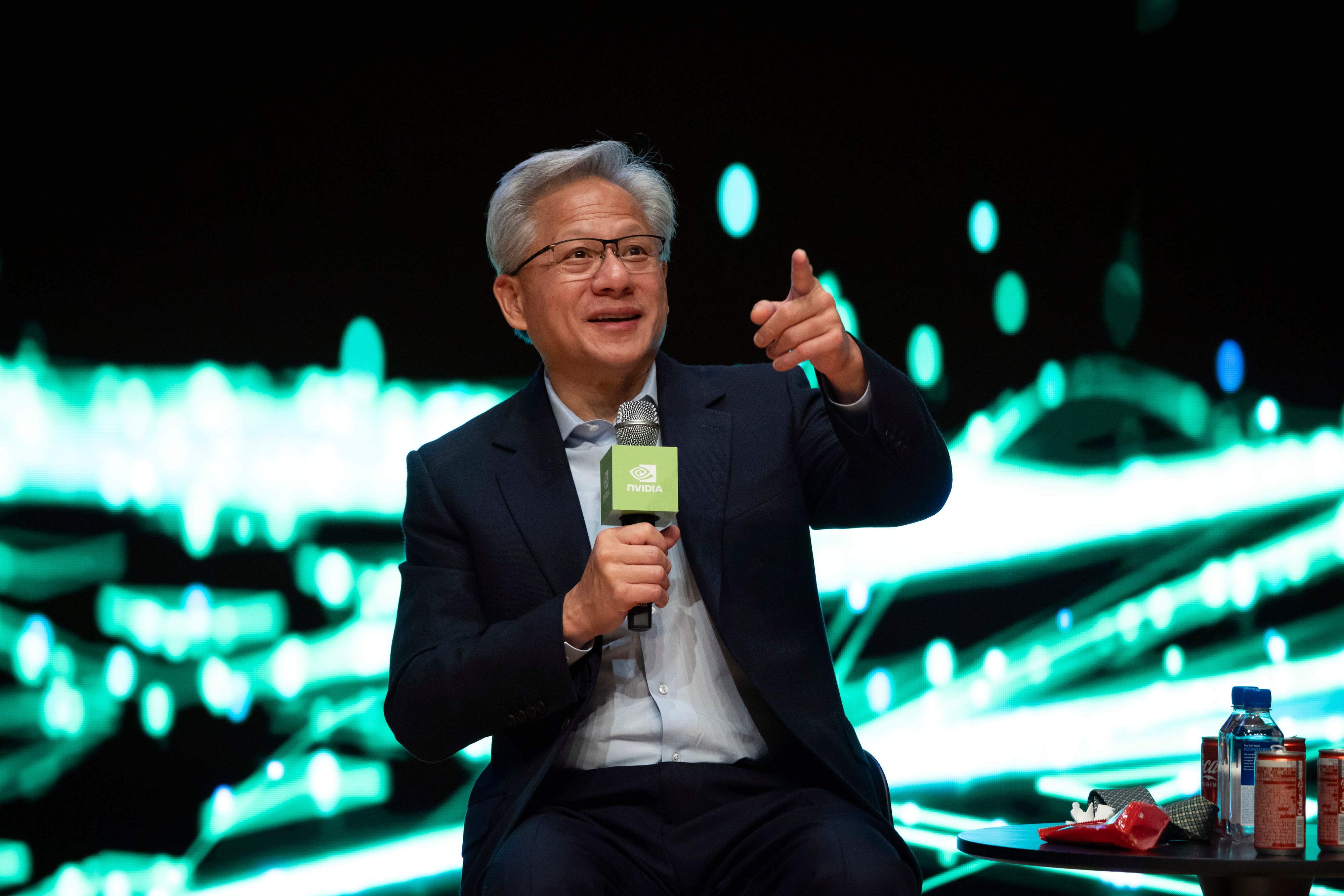
Jensen Huang, Nvidia’s CEO
WOOHAE CHO/GETTY IMAGES
The surge in the share price on Wednesday followed another “strategic partnership” deal, this time with Nokia, in which it is taking a $1 billion stake and co-operating to develop next-generation 6G mobile device technology. That came shortly after the Nvidia chief, Jensen Huang, said he expected to bag $500 billion in chip orders and announced plans to build seven new super-computers for the US government.
Institutions ranging from the Bank of England to the International Monetary Fund have raised concerns about AI valuations and the risk of the AI boom turning into a bust similar to the technology bubble of 1997-2000. Even James Anderson, the former Baillie Gifford stockpicker regarded by many as the UK’s finest tech investor, has raised concerns.
Yiu bats away the worries. “I have enormous respect for James Anderson, but I don’t agree with those comments.” The world is only at “the very early stages of the AI development cycle,” he argues. Even if the parallels with the dotcom bust are true, we are only at the equivalent stage of 1997 or 1998, he says, in other words long before dotcom and telecoms company valuations got really frothy.
Why is it different this time? Because, he says, of the absence of friction in this technology. It can be swiftly rolled out to the world and harnessed far more quickly than the time it took for the online revolution to really take hold. Starting in the 1990s, it took 13 years to reach the point where 800 million people worldwide got access to the internet, he says. It has taken just three years for ChatGPT alone to reach that same point of giving 800 million people access to AI.
Yui says: “I am even more convinced today that AI is more real than anything I have come across in my entire 47 years of living.”
His other argument is that he is extremely discerning in AI. “We don’t like, or we are very cautious on, AI spenders. We would rather be on the receiving end of any AI spending.” That means largely dumping companies buying Nvidia’s chips. That includes Microsoft, which was for years a big Blue Whale holding.
About 25 per cent of the Blue Whale portfolio is exposed to AI. Yiu also has top ten positions in Broadcom, another AI chipmaker; Lam Research, which supplies chipmaking equipment; and Uber, the ride-hailing service pushing into driverless cars.
But he is also perfectly happy to back more traditional sectors. Philip Morris, the tobacco group, and Flutter, the gambling group behind Paddy Power, also make it into his top ten investments. One of his biggest coups this year, he says, was buying into Leonardo, the European weapons maker, where he has doubled his money.
He comes across as more of a salesman than an engineer, and is reluctant to discuss his investment disasters, though the tech stocks retreat of 2022 was a painful time. “We underestimated how quickly interest rates were going to go up,” he recalls of the period when higher-risk stocks — including Nvidia — were sharply sold off.
He prides himself on being completely unemotional about his investments and bridles at the suggestion that his reputation could take a knock if Nvidia were to stumble. He’s never even met Huang, he says. “Why should I care about Nvidia? I only back Nvidia because it’s making my investors the most money, right?”
The implication is clear: he would dump his Nvidia holding in a heartbeat if he thought it wise.
A former Hargreaves Lansdown employee, Yiu went on manage money for New Star, Artemis and the hedge fund Nevsky Capital before setting up his own shop, backed by HL’s co-founder Peter Hargreaves, who both seeded the Blue Whale fund and also took a majority stake in the management company behind it, Blue Whale Capital. Yiu owns a minority of Mayfair-based BWC and says he invests all his personal wealth in the fund. BWC posted profits before tax of £4.1 million in 2024.
Married with no children, Yiu and his wife like to visit vineyards and ski. But he doesn’t really conform to the image of a big swinging financier, his friends say: he likes to beetle around town in a Fiat 500.