
Unlock the Editor’s Digest for free
Roula Khalaf, Editor of the FT, selects her favourite stories in this weekly newsletter.
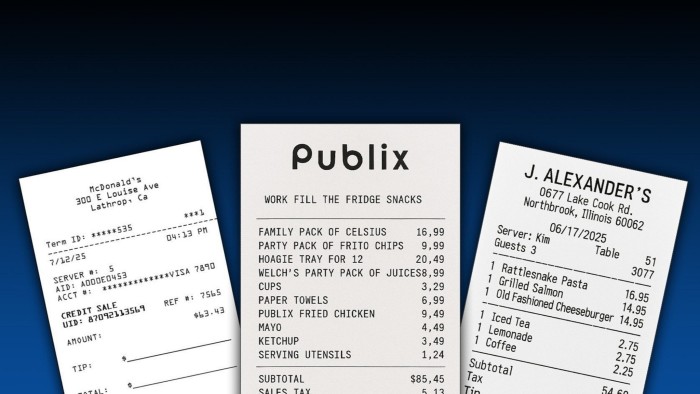
The tools of the would-be expenses fraudster used to be pretty low-tech: a photocopier and a bottle of correction fluid; a few blank taxi receipts supplied by an obliging cabbie. These days, things have become both more sophisticated, and simpler. As the Financial Times reported this week, the advent of image-generating artificial intelligence has led to an influx of AI-produced fake receipts that are fuelling expenses fraud. They come complete with authentic-looking logos, addresses and line items, even simulated creases and coffee stains.
Much attention has been paid to the potential for elaborate AI-generated deepfakes — manipulated videos or audio that can, say, put fake words in the mouths of well-known figures — to be used for political dirty tricks or financial scams. But the “democratisation of deception” can also facilitate more basic forms of fraud.
Convincing forgeries that once required graphic design or photo editing skills and access to appropriate software can now be created by AI using only text prompts. This is a big issue for companies trying to keep a lid on expenses fraud. By eroding trust in documentary evidence and paper trails, it also has potentially broader implications for financial trust.
According to AppZen, a software provider, fake AI receipts accounted for about 14 per cent of fraudulent documents submitted in September, up from zero the year before. Research by SAP in July found nearly 70 per cent of chief financial officers believed employees were using AI to falsify expense receipts; 10 per cent were sure it had happened in their business.
One countermeasure is to turn to AI to sniff out the AI fakes, for example by scanning for the metadata incorporated in AI-generated images — though many users know this can be removed by taking a photo or screenshot of an image. AI software can also search for subtler giveaways such as repeated patterns in claims, too many rounded totals or vendors that don’t fit a location.
Perhaps the most foolproof safeguard is to require all expense spending to be on company-paid corporate cards — providing companies with direct transaction data — potentially coupled with an app requiring employees to snap and submit receipts immediately. Companies can keep a tighter rein on expenses by using “virtual” corporate cards stored in apps that can include spending limits or be restricted to certain types of transactions or specific merchants.
If AI can conjure up a lifelike hotel bill, however, it can do the same with invoices, payment records, bank statements or rental contracts — undermining the seeing-is-believing principle that long underpinned financial reporting. For now, senior auditors are sanguine about the risks. The industry has come a long way in the past 30 years from its reliance on paper documents, using data analytics and direct interrogation of electronic payment records. Companies and auditors are themselves using AI to monitor for irregularities that humans might miss.
One senior auditor says a modern-day Nick Leeson, the rogue trader who brought down Barings Bank in 1995, could no longer cover his tracks with forged paperwork. The more recent Wirecard fraud, however — though it took place before the generative AI era — still relied heavily on faked documents to conceal non-existent revenue and cash balances.
An arms race looks in prospect between AI fraudsters and AI-equipped watchdogs. The watchdogs are, for now, reasonably confident they are out in front. But as one executive at an expense platform has taken to advising customers, the new motto should perhaps be: “Do not trust your eyes.”