
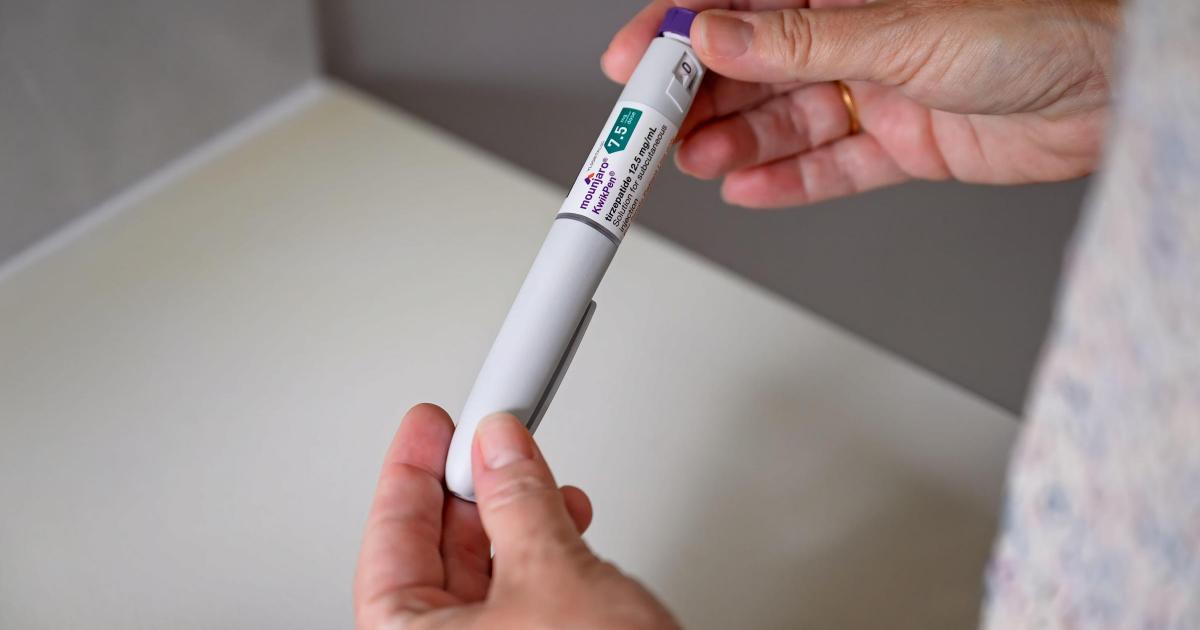
His comments come as up to 5,000 people in Scotland from the most deprived areas are expected to take Semaglutide injections as part of the multi-million pound study being led by Glasgow University.
The findings hope to provide insight into the lives of people living with obesity and health inequalities across the UK and, if successful, it could lead to a wider rollout of the injections throughout the country.
“This showcases Scotland as an area which does ground-breaking research,” Professor Gill, who is leading the study, told The Herald, “I think this is a real opportunity for Scotland to be the go-to place for this sort of research. Scotland can be one of the leaders in this sort of work.”
Read More:
Around 1.2 million adults in Scotland are currently living with obesity – a figure that has risen by around a third over the past two decades.
Professor Gill said the burden is heaviest in the country’s most deprived communities, where rates are nearly double those in the most affluent areas.
A quarter of all life years lost are linked to obesity, which costs the Scottish economy an estimated £5.3 billion annually.
While drugs such as semaglutide (commonly linked to the brand Wegovy) and tirzepatide (Mounjaro) have shown positive results in clinical trials, they are not yet widely prescribed on the NHS.
Prof Gill said the drugs are “very effective” in helping people lose weight and this in turn helps with any cardiovascular issues such as heart attacks and treating diabetes.
“There’s a whole range of issues that are mediated by obesity and that if you provide these drugs you might prevent it happening,” he said.
Professor Jason Gill, Professor of Cardiometabolic Health at University of Glasgow (Image: Stewart Attwood)
Current Scottish Medicines Consortium guidance limits weight loss drug use to people with a BMI over 30 and at least one related health condition. However, current roll-out is for a BMI of 38 plus a co-morbidity.
Professor Gill warned that this has created the beginnings of a two-tier obesity system, where people who can afford private prescriptions access the drugs while those most at risk are left waiting.
“We estimate there are around 100,000 private prescriptions for these drugs in central Scotland alone,” he said. “The status quo risks widening health inequalities so it’s important that we work out ways to use this new tool effectively in the NHS and the way we provide the drug ensures equitable access.”
The study hopes to find a way to deliver the drugs cost-effectively, fairly and efficiently through the routine NHS primary care system.
At the moment, obesity is often treated through a specialist management service.
Professor Gill said there is “simply not capacity” to treat the number of people seeking support under this setting.
“Moving the treatment to earlier primary care can enhance access but there are challenges,” he said, “GPs are very busy so we need to work out a way to deliver these drugs through primary care which doesn’t overwhelm the system.”
The trial, backed by drug manufacturer Novo Nordisk, will provide Semaglutide to participants for three years, followed by a further consultation period of three years.
Initial results are expected by 2029 or 2030, with recommendations to be presented to both the Scottish and UK governments.
It is still to be determined which GP practices will be used for the study and how it will be delivered as a parallel system to the NHS must be established.
Professor Gill said the study will be carefully monitored and there are “no major concerns” around the safety of the drugs.
“The benefits are overwhelmingly greater than any potential side effects,” he said. “All drugs carry some risk, but the evidence so far is very reassuring.”
He added that Scotland’s integrated health records will allow researchers to track participants’ health, healthcare use and costs across the system.
“Because we’ve got such good electronic health records in Scotland, we can pick up every single contact someone has had with the health system automatically. So what we can do is we can get this integrative picture of health service use and healthcare costs and events across the whole board and pull everything together,” Professor Gill said.
Professor Gill also said Scotland has a “more diverse” population in comparison to Scandinavian countries, meaning the findings can be “widely applicable” to other settings.
The trial is expected to be rolled out to eligible patients by late 2026 or early 2027.
The project involves industry leaders Novo Nordisk and IQVIA, as well as academics at the Universities of Edinburgh and Dundee.
“This is a real pan-Scotland effort,” Professor Gill said. “We’ve got a really good and thriving academic environment so lots of top level research being done here.”
The UK government has provided an initial £650,000 for the Scotland CardioMetabolic Impact Study (SCoMIS), with more money set to be released by the government if the design model for the study is approved later this year.
UK Health Innovation Minister Dr Zubir Ahmed said: “As a practicing NHS surgeon and Glasgow MP, I know firsthand the impact of the obesity crisis that plagues Scotland – and the litany of health problems it leads to.
“More than one in three adults in Scotland’s most deprived areas are living with obesity. The UK government is committed to tackling inequality wherever it finds it in our country.
“It’s why this landmark UK government investment is targeting help where it’s needed most in Scotland and meeting people where they are and backing helping the NHS services they trust to treat them.”
Jenni Minto, Scottish minister for public health, said the Scottish government was proud to be leading the way in tackling obesity.
The minister said: “This study places patients and communities at the heart of cutting-edge research into weight-loss medicines, ensuring we build the evidence needed to deliver the greatest benefit to those who need it most.”