

Northern Ireland has the largest disability employment gap of any UK region, with evidence indicating this has been the case for some time.
However, the current employment rates for people with disabilities and those without vary slightly from those quoted in the claim.
According to NISRA’s latest Labour Force Survey update, the employment rate for people with a disability is 41.3%, compared with 82.2% for people with no disability.
The figures mentioned in the claim are from 2021, whereas the current statistics cover April-June this year.
During an Assembly debate on 30 September about the skills gap between young people and businesses, Alliance Party MLA Michelle Guy claimed:
“Northern Ireland continues to have the largest disability employment gap of all the regions across the United Kingdom. The latest figures report that the employment rate for disabled people in Northern Ireland is 38·3%, while the rate for those without a disability is 85·9%.”
There are two aspects to this claim:
Among all regions of the UK, Northern Ireland has the largest gap between its disability employment rate and its rate for people without disabilities.
The latest figures (as of 30 September) indicate that Northern Ireland has a 38.3% employment rate for people with disabilities and an employment rate of 85.9% for people without a disability.
The first part of this claim is supported by evidence.
The disability employment gap is the difference between the employment rate of people with a disability and the employment rate of people without a disability. Data from the Northern Ireland Statistics and Research Agency (NISRA) and the Office for National Statistics (ONS) indicates that Northern Ireland has the highest disability employment gap of any UK region.
Ms Guy did make one error in her claim. The statistics she quotes in her claim are not the “latest figures” – they are from 2021.
However, the most recent data at the time of her claim (and also a new analysis published just this week) both also support the claim that the disability gap is larger in NI than in any of the other 11 regions.
At the time of her claim, the most recent available data – covering April-June 2025 – indicated that Northern Ireland’s disability employment rate was 41.3% and the employment rate for people without a disability was 82.2%, suggesting a disability employment gap of 40.9%.
For more information, please read on.
FactCheckNI contacted Ms Guy about her claim. She responded by pointing us to a press release from the Equality Commission (ECNI) and data from the Northern Ireland Statistics and Research Agency (NISRA).
The press release, published on 20 March this year, includes a joint statement from Derry and Strabane Labour Market Partnership, Northern Ireland Union of Supported the Employment (NIUSE) and the Equality Commission for Northern Ireland which states:
“Unfortunately, Northern Ireland continues to have the largest disability employment gap of all the regions across the United Kingdom. The latest figures report that the employment rate for disabled people in Northern Ireland is 38.3% while the rate for those without a disability is 85.9%.”
These figures match those in the claim – and also tally exactly with the figures found on NISRA’s data research update, published last December, which features statistics updated to be correct as of 2021:
The employment rate for people without disabilities was 85.9% (increased from 83.7% in 2011)
The employment rate for people with disabilities was 38.3% (increased from 31.4% in 2011)
These appear to back up the claim. However, are more recent numbers available?
NISRA publishes monthly Labour Market Reports looking at various aspects of the jobs market in NI. However, these do not routinely include figures for disability employment or the disability employment gap.
A greater level of detail is found in NISRA’s Labour Force Survey, which includes both annual reports covering calendar years and also quarterly updates. The most recent Labour Force Survey update was published on 21 August and covers the period from April to June this year, inclusive.
According to these most recent figures, the NI employment rate for people with a disability is 41.3% and the employment rate for those without a disability is 82.2%.
These figures are not the same as those quoted by Ms Guy, which are from 2021, although it is also worth noting that there has not been a major shift in either the disability employment rate or the rate for those without disabilities.
A note on labour market statistics
It is worth noting that employment statistics in Northern Ireland are undergoing an overhaul in a bid for more robust and accurate figures. NISRA is publishing quarterly updates on these changes, which are in parallel to broader changes across the UK being made by the Office for National Statistics – which has warned that the accuracy of its labour market figures in recent years should be treated with some caution.
All these reforms follow on from concerns that response rates to Labour Force Survey questions were becoming too low. Nevertheless, these remain the best available data for the jobs market in Northern Ireland and the rest of the UK.
Comparisons with elsewhere
ONS has a dedicated section within its employment statistics for analysis of work and disability.
Its latest annual report on this issue, The employment of disabled people 2025, was published on Tuesday (4 November 2025). As this came after the claim made by Ms Guy, we will look instead at the previous annual report, The employment of disabled people 2024, which was last updated on 20 June this year.
According to the 2023-24 figures, Northern Ireland has the largest disability employment gap of all UK regions, as can be seen in the table below:
RegionDisability employment rate (%)Employment rate for people without a disability (%)Disability Employment Gap (%)North East44.281.737.5North West51.281.430.1Yorkshire and the Humber53.280.727.6East Midlands55.881.725.9West Midlands53.981.627.6East of England56.68326.4London56.278.622.5South East62.484.121.7South West61.384.823.5Wales5181.930.9Scotland52.582.830.2Northern Ireland43.483.740.3
Figure 1 – source: ONS
These figures are shown in the following chart, published by ONS, along with the equivalent figures from a decade ago to provide some guide to how things have or have not changed in that time. According to the ONS:
“All areas of the UK have seen a reduction in the disability employment gap between 2013/14 and 2023/24 except for the North East where the gap has increased by 1.4 percentage point, although this increase was not statistically significant.”
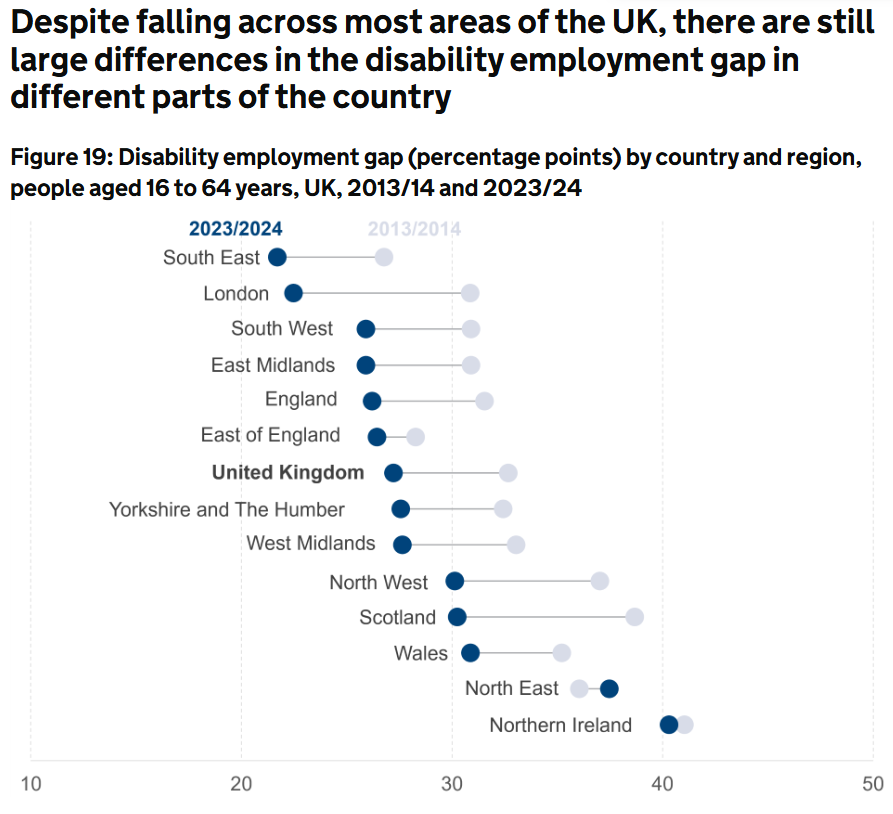
Figure 2 – source: ONS, with raw data supplied by the Annual Population Survey.
The figures for Northern Ireland are different that those in the section above because these are slightly older figures, due to the fact that the latest ONS cross-regional analysis of the disability employment gap was not published until Ms Guy made her claim – but a more recent set of figures for NI specifically, as seen above, was published in July.
Regardless, figures for the most recent year (2024-25) indicate that the difference between the disability employment gap in Northern Ireland and other UK regions has grown in the past 12 months.
Taken altogether, this evidence supports the fact that Northern Ireland has the largest disability employment gap of all UK regions. Ms Guy did make one error in her claim, by referring to data from 2021 as the “latest figures”, but current data also supports the point being made.
In a statement delivered to the Assembly on 6 October, just under a week after Ms Guy’s claim, Communities Minister Gordon Lyons announced a new Disability and Work strategy for Northern Ireland that is now out for public consultation, saying:
“Disability influences lives in many unique and personal ways, and the issues that disabled people face can be complex and intersectional. Given that one in four working-age people in Northern Ireland is disabled, few of us are untouched by disability, yet many disabled people and people with health conditions face multiple barriers that can lead to poverty, social exclusion, inequality and disadvantage, among a range of other challenges. Employment can offer a means to help address and overcome many of the challenges faced, yet, despite the representation of disability across society, only 41% of disabled people in Northern Ireland are in work. That is the worst figure in the UK.”
The consultation features a look at NI’s disability employment gap over time:
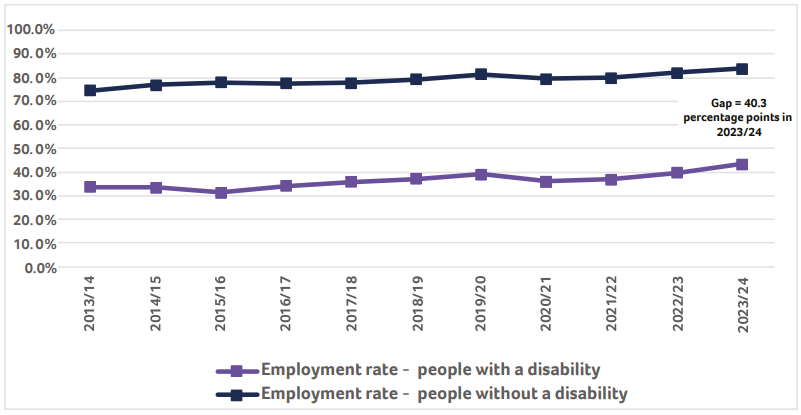
Figure 3 – source: DfC
The consultation also notes that “Northern Ireland has persistently had the worst employment rates for disabled people across the UK, and the greatest disability employment gap.”
However, the comparisons in the consultation are less granular than in this fact check, as they focus on the UK’s four constituent nations rather than its 12 regions.
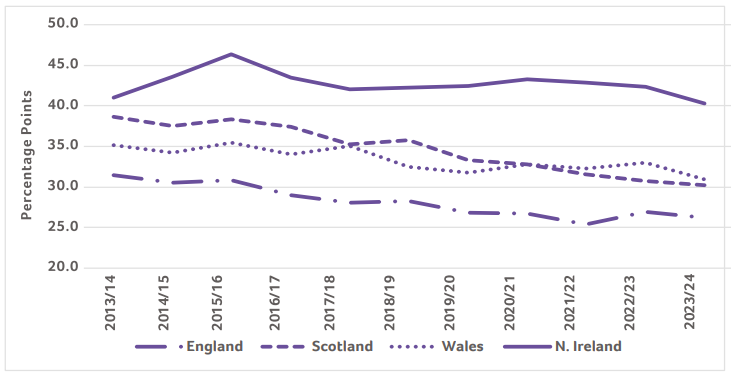
Figure 4 – source: DfC