
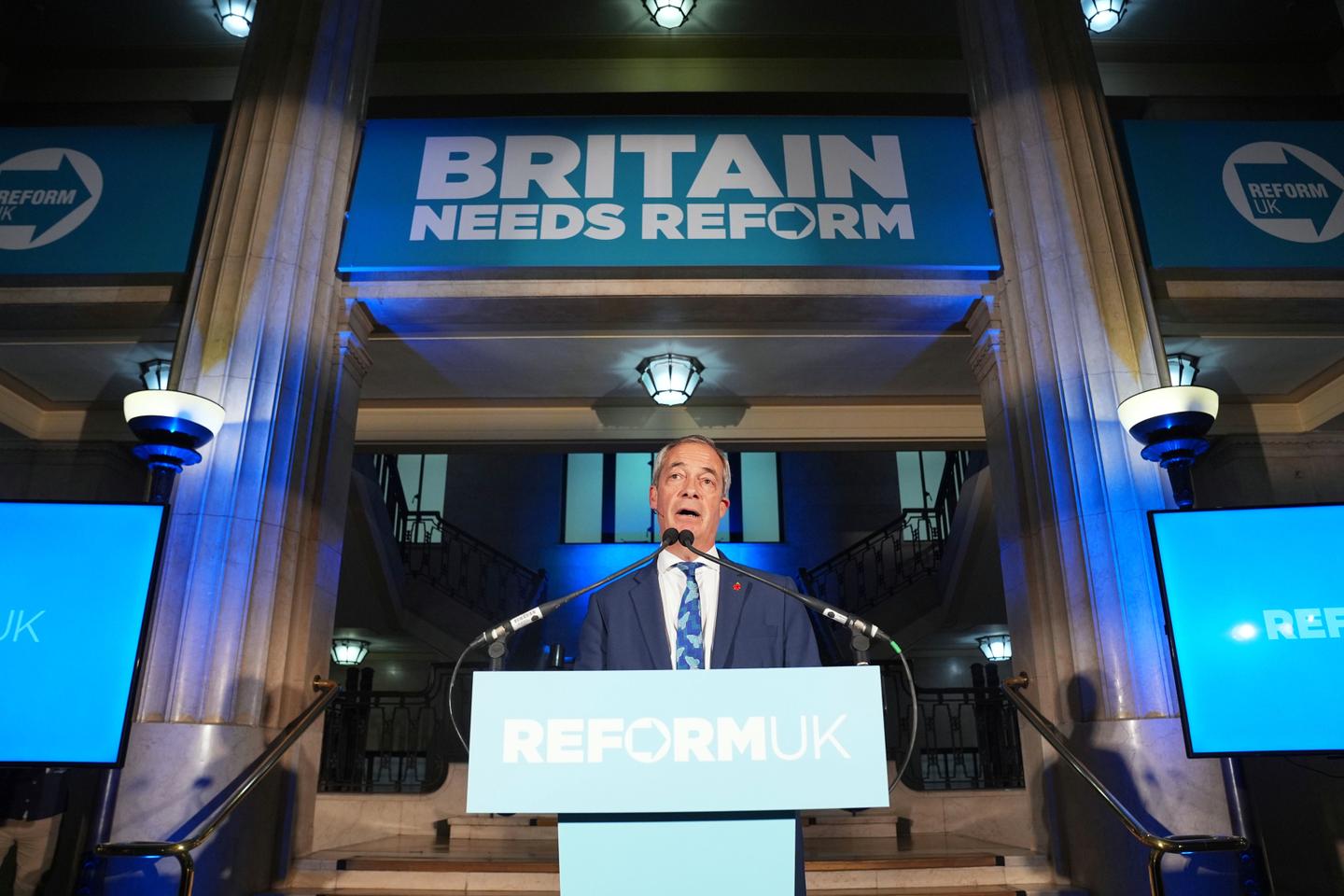
 Nigel Farage, leader of the far-right Reform UK party, delivers a speech in London, United Kingdom, on November 3, 2025. LUCY NORTH / AP
Nigel Farage has never accepted being classified as far right on the United Kingdom’s political spectrum, much less being described as a racist. While, as the leader of the Reform UK party, he has said he would deport hundreds of thousands of foreign nationals if he became Prime Minister, and periodically questions whether Muslims respect “British values,” he has preferred the label of a proponent of “common sense.” At protests, his supporters, who sometimes also support anti-Islam activist and former football hooligan Tommy Robinson, frequently brandish placards bearing a similar slogan: “Not far right, just right.”
Read more Subscribers only Tommy Robinson, a racist hooligan turned mass mobilizer
There is no doubt that the UK’s unique history, with its victorious resistance to Hitler’s Nazi Germany during World War II, has made any connection with fascist movements toxic. Nevertheless, to claim that this history has made the country immune to radical ideologies is merely a myth, as is the idea that the UK’s first-past-the-post electoral system would prevent extremists from gaining power.
According to Nigel Copsey, professor of contemporary history at Teesside University in Middlesbrough, “This story [of a victorious resistance to Nazism] is woven into our post-war national identity. Without doubt, it has created a hostile climate for the extreme right. It fueled the message, exploited by anti-fascists from the Anti-Nazi League of the 1970s through to the present, that the extreme right were ‘sham patriots.’ But this narrative was too blind to racism, giving far-right movements space to grow.”
You have 74.03% of this article left to read. The rest is for subscribers only.