
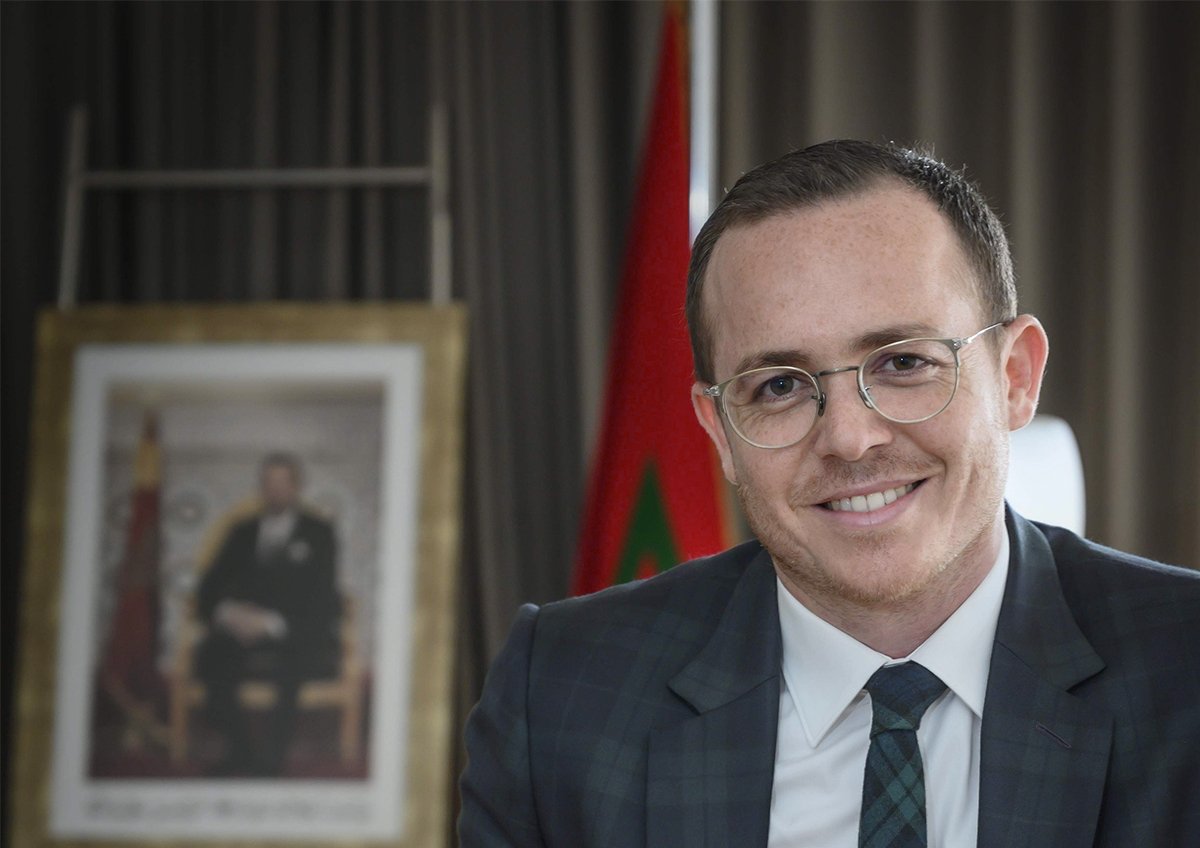
Marrakech – Morocco’s Ambassador to the United Kingdom, Hakim Hajoui, has described the recent United Nations Security Council resolution endorsing the Moroccan Autonomy Initiative as a “historic turning point” in the trajectory of the Sahara issue.
Writing in The Telegraph, he stressed that the UK’s June 1 decision to support the initiative marked “a historic turning point in our 800-year-old friendship,” aligning both kingdoms behind what he calls “the most credible, viable and pragmatic path” to resolving the dispute.
The UN Security Council’s Resolution 2797, adopted on October 31, placed autonomy under Moroccan sovereignty as the basis for future negotiations.
Introduced by the United States as a penholder and supported by the UK, France, and other members, the resolution states that genuine autonomy under Moroccan sovereignty offers “the most realistic path to lasting peace” and calls on all parties to work toward “a final, mutually acceptable political solution.”
Hajoui cast this as an affirmation of a “broad international consensus,” reflecting years of diplomatic work and a gradual evolution in UN language, moving away from earlier references to a referendum model.
In his article, Hajoui wrote that the UK’s support signaled more than a diplomatic position. It reflected “a shared belief that progress begins where principle meets pragmatism,” and reaffirmed, he said, “a core principle of [the UK’s] foreign policy: that partnership with stable, reform-oriented nations is essential to advancing peace and prosperity in an uncertain world.”
London’s decision was taken “in full consistency with its core principles,” he noted, suggesting that the move was the culmination of the belief that the UK’s involvement “could help advance a credible and lasting process toward resolution under the United Nations framework.”
More than 120 countries now regard Morocco’s autonomy proposal as the credible political framework for resolving the dispute.
The timing of the resolution closely preceded the 50th anniversary of the Green March on November 6, 1975, when 350,000 Moroccans marched peacefully to reclaim territory under Spanish control. The march was “a movement of people, but also of purpose,” Hajoui wrote, adding that half a century later, “that spirit of confidence still defines our national direction.”
‘Modern march toward progress’
Alongside diplomatic developments, Morocco has pursued an extensive development program in the southern provinces over the past decades. Major investments have been directed toward infrastructure, logistics, renewable energy, higher education, and health services.
Projects such as the Tiznit-Dakhla expressway and the Dakhla Atlantic Port are expected to strengthen Morocco’s links to African, European, and Atlantic markets. Hajoui referenced these changes, calling them part of Morocco’s “modern march toward progress,” pointing to steady growth and institutional consolidation in the region, rather than short-term policy shifts.
Voter participation has also been cited as part of this trajectory. Turnout in the southern regions exceeded 66% in the 2021 regional elections, among the highest nationwide.
These regions have been operating under the 2011 Constitution and the 2015 framework of advanced regionalisation, which granted elected regional councils expanded powers in planning and development.
In parallel, a recent analytical report from the African Centre for Strategic Studies and Digitalisation (CAESD) described the southern provinces as “an advanced laboratory” for territorial governance under autonomy.
According to the report, the success of this model will depend on strengthening regional councils’ competencies, securing economic sovereignty in strategic sectors, and ensuring transparent governance.
The report recommended maintaining public control over critical assets, developing local value chains in fisheries and renewable energy, expanding university and vocational training offerings, and improving digitalisation of public services through clear accountability mechanisms.
It identified as priorities the creation of special economic zones in Dakhla and Laâyoune, the establishment of investment screening mechanisms to safeguard strategic assets, and the development of local value chains in fisheries and renewable energy.
In addition, the report underlined the need to complete logistical integration with the rest of the country and to link the region to broader African economic networks. In this context, autonomy’s sustainability is connected to continental integration efforts, including strengthening transport corridors toward African markets and positioning Dakhla as a diplomatic and economic platform.
‘Two kingdoms built on centuries of friendship’
In Hajoui’s view, the recent diplomatic developments also reinforce the strategic dimension of UK-Morocco cooperation.
The Enhanced Strategic Partnership signed earlier this year “strengthens cooperation across trade, energy, and innovation,” he noted, referencing the readiness of UK Export Finance to support up to £5 billion in Moroccan projects.
He labeled Morocco and the UK as two kingdoms built “on centuries of friendship, that cooperation is more than ever about creating sustainable growth and enhancing security in an uncertain world.” The partnership, he argued, reflects the belief that “enterprise and sustainability can go hand in hand.”
As Morocco marks five decades since the Green March, the convergence of diplomatic recognition, development programming, and regional governance reforms places autonomy under Moroccan sovereignty at the center of both national planning and international engagement.
The implementation phase, observers note, now depends on translating these frameworks into equitable and sustainable outcomes on the ground.