
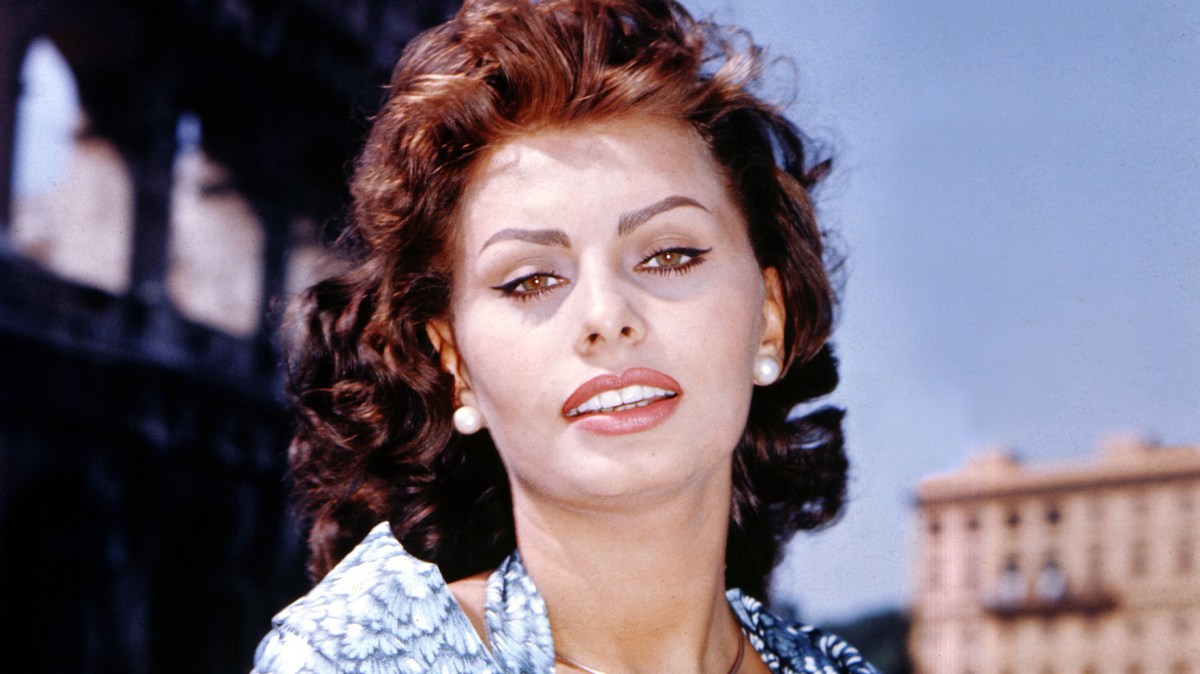
Cary Grant proposed to her. Omar Sharif told her he dreamt of her naked. Clark Gable admitted to “the wrong thoughts” after working with her. Peter Sellers wrecked his marriage by telling his wife how he was going to run off with her. “It was total madness, the way he kept babbling to me about Sophia Loren,” his soon-to-be-ex, Anne Howe, said. “Total and utter madness.”
To her sons, Edoardo and Carlo, Loren cut a very different figure. She was their mammina in a creased apron, hands covered in flour, kneading the struffoli dough, who brought the whole family together with her Sunday ragù alla napoletana. A quiet, meticulous woman who went over shopping lists and menus like a scholar over scrolls; a Scrabble whizz who beat Peter O’Toole and Richard Burton; a diligent professional who received potential film directors in her living room, listening and asking questions about make-up, shoes (flats or heels?) and how they would make her walk — discussions that Edoardo would listen to, rapt, while his elder brother practised the piano in the adjacent room.
“I would sit in a corner and listen to these conversations because they really, really interested me,” says Edoardo, 52, speaking from his home in Geneva. He grew up to be a director himself, working with his mother on three films.
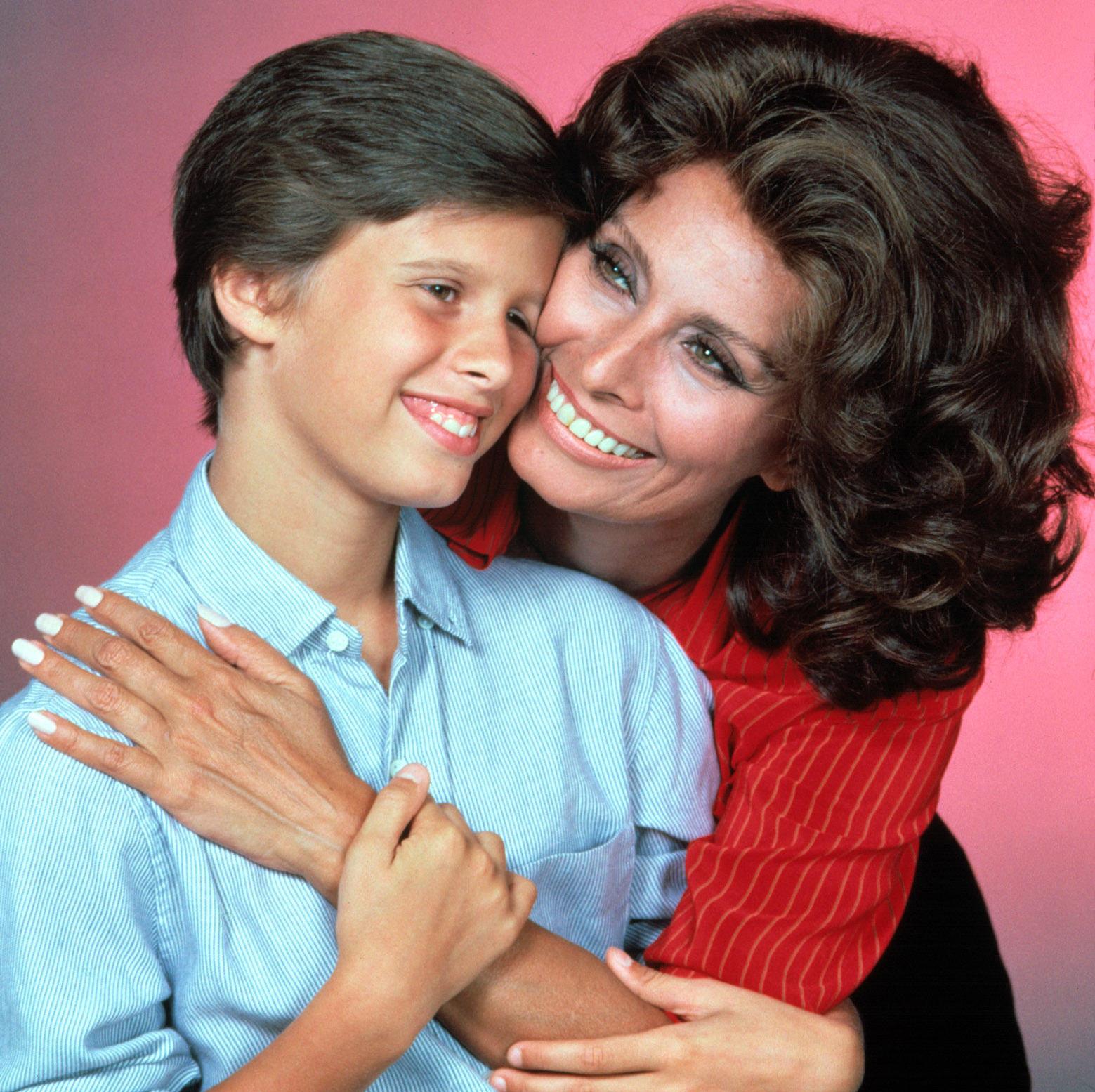
Loren with Edoardo in 1984
ALAMY
“She never made a big deal out of the big deal, because this kind of ‘male gaze’ approval never defined my mother — she always saw it like a game. It was a silliness that, yes, was part of who she is: she’s a very beautiful woman and my mother always enjoyed the attention. But she never took it seriously and always had the discipline and the wisdom not to allow herself to be defined by it. And what happens when you do that? You stay beautiful for ever. That’s why we’re still watching her movies, after all these years.”
Today there are countless TikTok videos showing how to draw your eyeliner like Loren, who celebrated her 90th birthday last September with a screening of one of her first films, The Gold of Naples (1954), at the Cinema Moderno in Rome. The film ends with Loren’s triumphant, rain-soaked stroll through the streets of Naples, wearing an impudent smile that seems to sum up the hope of Europe as it emerged from the rubble of the Second World War.
A newly restored edition is among the films being shown in a retrospective at the British Film Institute in London next month, alongside the comedies Too Bad She’s Bad and Yesterday, Today and Tomorrow — in which she reduced Marcello Mastroianni to wolf howls with a striptease — and the Hollywood blockbusters El Cid and Arabesque. Not only Italy but the world ate her up.
“In terms of European actresses she is unique,” says the season’s programmer, Adrian Wootton. “She is the only Italian actress of her generation who became a blockbuster star around the world. She starts off in that now rather dubious category of ‘shapely lady’, and rapidly demonstrates that not only is she incredibly attractive, but she has a gift for comedy. She can do extreme drama and tragedy. She also understands the camera and has an amazing capacity to be understated and do things with tiny gestures. She’s got the whole thing. Very few actors have that complete command of cinematic craft.”
The internationalism of Loren’s career is owed, in no small part, to the efforts of her husband of 50 years, Carlo Ponti — a film producer, agent and wheeler dealer, who spotted Sofia Scicolone, aged 16, in the line-up of a beauty contest he was judging in 1950. Twenty-two years her senior, Ponti organised a screen test, signed the teenager to a movie contract and, in the years to come, moulded her for the international market, changing her name to Sophia Loren, helping her to shed her Neapolitan accent and employing an English coach who painstakingly went over every single technical term on the set, from “take one” to “action”.

With Peter Sellers in 1960
EVENING STANDARD/HULTON ARCHIVE/GETTY IMAGES
“The thing is, he couldn’t have done it if she wasn’t incredibly talented,” Wootton says. “But by the time she was 21, before she’d even left Italy, she’d made over 25 films.”
In 1957 she and Ponti moved to America to complete a five-picture deal at Paramount, including The Pride and the Passion and Houseboat with Grant. Pursuing her ardently between films, Grant presented Loren with a bouquet of yellow roses upon learning that she had chosen Ponti over him. In fact the Ponti-Loren bond was to prove unshakeable: he did the deals for most of his wife’s films and even, on occasion, chose the directors.
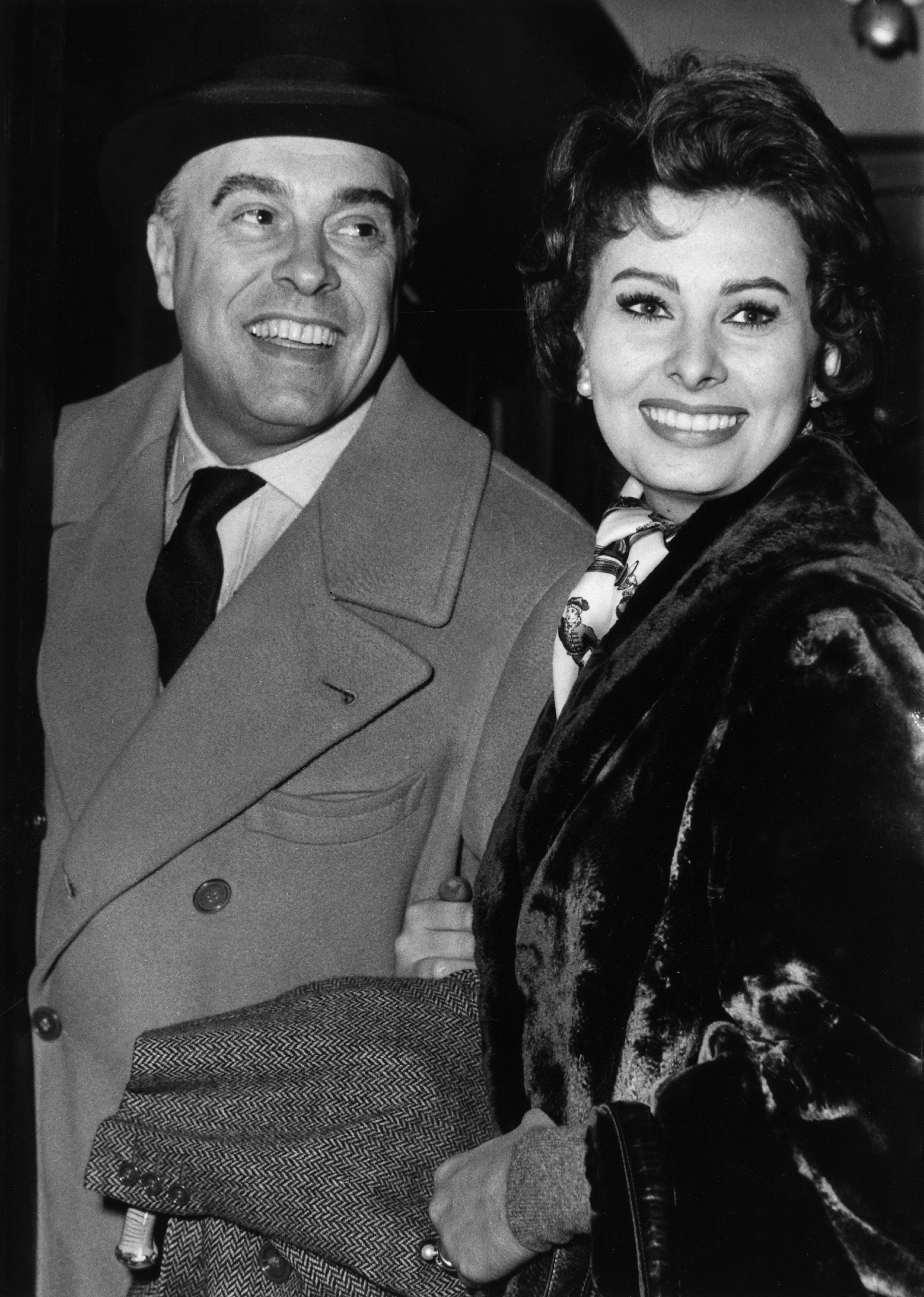
With Carlo Ponti in 1957
ULLSTEIN BILD/GETTY IMAGES
“Part of the connection between my parents was that he was very much a father figure for my mother,” Edoardo says. “In addition to the romantic love and the attraction, he provided that sense of security, that sense of protection, which my mother was always in want of.”
• Sophia Loren on The Life Ahead and the men from her past, from Cary Grant to Marlon Brando
Born in a charity ward for unmarried women in Rome, Loren barely knew her father, and was brought up by her mother, Romilda, and grandmother in provincial Pozzuoli, just outside Naples. During the war she frequently went hungry: she was called “Sofia Stuzzicadenti” (“toothpick”) at school, because of her gangly, emaciated form. When she was 16 her mother moved them both to a series of cramped, rented rooms in Rome and sought out Sofia’s father for financial support. When he spurned them again, Romilda decided to return to Pozzuoli. She was stunned when her daughter announced she was staying on to seek her fortune.
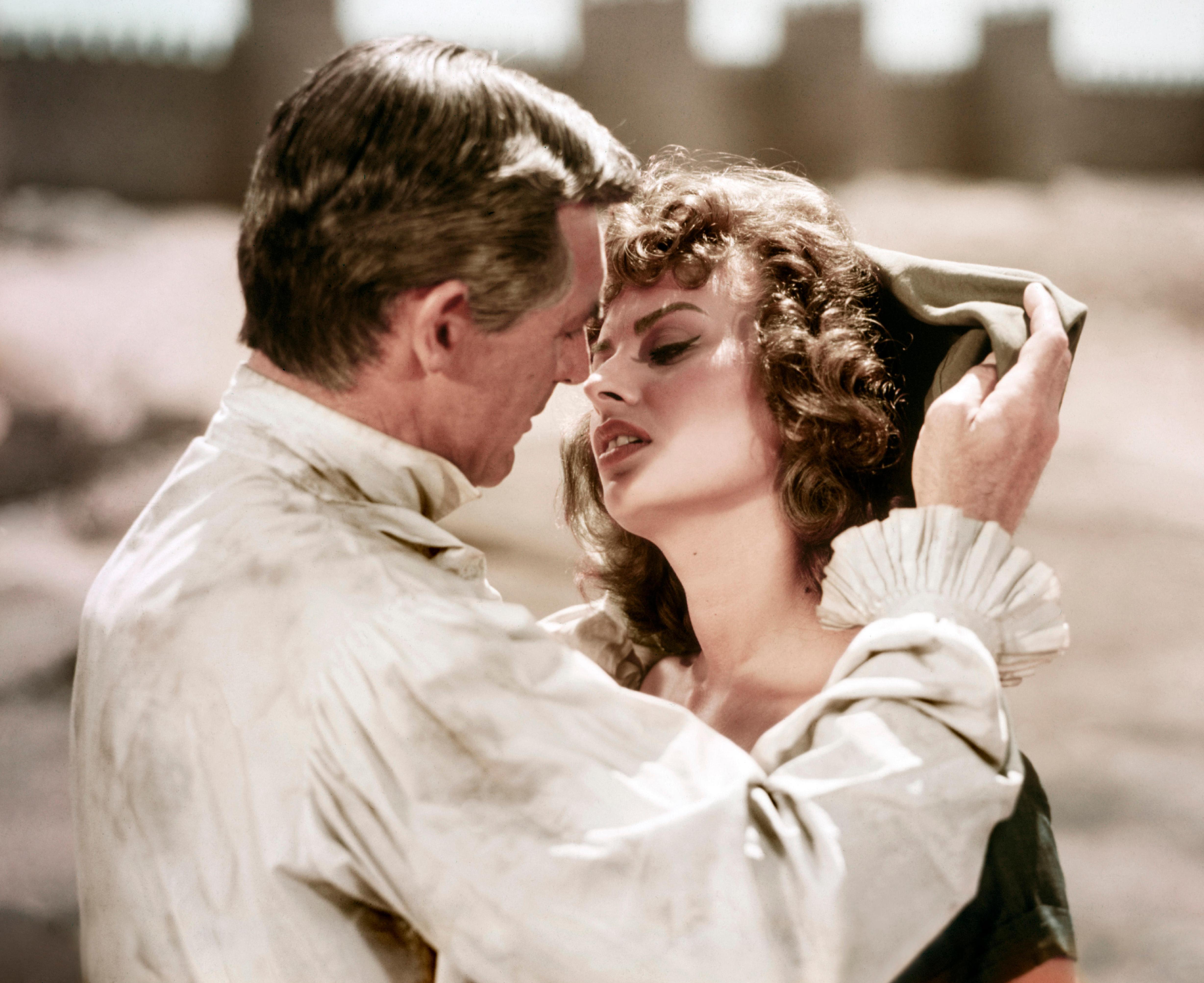
Cary Grant and Loren in The Pride and the Passion, 1957
ALAMY
“Imagine today a 16-year-old daughter telling her mother, ‘I’m not leaving. You go, I’ll stay,’” Edoardo says. “I mean, it’s absolutely unthinkable. Every character that my mother has built on screen comes from the fabric of her trauma — there’s no question. She understood that poverty for an artist is gold, because adversity, not knowing where your next meal is going to come from, all of those elements create such a wealth of inner life. [She understood] the humility of being in the service of something, her characters, her directors. She has never been the diva. She’s always a team player.”
That Neapolitan tenacity showed itself in her decades-long struggle to get her marriage to Ponti recognised by the Vatican, after the Catholic church refused to acknowledge it — Ponti was married already, and divorce was illegal in Italy. This led to a charge of bigamy that eventually forced the couple to move to France, where their marriage was legally recognised.
One of the reasons that Loren and Ponti made so many movies abroad is that they feared arrest if they returned to their home country. “When Loren won the Oscar for Two Women it was a seismic moment for European cinema, the first non-English performance to win an Academy Award,” Wootton says. “She was doing some of her greatest work at the same time with [the director] Vittorio De Sica and Marcello Mastroianni — Two Women, Marriage Italian Style, Yesterday, Today and Tomorrow. And during this whole period she and Ponti are wondering, are they going to get arrested? Or going to prison?”
• Read more film reviews, guides about what to watch and interviews
They kept all this from their sons, and later moved to Geneva, for its schools and to be away from the paparazzi. In Switzerland the family enjoyed years of relative normality — although Carlo, the quieter son, now an orchestra conductor, often complained, “You’re not like the other mothers” at school drop-off (Loren wore jeans to be as inconspicuous as possible).
“I would say that the Eighties was a decade where she definitely slowed down,” Edoardo says, although “slowing down” involved writing a memoir, cookbooks and launching a fragrance line; she was one of the first actresses to do so. She also occasionally returned to the screen, often for Edoardo, most recently in 2020. In The Life Ahead, which concludes the BFI season, Loren plays an elderly woman who is subject to occasional dementia, and who looks after a 12-year-old Senagalese orphan.
On screen, she appears without make-up, fragile and disorientated. “Normally, my mother always has a little bit of an eyelash extension,” Edoardo says. “There are certain things she has done all her life, but for the last third of the movie she has nothing.” At one point her character comes to her senses in the pouring rain, an echo of her triumphant walk in The Gold of Naples all those years ago.
Loren is as magnetic a screen presence at 85 as she was at 19. What was it like for her son to shoot those scenes? “I was taken aback because your parents are always so strong and omnipotent — my mother is larger than life. She’s known for that strength, that indomitable fighting spirit — and here it was the exact opposite. Even for me as a son, I was surprised how vulnerable she looked. After shooting, I said, it’s really amazing how you did that. And she very simply said, ‘Well, I just leant into my age.’ She had the courage to just embrace the reality of this character.”
Two years ago Loren underwent emergency surgery after a fall at her Swiss home fractured her femur. But less than a year later she made the long trip to Los Angeles to celebrate her granddaughter’s birthday and high school graduation, walking with a cane, her famous russet coiffure intact. She has now made a full recovery, Edoardo says. Will she make another movie? “An actor never retires,” he says with a smile.
Sophia Loren: Hollywood Style, Neapolitan Spirit, presented in partnership with Cinecittà and the Cinema Department of the Ministry of Culture of Italy, is at BFI Southbank, London, Aug 1-31, with select titles on BFI Player