
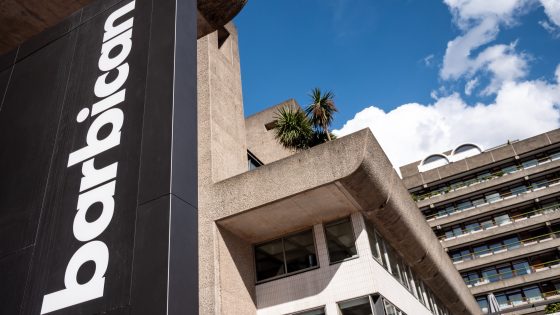
The Turner Prize-winning practice is co-leading the multidisciplinary consortium with Paris-based Designers Unit, and will also work with Tactile Studio.
The project will ensure new ‘intuitive and accessible’ visitor journeys through the Brutalist-style complex, which has suffered from poor navigation in the past. The wayfinding upgrade coincides with plans to restore and refurbish key public spaces at the Barbican Centre, including its foyers, lakeside terrace and conservatory.
The upgrade will take place alongside the first phase of the £230 million Barbican Renewal programme, which is being carried out by Allies and Morrison and Asif Khan Studio. The two practices revealed their latest plans for the scheme last May.
Barbican director of buildings and renewal Philippa Simpson said: ‘We’re thrilled to announce the appointment of Assemble, working with Designers Unit, to lead the development of a new wayfinding scheme for the Barbican Centre.
‘Assemble’s empathetic and intelligent design sensibility and impressive track record of working with communities and users make them the ideal practice to lead this process.
‘Combined with Designers Unit’s experience in navigating challenging spaces, this expert team are perfectly placed to bring clarity to the Barbican site while retaining the magic of its complexity.’
Assemble founding partner Giles Smith said: ‘It is a wonderful privilege to be working with such an extraordinary and well-loved institution as the Barbican Centre.
‘We’ve long been fans of the centre and its architecture, and are looking forward to developing a wayfinding system that helps even more people enjoy its many charms.’
Designers Unit founding partner David Lebreton added: ‘Finding your way around the Barbican Centre has always been a challenge, and I believe we could even think of it as part of its identity. So, it’s quite an opportunity, and we are both proud and very happy to take it on.’
The Barbican Centre was designed by Chamberlin, Powell and Bon and completed in 1982 as the centrepiece of the City’s large-scale Barbican Estate post-war reconstruction. It features a concert hall, theatre, cinema, two art galleries, a conference centre, library, restaurants and public foyers.
Its current wayfinding system, developed by design studio Cartlidge Levene, has been in place for more than 20 years.
In recent decades, the building has received a series of upgrades. AHMM completed a £12.6 million overhaul of the complex in 2006 and later created a £3.4 million street-level cinema complex and renewed shop. In 2019, Ruff Architects carried out an environmental upgrade of the centre’s main art gallery.
In August, the City of London Corporation and Barbican Centre announced a search for ‘visionary’ proposals for the future of the Barbican’s vacant exhibition halls.
Subject to planning permission, the Barbican Renewal programme is set to begin in 2027 with its first phase complete in time for the Barbican’s 50th anniversary in 2032.
Assemble is a London-based practice working across the fields of art, architecture and design. In 2015, it won the Turner Prize for its Granby Four Streets project in Liverpool.