
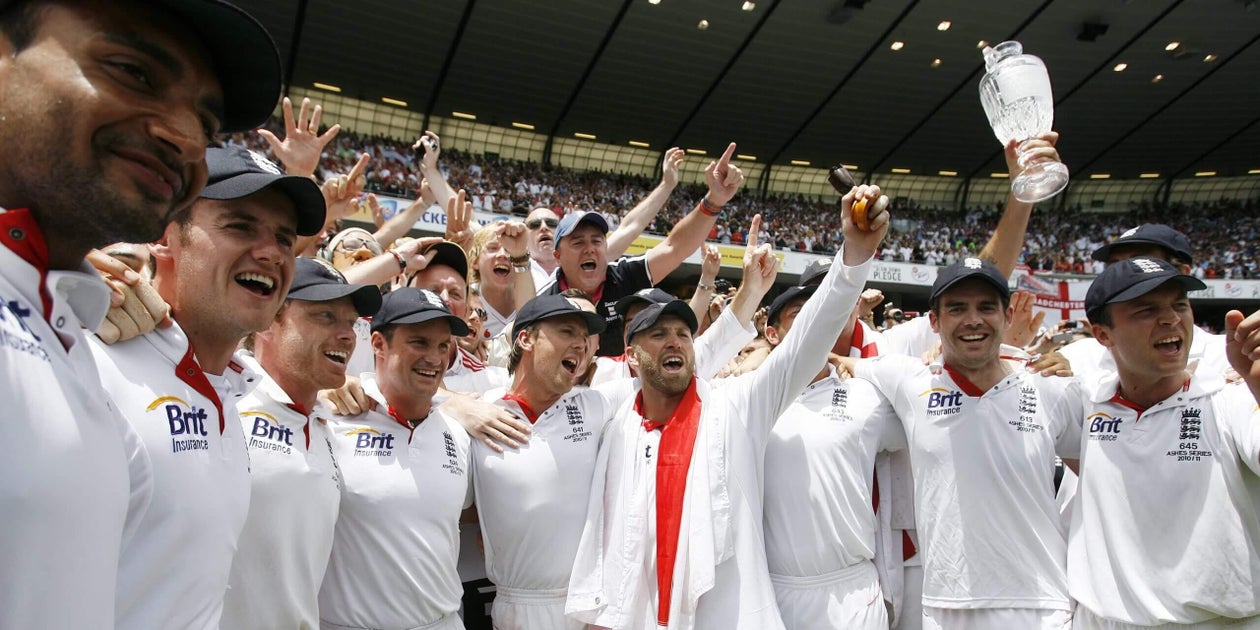
England will begin the Ashes in Perth next week with the weight of history against them.
Not only have they won only five series in Australia since the end of the Second World War, but they have been comprehensively beaten in the last three away Ashes without winning a single Test match.
But there is one Ashes outlier. In 2010-11 the England team led by captain Andrew Strauss and coach Andy Flower won 3-1 with all three victories, remarkably, by an innings.
It remains one of the biggest achievements in modern English cricket history. But how did they do it? The Athletic spoke to the class of 2010-11 to find out.
England’s preparations began unconventionally. Strauss and Flower took the team to a training camp led by former SAS soldiers in Bavaria, Germany, before the tour. The idea was to bring the team closer together, but results were mixed.
Andrew Strauss: We did a lot of planning and one of the things that came across was the need to be resilient. We didn’t know what was going to come our way but we knew it would test us mentally and physically. That was the thinking behind the Germany camp. The idea was to go somewhere where we’d be pushed very hard but bound together as a consequence. It definitely worked.
Graeme Swann (England’s off-spinner): It was nonsense. I told Andy Flower this as well: “If you ever try again to put me in a field in a tent with a psychologist who snores like a chainsaw that would be it!”

England fast bowler Steven Finn flies head-first down the rock face during an abseiling exercise (Stu Forster/Getty Images)
One player left quite a mark on a team-mate in Bavaria, almost putting fellow fast bowler Jimmy Anderson out of the Ashes before the series had even started.
Chris Tremlett (England fast bowler): We were told there would be a special guest on the trip — Joe Calzaghe (former boxing super middleweight world champion), who was supposed to give us a boxing lesson. But he couldn’t make it and the military guys in charge said: “We’re still going to do this.”
It wasn’t really policed. Basically it was a 30-second brawl against a team-mate and, for some reason, I was put up against Jimmy. We had head guards on and it was just: “Beat the crap out of each other for 30 seconds and self-defend.”
When someone like Jimmy starts hitting you your reaction is to hit back, which I had been told to do. So I belted him as hard as I could and unfortunately cracked his rib.
It was touch and go about Jimmy bowling at the start of the tour. I can’t remember how quickly it got out in the press but someone did say to me: “If you get asked about Germany, don’t say anything about the boxing.”
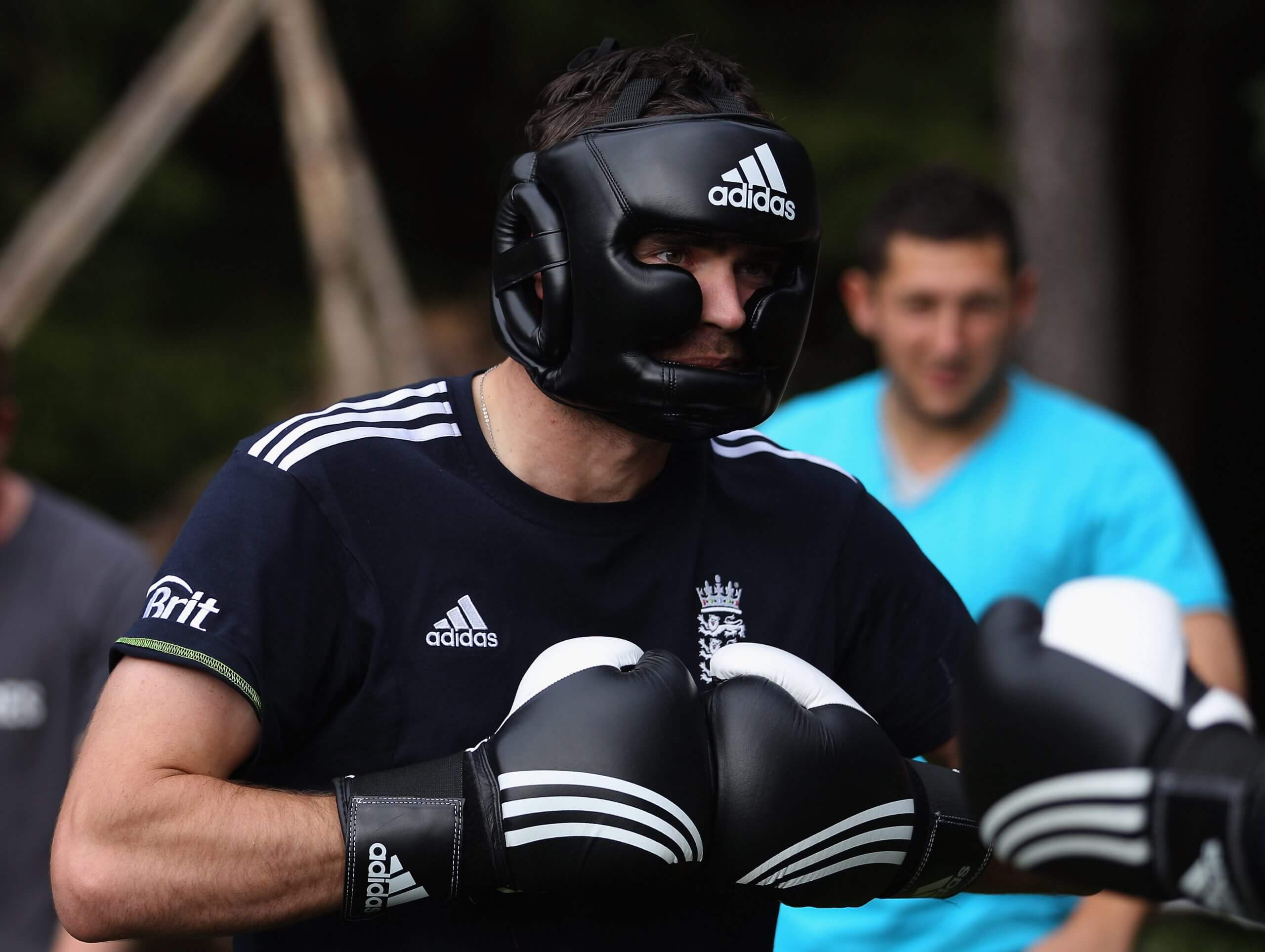
Jimmy Anderson prepares to be pummelled by Chris Tremlett (Stu Forster/Getty Images)
Things improved once England arrived in Australia. The team played three first-class matches as preparation for the first Test in Brisbane.
Strauss: We treated the warm-up games as a mini-series. We wanted to win 3-0 (they won two and drew the other) and we picked our best side apart from the final game when we sent our first-choice bowlers up to Brisbane. It was about making a statement, getting into good habits, some success under our belts and improving our confidence.
Swann: The forecast was horrific for the last day of the South Australia game in Adelaide so, the night before, we probably had one glass of wine too many, turned up next morning and it was so sunny it was cracking flags. You’d never seen 11 more miserable people take to the field. But within 10 minutes this big black cloud appeared and absolutely banged it down, flooding the ground.
So we went from the 11 most disillusioned human beings to the 11 happiest within a minute. We got in the changing room, put music on and everyone started doing dances. Then Paul Collingwood said: “Do you remember last night in the nightclub doing that sprinkler dance at 3am?”
Just at that moment Andy Flower walked in and said: “What time?” Hilarious.
I didn’t have any content for my video diary that week so I thought “I’ll have that” and the sprinkler became a big part of the diary and the series.
Swann’s video diaries, posted on the ECB website, were an early foray into the world of social media and became increasingly popular. Behind the camera was England’s first video producer — now a respected filmmaker.
Barney Douglas: There was no masterplan, we just wanted to have something that was real and not remotely professional. It was just a window into the personalities of the players. The sprinkler dance started to take off when we did an episode at a sponsor’s day and got everyone doing it on film, including the press.
I asked people to send in videos of themselves doing the sprinkler naively expecting 10 or 15. We got thousands.
It blew up my email. There was a whole school doing it and even a vicar in a church. There was a whole togetherness about the tour party, including the media, and small things like that brought it all together.
Swann: I was given carte blanche by the ECB to do whatever I wanted which was very refreshing. Barney was making music at that time, too, and we even used one of his songs on the last episode and took it to No 1 in the indie charts.
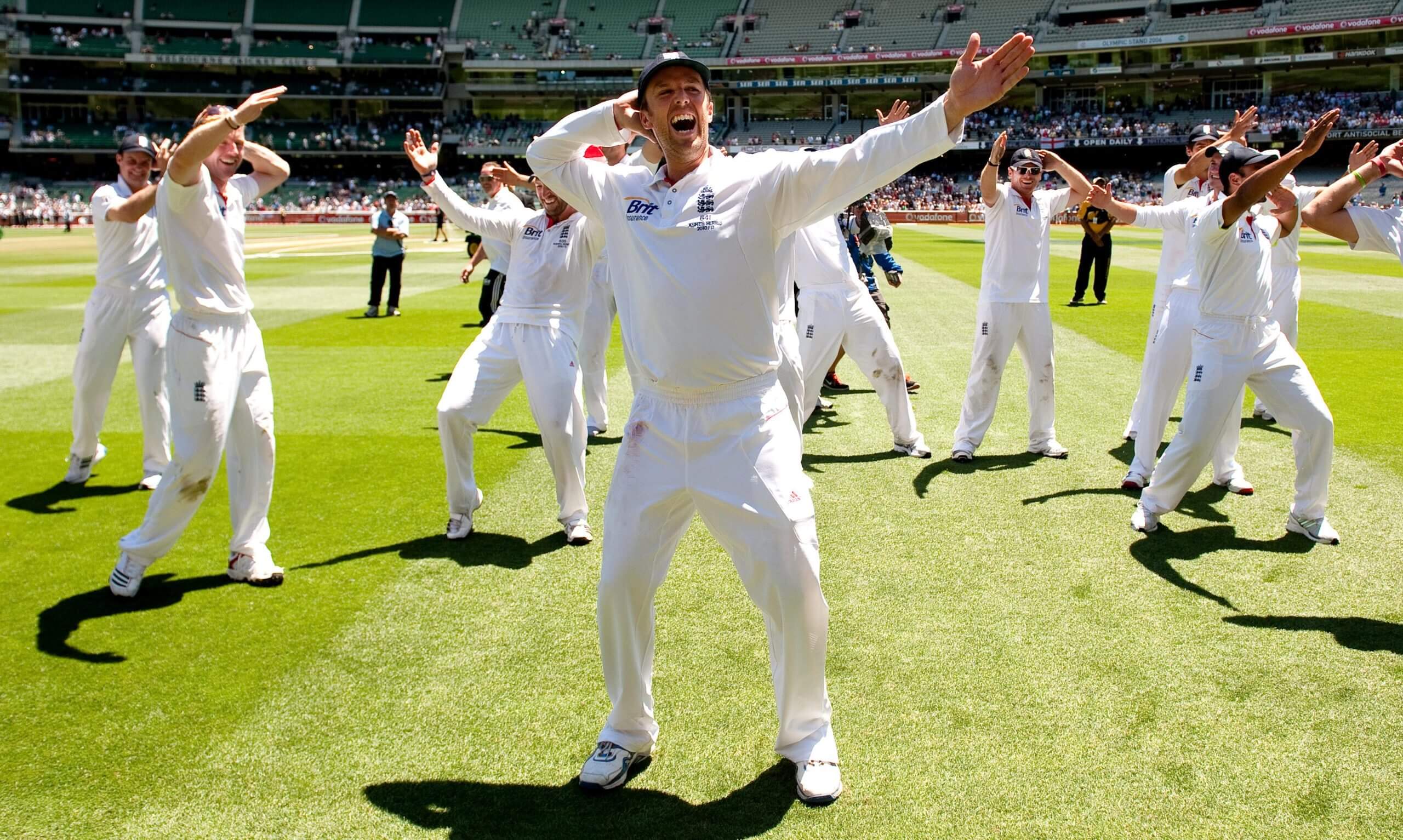
Graeme Swann conducts the England team through a celebratory ‘sprinkler’ in Melbourne (Gareth Copley/PA Images via Getty Images)
So England were in good spirits when they arrived at the Australian fortress of the Gabba for the first Test, only for the first day of the series to deliver a reminder of just how tough playing Ashes cricket in Australia is. The captain was dismissed third ball, Peter Siddle took a hat-trick and England were bowled out for 260. Australia piled on 481 in reply.
Strauss: It was brutal. I was so keen to set the tone and lead by example. To get out so quickly was a hammer blow. For the first three days of that first Test it was same old story, here we go again. But the way we finished that Test was a huge momentum swing in our favour — something not many people expected.
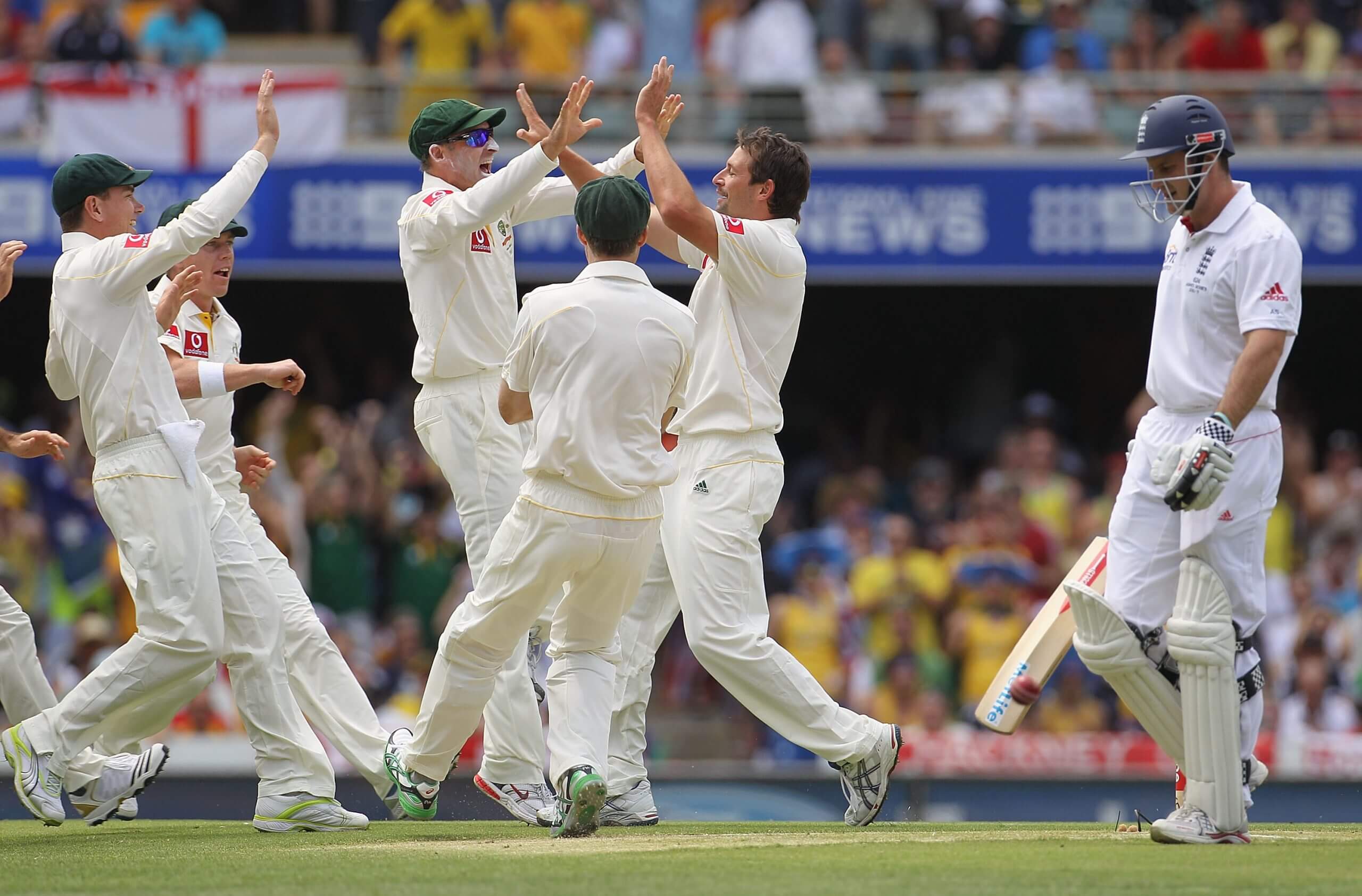
Ben Hilfenhaus celebrates as Andrew Strauss trudges off after his third-ball dismissal (Hamish Blair/Getty Images)
In their second innings, England rallied to post 517 for one on the fifth day and declared before securing a draw, with centuries for Strauss and Jonathan Trott, and an unbeaten double hundred from Alastair Cook. It was the start of an extraordinary Ashes for the Essex opener, who would end the series with 766 runs at an average of 127.66.
Sir Alastair Cook: Unfortunately I peaked at 25! It was an extraordinary seven weeks when I played as well as I could possibly play and only on another couple of occasions have I played as well as that. I was lucky it happened in such a big series.
Jonathan Trott: I remember Goochie (batting coach and former England captain Graham Gooch) taking a photo of the scoreboard when it read 517 for one because it was such a big thing.
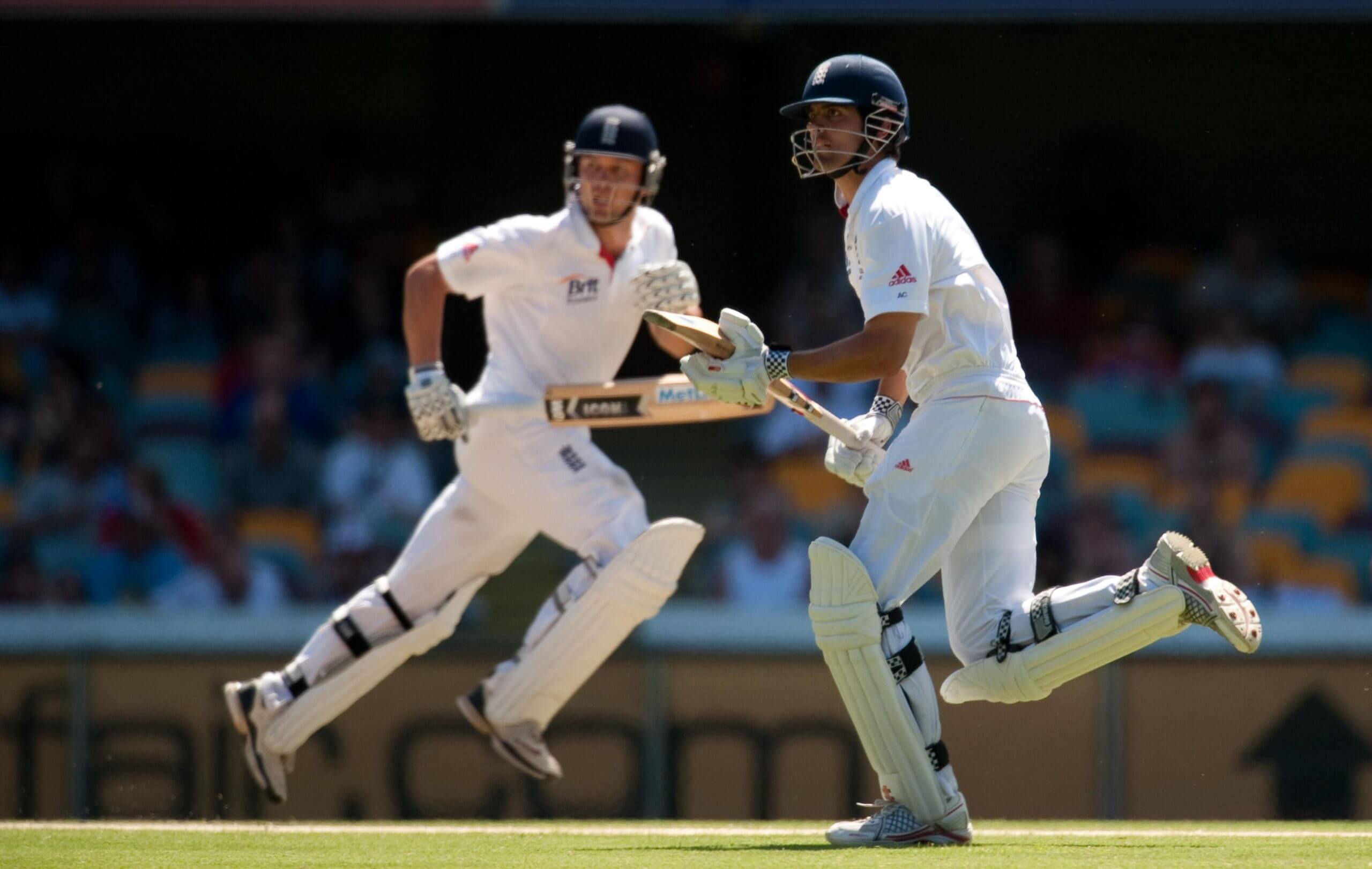
Jonathan Trott and Alastair Cook during their unbeaten second-innings partnership of 329 in Brisbane (Gareth Copley/PA Images via Getty Images)
Another England player who could take real satisfaction was a fast bowler who thrived in Australia’s first innings.
Steven Finn: Six wickets in an innings in your first Ashes Test is something to be remembered, even though we toiled and they weren’t necessarily pretty wickets. To hang in there and bowl Australia out was important in the context of the game and they weren’t completely out of sight. It made our second innings a bit more manageable.
At the time I was a bit disappointed it was six for 125 rather than six for 60 in those conditions but now, 15 years removed, I’m proud of what I did. We puffed our chests out and pushed back against Australia which I’m not sure many England teams have done down there. It felt like a win.
Mike Hussey (Australia’s leading scorer in the series): England were seasoned, hardened Test cricketers at that time who all knew each other well. They played three hard games before the first Test so that series was more about England and their preparation than us. We were in a bit of a transitional spell and had some new players coming in, but we were still a very good team.
Our problem was that our two best players had below par series; Ricky Ponting and Michael Clarke didn’t really make many runs at all which very rarely happened.
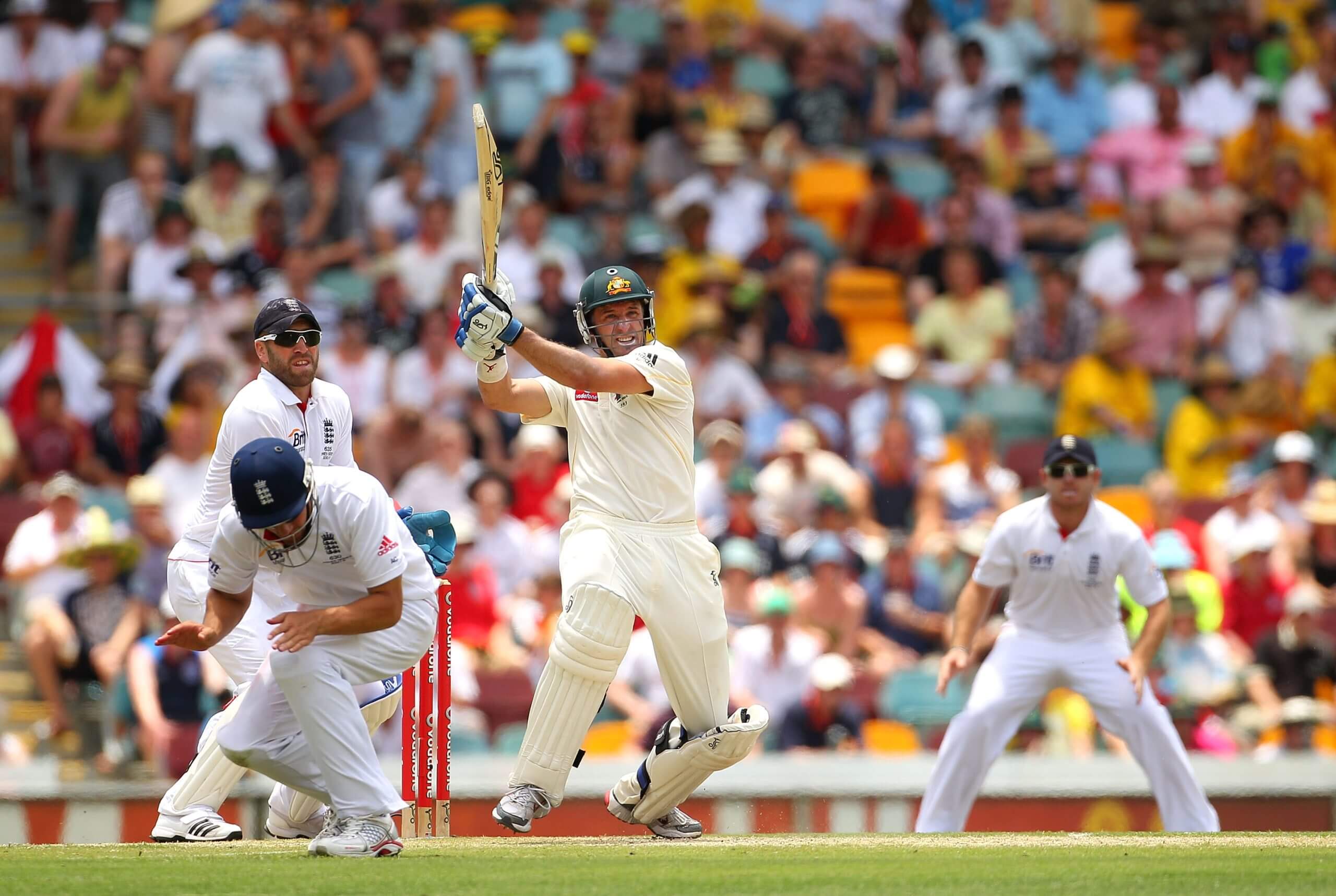
Mike Hussey scored a century for the hosts at Brisbane (Cameron Spencer/Getty Images)
The Brisbane defiance was a springboard for England who returned to Adelaide for the second Test and bowled Australia out for only 245. The visitors responded with a huge 620 for five declared, Kevin Pietersen making a double century and Cook adding another hundred.
But it was the run out of Simon Katich with a direct hit by Trott off the fourth ball of the first day that set the tone.
Trott: The second Test was probably my favourite in my career and certainly my favourite moment as an England player with that run out. It meant more to me than any personal accolades because I got to run around like Alan Shearer after he’d scored a goal. At Warwickshire I fielded at slip but, with England, no one was moving Strauss and certainly not Swann who was pretty lazy and wanted to stand at slip. So I had to improve my fielding. That’s why that wicket meant so much to me.
Swann: It was the most surreal first hour’s play. If you lose the toss in Adelaide you’re generally in trouble and I remember Straussy walking in with a semi-grin on his face and saying: “Sorry chaps, I lost it. We’re having a bowl.” Everyone threw abuse at him, saying: “You had one job Strauss!”
But Trotty ran out Katich with a direct hit and peeled away laughing with that manic cackle of his like an evil villain in an Austin Powers movie and everybody mobbed him. It was fantastic. Then Ponting nicked Jimmy to me first ball. I’ve always said this, but I had a premonition that would happen. “He’s nicking this straight to my left hand” and he did exactly that.
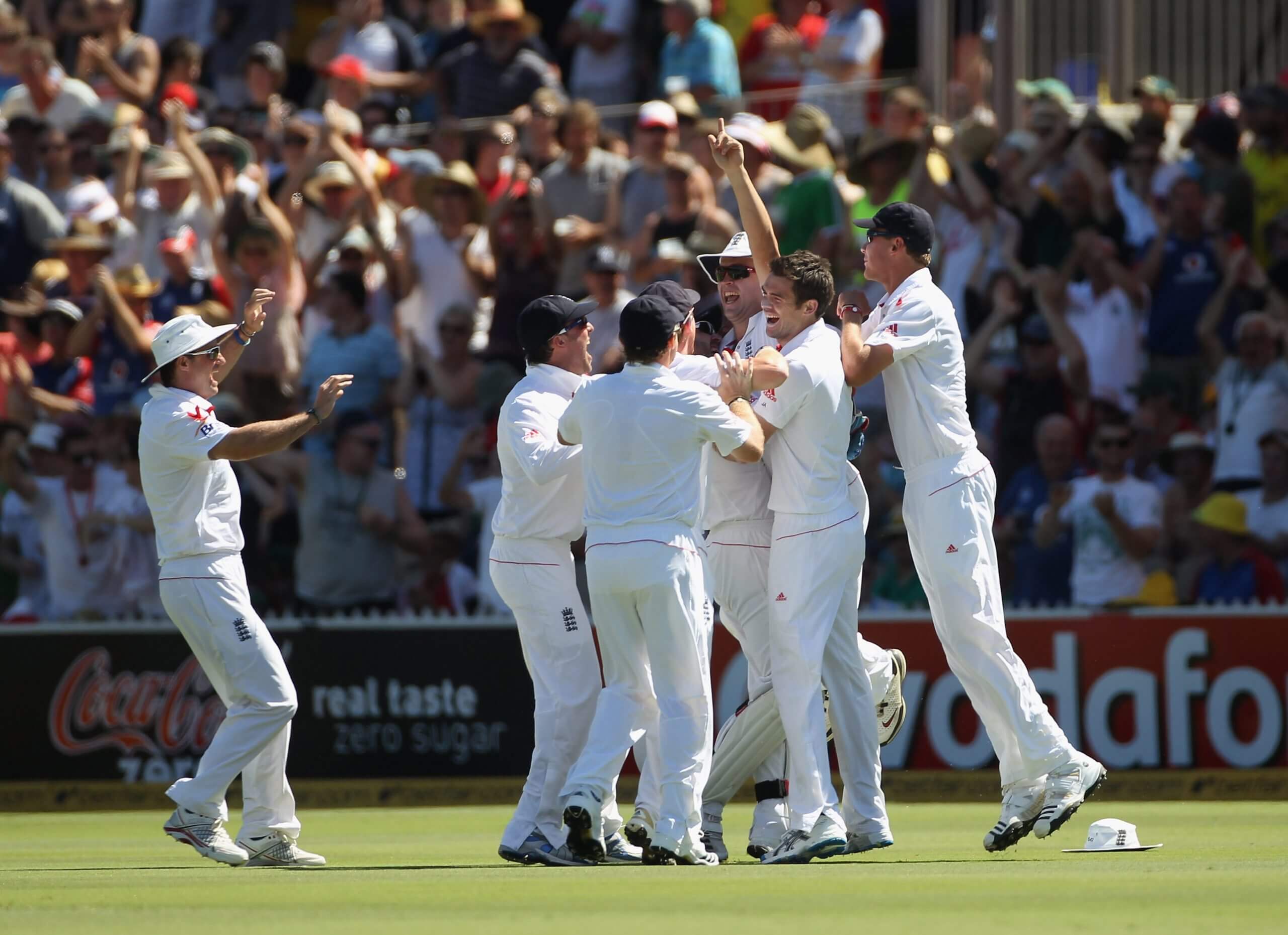
England’s players catch up with Trott (arm raised) after his run out of Simon Katich (Tom Shaw/Getty Images)
The off-spinner went on to have an even bigger impact in Australia’s second innings, taking five for 91 as the hosts were bowled out for 304 to give England victory by an innings and 71 runs and a 1-0 series lead.
Swann: It’s a five-for even if it does include rabbit pie (dismissing tail-enders) and it turned into one of the highlights of my career. I bowled Siddle through the gate to finish it off and I remember turning to our fans, the Barmy Army, and seeing them going mad on the old hill in front of the scoreboard.
Yet there was heartache for England’s Stuart Broad who tore an abdominal muscle bowling towards the end of the Test. His Ashes were over.
Stuart Broad: Honestly, it was the sharpest pain I’ve ever felt. I tried to bowl one more ball and knew I was in big trouble. I lifted up my shirt and could already see bruising. Our doctor at the time was Nick Peirce. He looked at it and gave me a massive hug — he knew my tour was over. I just burst out crying. It made me realise international sport moves very quickly.

Stuart Broad’s Ashes were curtailed by injury (Scott Barbour/Getty Images)
England were still riding high when they travelled west to Perth, only to come crashing back down to earth, losing the third Test by 267 runs. Their only consolation was an eight-wicket haul for Broad’s replacement, Tremlett.
Tremlett (now a property investment advisor): After we won in Adelaide (the bowling coach) David Saker asked me, Tim Bresnan and Ajmal Shahzad to bowl into the mitt. All three of us were trying to bowl as fast as we possibly could because we knew there was a place to be had. Then the day before the match Strauss told me I was playing. It couldn’t happen on a better pitch for me and I came in and got some wickets.
But we lost because Mitchell Johnson swung it at 95mph. That really was the difference and it surprised everyone as he hadn’t bowled that well until then.
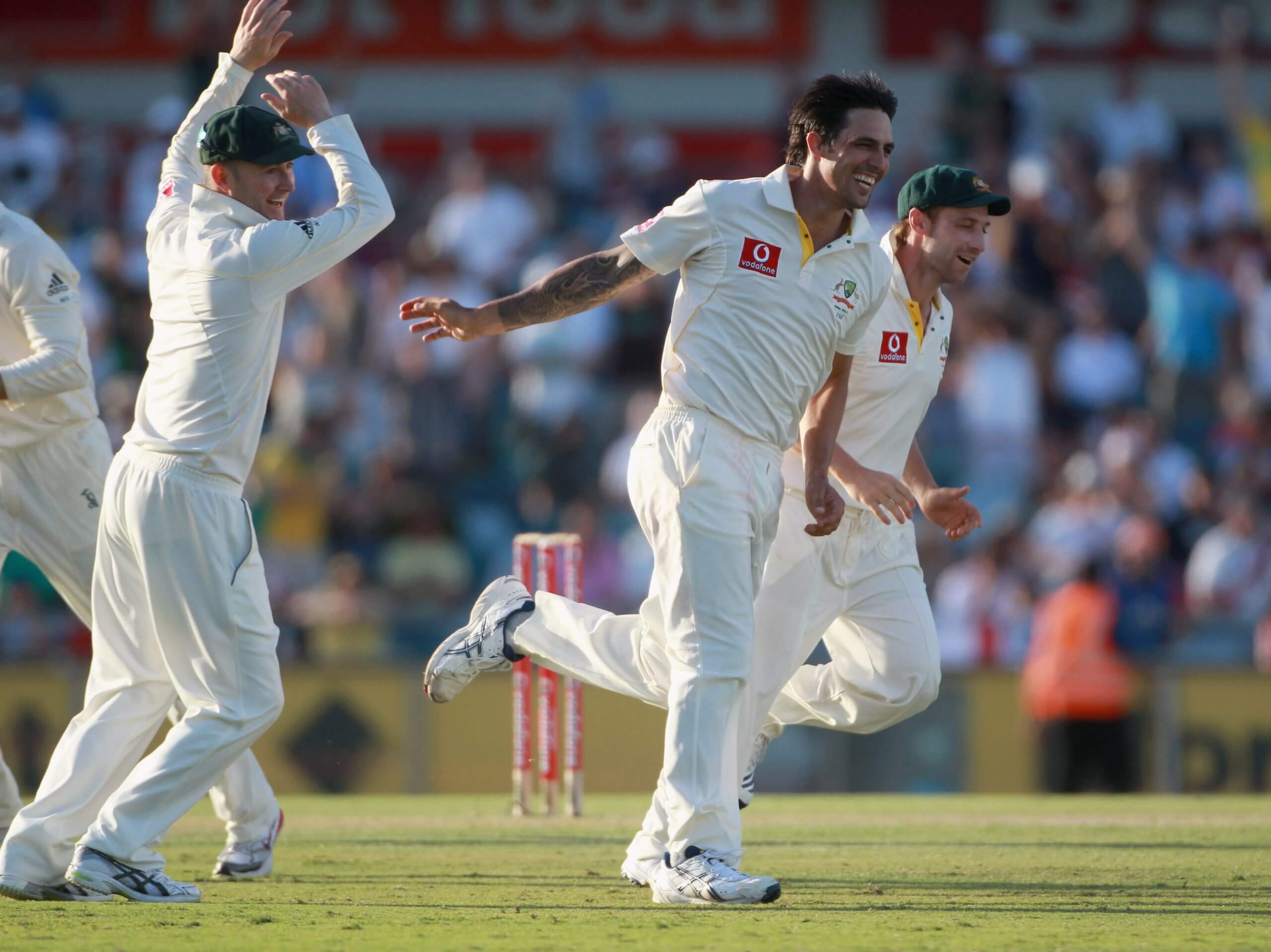
Mitchell Johnson tore through England as Australia drew level in the series in Perth (Tom Shaw/Getty Images)
The third Test was when a young leg-spinning all-rounder called Steve Smith was brought into the Australia side in part, it was claimed, to lighten the mood in the home camp.
Swann: They said they wanted a spinner like me to be fun in the dressing room and a bit of a joker, so when Steve came in to bat we were saying: “Come on Smithy, tell us a joke.” He was so embarrassed because that really wasn’t him at all. Imagine that, the best batsman they’ve had in a generation was first picked as a joke-telling leg-spinner!
Hussey: I do remember Steve coming in but I don’t remember it being to lighten the mood. The mood in the Aussie team is always fun if results are going for or against you, so I don’t necessarily think that’s true.
With the series level again at 1-1, England dropped their leading wicket-taker, Finn, for Bresnan for the Boxing Day Test in Melbourne.
Strauss: The plan was to build up pressure by putting a lot of dot balls together because we thought Australia would try and take some risks. Finny had bowled some excellent deliveries but he was struggling with consistency. He had every right to be disappointed, but we had to commit fully to the plan.
Finn (who has just written a book, The Ashes Files, on his experiences against Australia): I was told I wasn’t playing on Christmas Day. Strauss took me into the toilets and said: “Look, we’re going to go with Bres in this game. We don’t feel like you’ve been hitting your straps in the Tests and we need someone to do a better job in that role.” So that was tough to take. My family had flown out a couple of days before hoping to watch me play in a Boxing Day Test. It was a blow.
You grow up dreaming of playing in a Boxing Day Test in Australia and, even though I went on three Ashes tours, I never actually played in one. But I couldn’t argue when we won the toss and bowled them out for 98 on the first day.
England followed up that rout on day one by moving to 157 without loss in reply.
Strauss: If Carlsberg did days of cricket, that first day was it. It was staggering. By the end, the whole of the MCG was virtually empty apart from England supporters. It was the perfect day’s cricket.
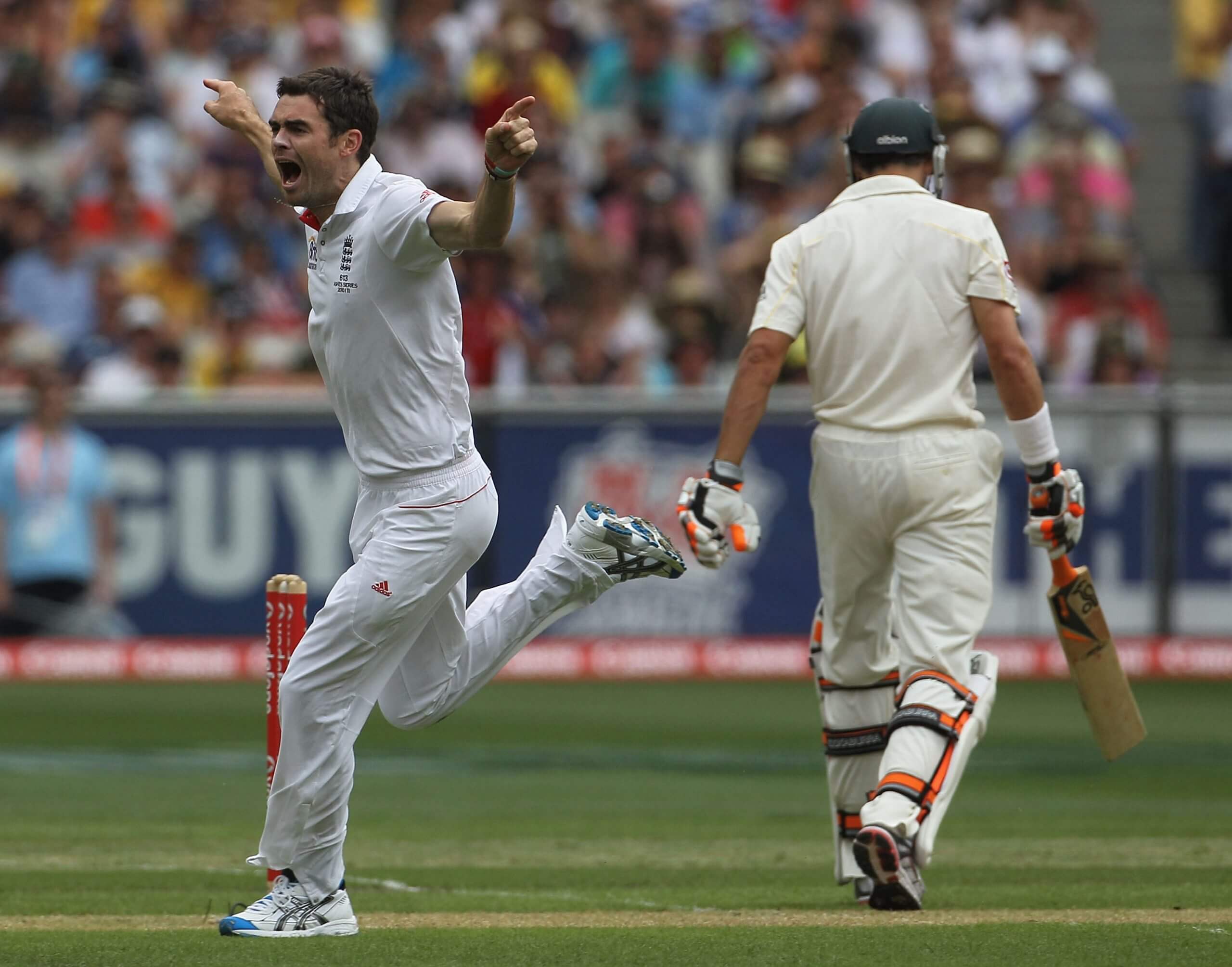
Jimmy Anderson dismisses Australia’s danger man, Mike Hussey, at the MCG (Hamish Blair/Getty Images)
Having moved on to 513 in reply, with Trott scoring 168 not out, England completed victory by an innings and 157 runs. They led 2-1 with one to play and, as holders, retained the Ashes
Trott: I will never forget the expressions on the faces of those guys who had been there before and lost. You could see what it meant to them. I got man of the match in Melbourne. I’d watched Channel Nine as a kid and always remembered the music from the highlights. So to be up there being interviewed by Mark Taylor (the former Australia captain) was pretty surreal.
I went back to Melbourne with the Lions as a coach a few years ago and made a point of going around the ground, to the museum and library and the members section, because, as a player, you just go from the changing room to the nets and the middle. You don’t experience it properly. I looked at the honours board in the dressing room and my name was there. That’s really nice.
Strauss: I was uncomfortable with the celebrations on the outfield at the end. I just felt there was a danger of it coming across as us rubbing their noses in it, which wasn’t our mantra for the tour. We wanted to concentrate on us and be respectful to the opposition, so I didn’t really like that. But I suppose the guys had every right to celebrate.
We had talked about how to deal with the media in the buildup to the tour and it was a kind of “kill them with kindness” policy. Let’s be glowing about the country, how much we love Australia, what a pleasure it is to be here, how much fun we’re having. The worst thing you can do there is get into that siege mentality and start fending off the media and public.
It’s a very hard place to go as a touring side because you do feel as though you get battered from all sides when things start going badly, but by Melbourne it was really noticeable how much the Australia media turned on their own side. We had the advantage psychologically.
That’s why it’s so important to get on top early when you go to Australia.
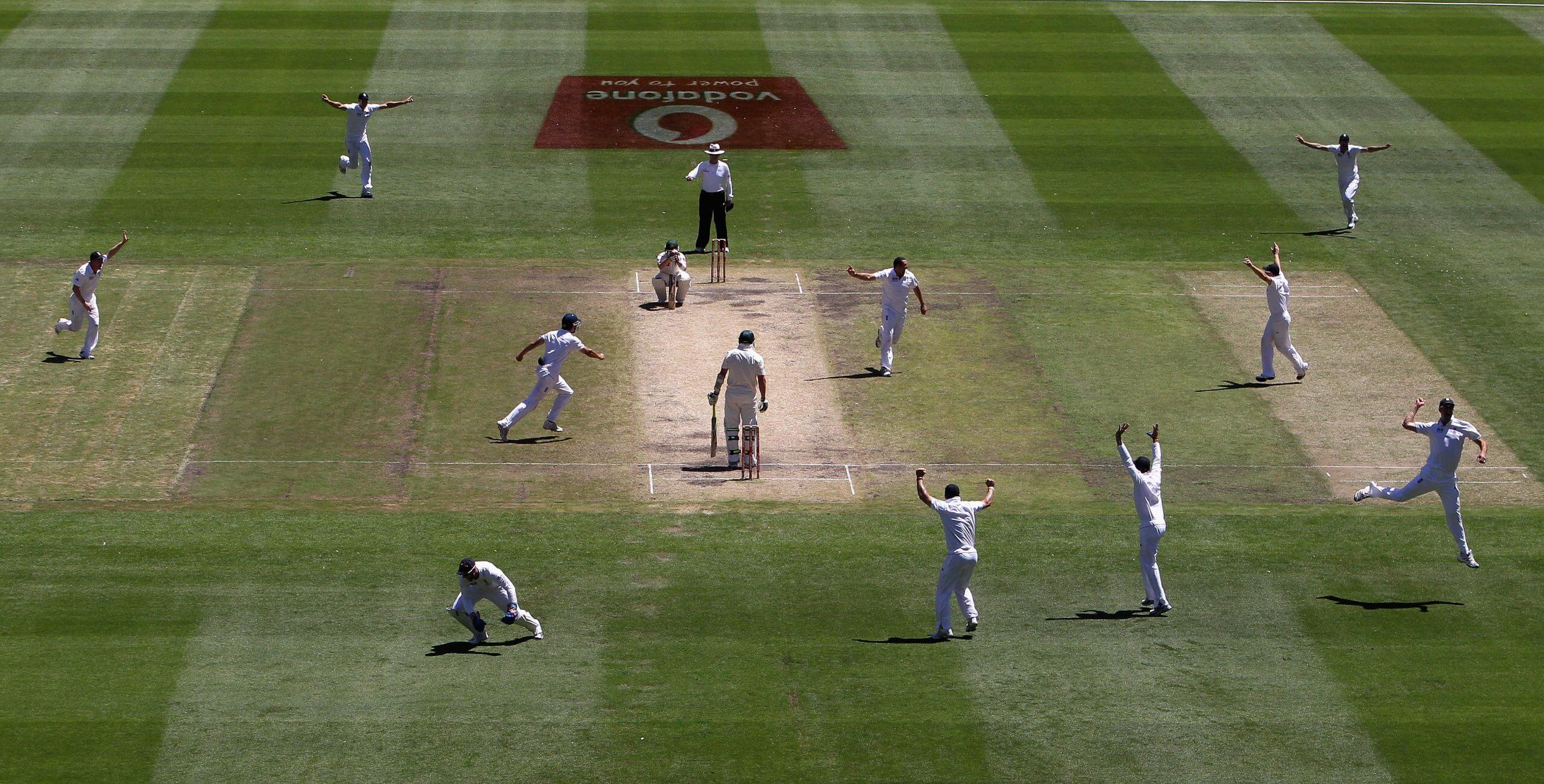
Ben Hilfenhaus is caught behind off Tim Bresnan and the Ashes are England’s (Mark Dadswell/Getty Images)
The Ashes were retained but the series had yet to be won. That was achieved with another emphatic victory in Sydney, by an innings and 83 runs, with centuries for Cook, Ian Bell and Matt Prior. The honour of taking the final wicket, that of Michael Beer, fell to Tremlett.
Tremlett: All the emotions came out because we’d finally done it. We were all jumping on each other and running around not really knowing what to do. I was just elated. I thought it was going to change my life. It was something I wanted to do as a boy watching the Ashes on TV, wanting to be Ian Botham or Glenn McGrath. To actually play a part and take the final wicket… I will always look back on that with gratitude.
Once the celebrations had subsided, the players came together to sit in the middle of a deserted SCG to discuss their favourite memories of the series.
Strauss: The winning moment does pass very quickly. So sitting on the outfield in a circle reflecting on the tour and asking each other what we were going to tell our grandkids was very special. I was so proud of that group of players and support staff. We stuck together and had the bit between our teeth. Those of us who had been there in 2006-07 (when England lost 5-0) had such strong motivation to avenge that defeat.
It’s such fun to play cricket when everyone is on the same page, knows what their role is and is getting on well and enjoying each other’s company.
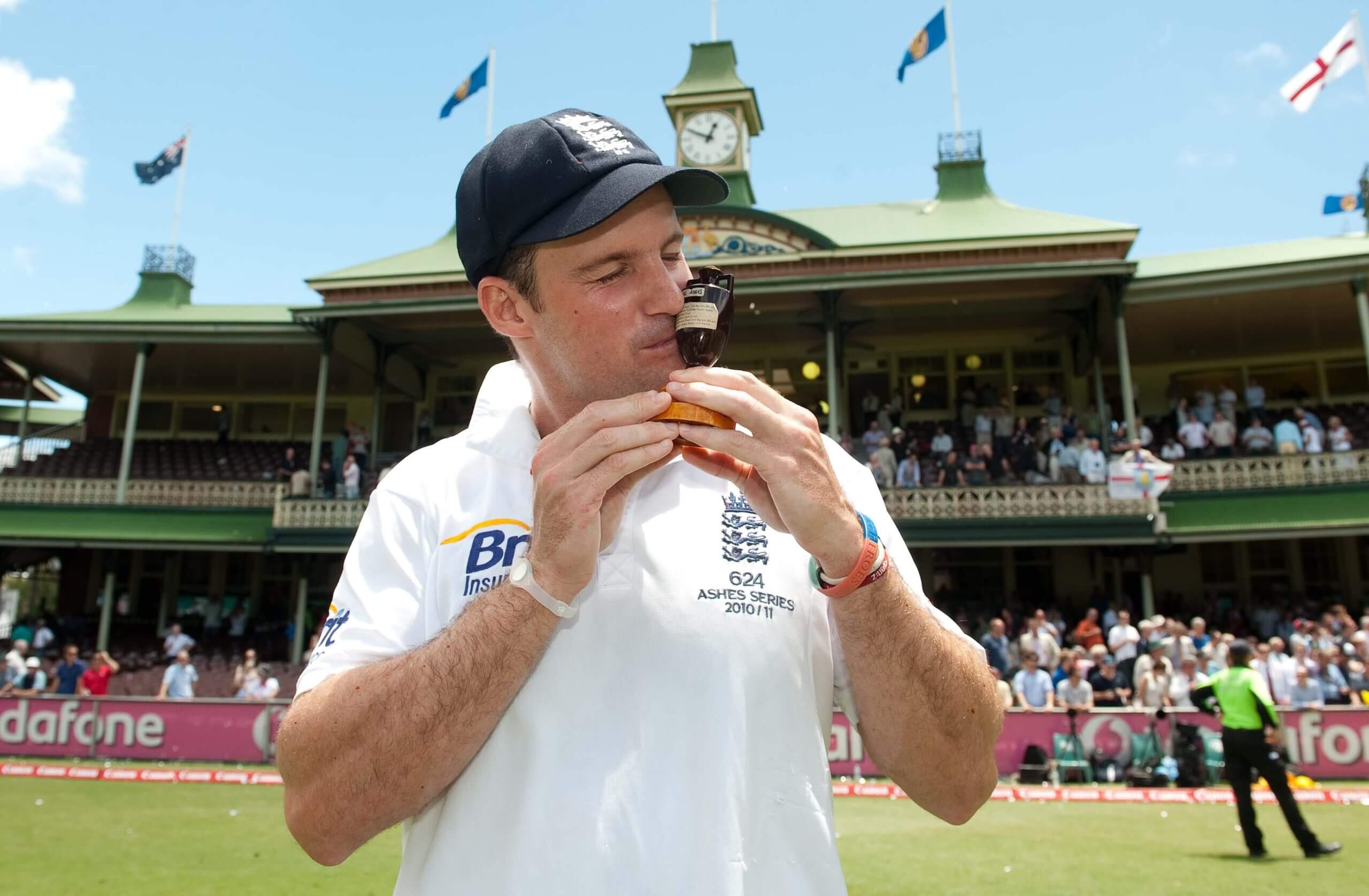
Andrew Strauss celebrates with the Ashes urn in front of the Sydney pavilion (Gareth Copley/PA Images via Getty Images)
Swann: My wife Sarah had to go home before the match as she was 31-and-a-half weeks pregnant and got the last flight before they closed Heathrow because of snow. We wanted two middle names for our son so he could be captain of England one day, so it was Wilfred Richard after our grandads and I immortalised that moment by calling him Wilfred Richard Sydney Swann.
I will always remember us sitting there in the middle telling stories, looking around and thinking this is an absolute peak moment in my career and my life.
So can England do what they did nearly 15 years ago and win the Ashes in Australia?
Cook: They haven’t won a single Test in Australia since that time but you start looking at the way this England side play and you think, ‘Yes, they’ve got a really good chance’.
England’s top seven could knock Australia off their lines and lengths. Then you look at the bowling attack and any combination you choose could threaten Australia.
Strauss: The way England play we have the potential to land some blows on that Australian team but if you look at their record at home it’s phenomenal. Australia are an older side getting towards the back end of their cycle but we’re going to have to play some outstanding cricket to win there. We’re capable of doing it and we have world-class match-winners in our team but the challenge as always will be whether we have the bowling line-up to take 20 wickets.
Trott: It’s really good for England this series is starting in Perth. I don’t know why they’ve done that, especially with England’s attack. It definitely suits England. They will be fresh and the pitch is rapid. It’s the ultimate challenge. It is the Mount Everest and if you can climb that mountain like we did you have something in your memory bank for life.
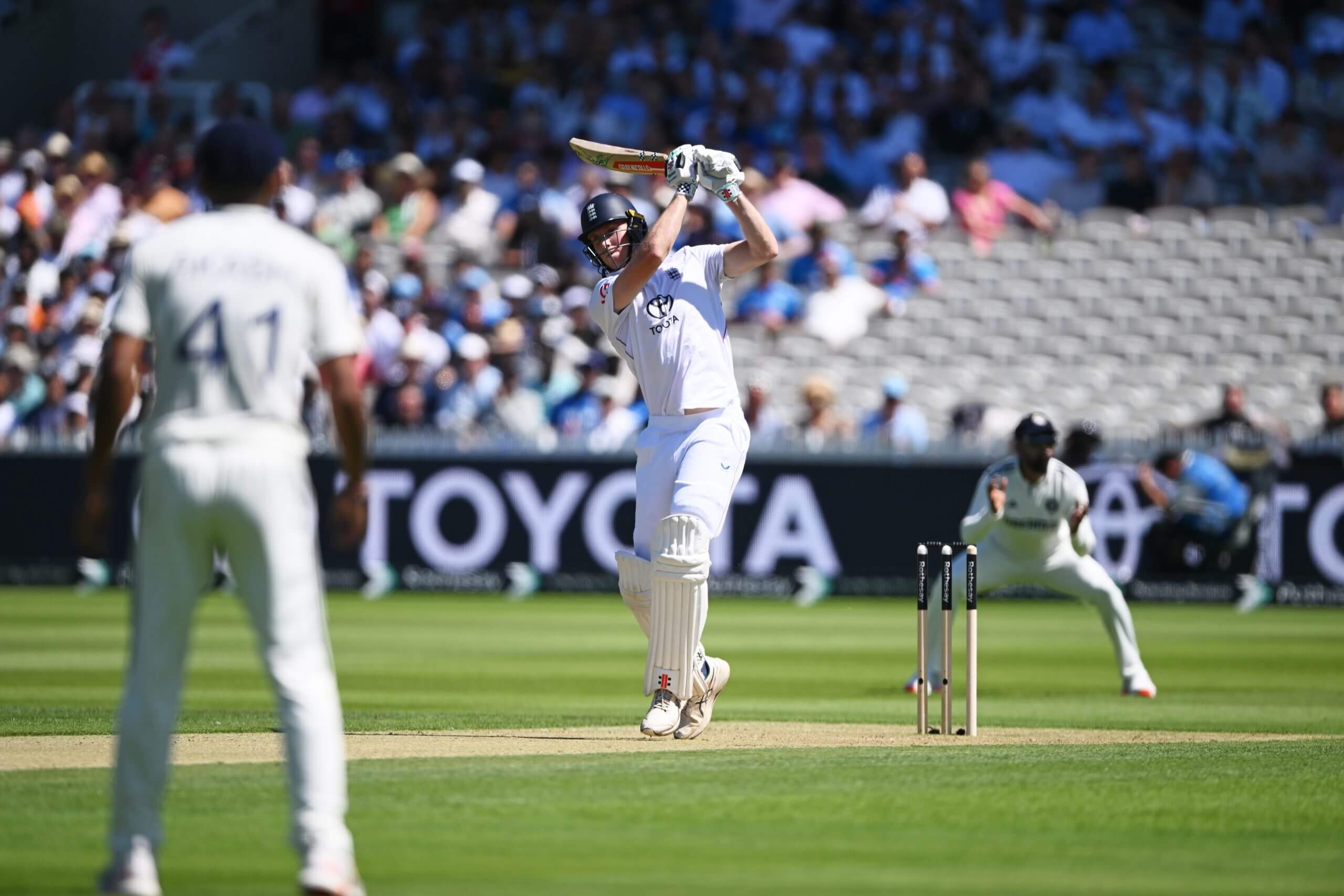
Swann says Zak Crawley could be key to England’s hopes this time around (Stu Forster/Getty Images)
Hussey: It might be closer this time. England are coming with a very clear plan, to hit the Aussies hard with pace, so that’s going to be fun to watch. In the same breath they will have to maintain it over five days and five Test matches in Australian conditions so that will be a challenge. One thing I don’t agree with is Stuart Broad’s assertion that this is the worst Australian side since 2010-11. That’s a bit laughable. The Australian team is very good and has been for a long period of time. It’s just a publicity stunt from Broad to keep his name in lights.
Swann. I’m always optimistic. It will come down as every Ashes does to one or two players having an elite series to sway things for their side. If someone like Zak Crawley has a tour like Cook did back then, which he has every chance of the way he bats, the belief that would instil could spread like wildfire and they could have the trip of a lifetime. Just like we did.