
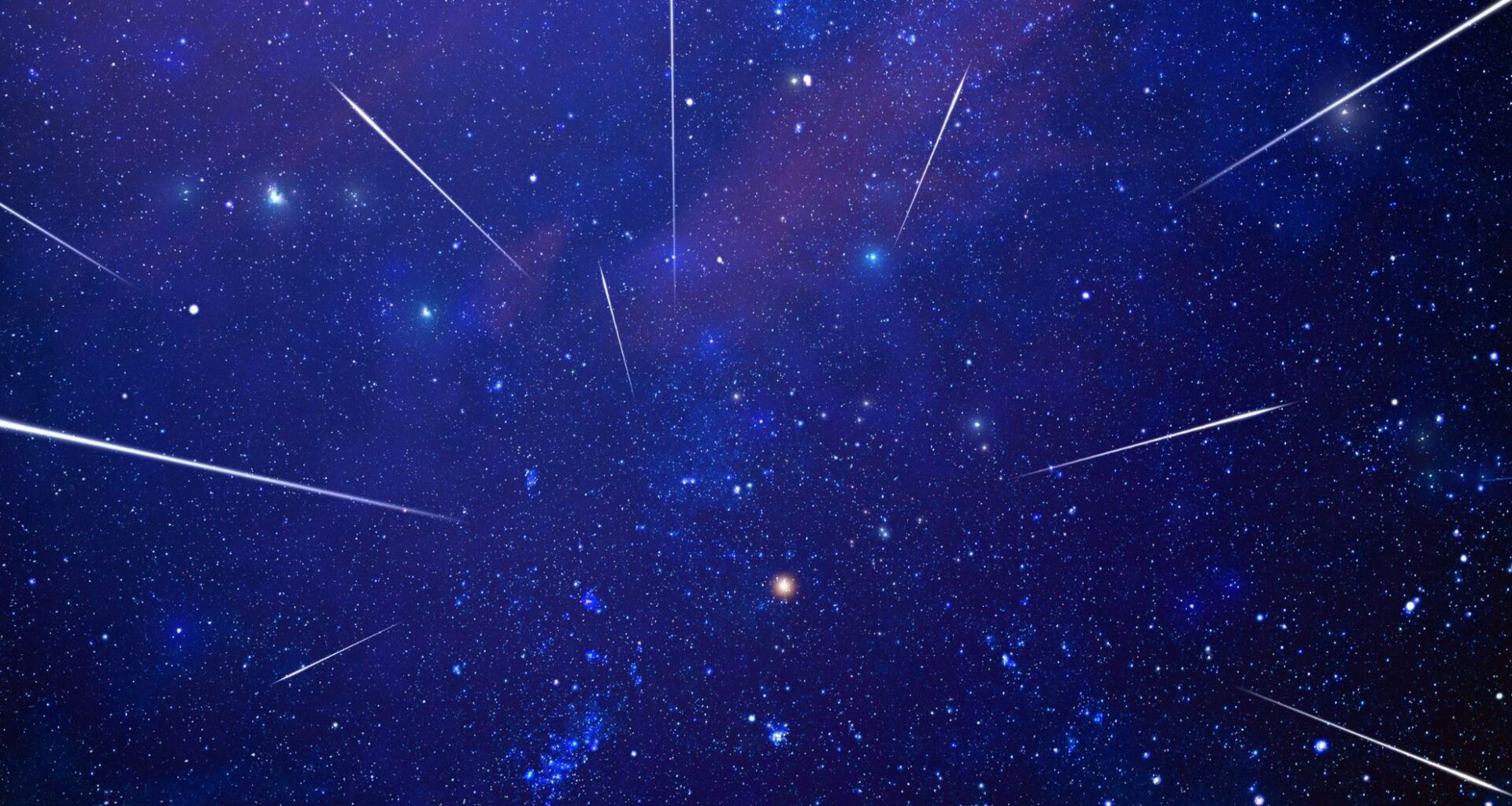
The Taurid meteor shower stands out for its double-stream nature, the Southern and Northern Taurids, both named after the constellation Taurus, from which the meteors appear to radiate. Though each stream has a distinct origin, both produce larger-than-average fragments capable of generating brilliant fireballs. The Southern Taurids peaked earlier this month, but remain active through November 20, overlapping with the Northern Taurids’ peak and the ramp-up of the Leonid meteor shower.
Unlike other brief meteor events, the Taurids are drawn out over weeks, with noticeable activity between mid-October and mid-November. According to EarthSky, this year’s show gains special attention due to the possibility of a Taurid swarm, a denser cluster of debris from Comet Encke that can boost the number of visible fireballs.
How and When to Watch the Taurids at Their Peak
The Northern Taurids are active from October 20 through December 10, but their maximum intensity is expected tonight and tomorrow night. With the moon not rising until after midnight, Tuesday and Wednesday evenings provide an unusually dark backdrop. This allows even the faintest of meteors, and the occasional fireball, to stand out clearly.
According to Space.com, up to 15 meteors per hour may be visible under dark skies. The meteors tend to appear yellowish-orange and move slower than typical shooting stars. They radiate from Taurus, which becomes prominent in the eastern sky a couple of hours after sunset and moves overhead by 1:30 a.m.
Visibility is not limited by hemisphere, and the American Meteor Society notes that both Northern and Southern Taurids are best viewed from open, rural locations with minimal light pollution. Observers should lie back and look slightly away from the constellation Taurus to spot longer meteor trails.
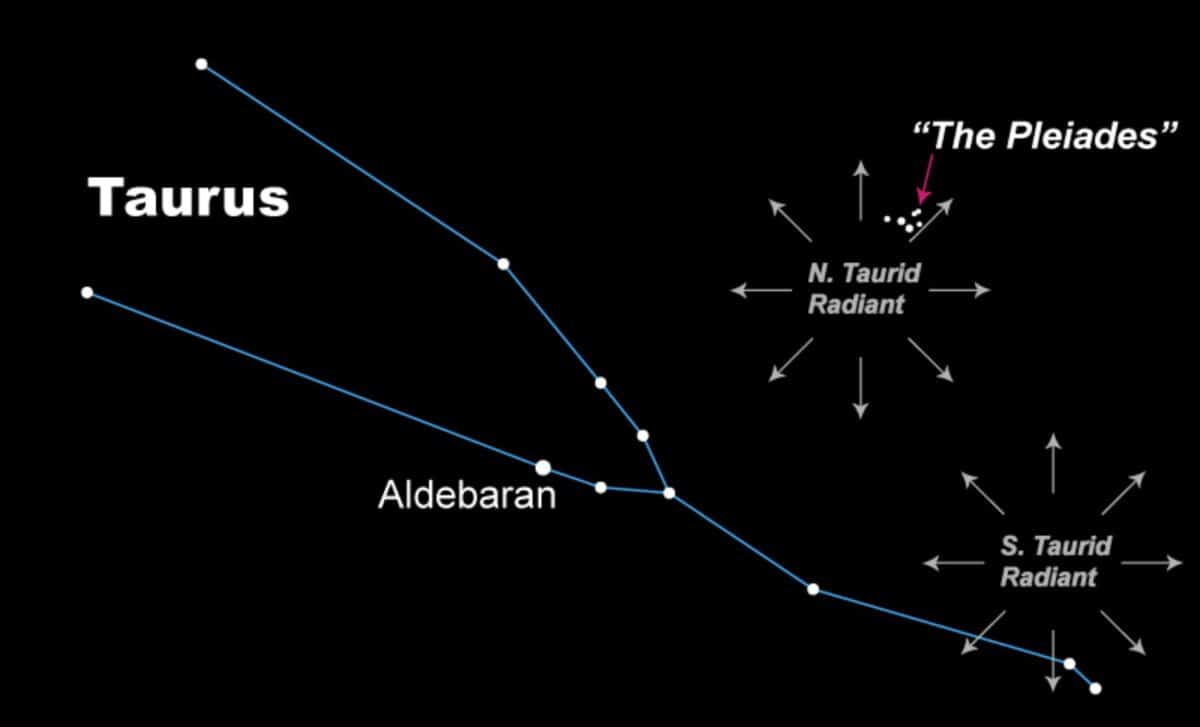 The Taurid meteors consist of 2 streams, the South Taurid meteors and North Taurid meteors. ©Earthsky
The Science behind the Fireballs
The Taurid meteors are generated from two distinct parent bodies: the Southern Taurids originate from Comet 2P/Encke, while the Northern Taurids come from asteroid 2004 TG10. Despite differing sources, both streams intersect Earth’s orbit annually, creating a shared spectacle in the November sky.
These meteors are known for their slow entry speeds, around 27 km/s, and their tendency to produce bright, long-lasting fireballs. The larger size of Taurid debris is what sets them apart from other meteor showers, whose smaller particles often burn out quickly and less dramatically.
A small percentage of Taurid meteors, sometimes as high as 7% during swarm years — are classified as fireballs, which are significantly brighter and can cast shadows on the ground. Their unique behavior has made the Taurids a subject of long-term observation, especially since they’re suspected of contributing to rare atmospheric explosions like the Tunguska event in 1908.
What Makes 2025 Different
This year’s Taurid display comes under changing moon phases that have slowly improved conditions since the Full Moon on November 5. As noted by EarthSky, the Last Quarter Moon on November 12 marks a turning point, as each night since has allowed for more pre-midnight darkness.
Although moonlight still poses a challenge for fainter meteors, the bright fireballs typical of the Taurids should pierce through the glow. Skywatchers may still catch sight of both Northern and lingering Southern Taurids, effectively doubling their chance of a spectacular fireball sighting.
This overlap also leads into the Leonid meteor shower, which is active through the end of November and peaks on November 18. These meteors are faster and appear to shoot from the constellation Leo, adding another layer to the nighttime display in mid-month.
The Northern Taurids may not offer a storm of meteors, but their slow burn and frequent fireballs make them one of the most visually rewarding showers for those with the patience to watch the sky closely. For many, this week may be the best window to enjoy them — under dark, quiet skies.