
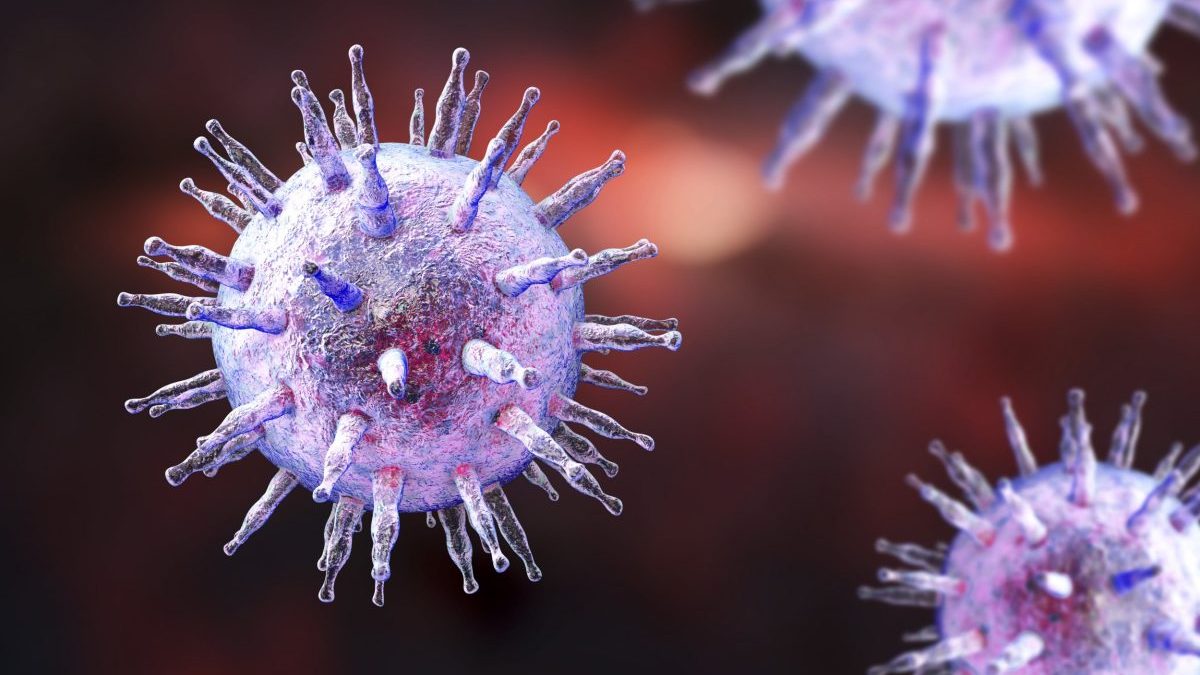
The virus that causes glandular fever may be an unsuspected cause of several autoimmune conditions, lending hope for new treatments and vaccines
Medical textbooks may need a rewrite, after a common virus has been found to be the cause of a second autoimmune disease.
The Epstein-Barr virus (EBV), once thought to just cause a childhood illness called glandular fever, has turned out to be the trigger for an autoimmune condition called lupus, which leads to skin rashes, joint pain and extreme fatigue, a study has shown.
EBV was also found three years ago to cause multiple sclerosis (MS), where people become progressively disabled.
New FeatureIn ShortQuick Stories. Same trusted journalism.
And the virus is suspected of causing several other autoimmune diseases – where the immune system mistakenly attacks parts of the body – including rheumatoid arthritis and type 1 diabetes.
The discovery opens the door to new treatments for one or more of these conditions, and even prevents them, if one of the several vaccines against EBV that are in development succeeds in trials.
“None of us really know what’s going to happen, but we’re all quite hopeful,” said Professor Helen Stagg, an infectious disease expert at the London School of Hygiene & Tropical Medicine.
The spread of EBV
EBV is carried by up to 95 per cent of people, infecting the mouth and throat as well as a type of immune cell called B cells. These make antibodies, which help kill bacteria and other pathogens.
The virus is usually harmless, and, after an initial burst of activity on infection, is then kept under control by the immune system. But it persists at low levels and is present in saliva, which is how it is spread.
Historically, we probably all used to catch it as babies from our mums, said Dr Graham Taylor, a virologist at the University of Birmingham. “When mothers would chew food for their infants as they’re weaning, that would be a very efficient route for a virus,” he says.
In today’s more hygienic societies, we tend to catch EBV in two time periods – either as babies or as teenagers and young adults, with the latter probably caused by the start of romantic relationships.
For unclear reasons, catching the virus at this later stage in life can lead to the illness we call glandular fever – sometimes known as kissing disease – involving a sore throat, swollen glands and severe fatigue.
While that is the extent of the harm for most, in a few people – perhaps because of their genetics or other risk factors – the virus has a more sinister side.
EBV has long been known as a possible cause of a few types of cancer, because the virus DNA is found inside the cancer cells.
For instance, it can cause a condition called Hodgkin lymphoma, when B cells start multiplying out of control. These EBV cancers are fairly rare, although one of them, called Burkitt’s lymphoma, is more common in some African countries where malaria weakens the immune system.
By contrast, the links with autoimmune diseases were more uncertain, as they were just based on statistical correlations – for instance, you are more likely to get MS if you had glandular fever as a teen. But these kinds of correlations can’t prove the virus is the cause.
Nerve damage from the first infection
The breakthrough came when US researchers thought of using blood samples from military recruits taken over two decades. This revealed that if people got glandular fever during their military service and then later got MS, there were compounds in the blood at the time of the initial infection that revealed subtle nerve damage. “That led to a massive increase in interest in anti-EBV vaccines,” said Professor Stagg.
The new study has now also found a causal role for EBV in lupus, but in a different way – by revealing exactly how it wreaks the damage. The explanation lies in the fact that we all have a small number of B cells that mistakenly react to our own proteins, but normally these stay dormant.
It seems that in lupus, the virus infects some of these “self-reactive” B cells that react to our own proteins in the cell nucleus, causing those B cells to wake up and start multiplying, according to work published in the journal Science Translational Medicine this week.
“Understanding the mechanism is a really important aspect of demonstrating a causal mechanism for disease,” said Professor William Robinson, a rheumatologist at Stanford University, who led the study.
Professor Robinson is now investigating if EBV causes MS in the same way, by waking up self-reactive B cells that target nerves. It also seems logical to investigate if similar explanations are behind the links between EBV and some other autoimmune diseases.
These include rheumatoid arthritis, where the immune system attacks the joints, type 1 diabetes, where it attacks insulin-making cells in the pancreas, and inflammatory bowel disease, where it attacks the gut.
Even if not, the fact we now have a new avenue for treating and perhaps even preventing two major autoimmune diseases, MS and lupus, is a great advance, said Professor Robinson.
In terms of treatments, it gives more support to a highly experimental approach for lupus, where all the B cells in the blood are eradicated. Various ways of suppressing EBV are also being investigated for MS.
But the idea of vaccines against EBV are causing even more excitement. These were already in development – with three in early-stage trials and more at the animal research stage – with the goal of preventing glandular fever.
The condition can leave people profoundly fatigued for several months, taking them out of school or work. “It can be quite devastating,” said Professor Stagg.
Your next read

If a glandular fever vaccine turned out to also prevent MS, lupus, and several types of cancer, it would be a great bonus, said Dr Carol Leung, an immuno-oncologist at the University of Oxford, who is one of those working on a vaccine.
It could arrive within a decade if one of the candidates currently in trials is successful.
The caveat is that if a vaccine just delayed when people catch EBV rather than preventing it, it could, in theory, make the infection worse, said Dr Leung. That is what we will have to find out through trials.
“It is a topic of conversation in every EBV vaccine meeting that I’ve been in,” said Professor Stagg.
“But I do think an EBV vaccine holds huge promise to improve health globally.”