
(Credits: Far Out / Focus Features)
Sat 15 November 2025 16:21, UK
There are a lot of Hollywood icons, but Bill Murray is an icon of iconoclastic behaviour.
Sometimes that can be comical, like when he agreed to star in the adaptation of Garfield because he believed the Coen brothers were writing the script, and sometimes it can be abhorrent, like when he recently stalled production on the Aziz Ansari film Being Mortal due to allegations of “inappropriate behaviour.”
For better or for worse, Bill Murray is always going to do things his own way. If you want to reach him, call his 1-800 line. Unless your name is Wes Anderson, chances are he probably isn’t going to get back to you since he has no agent or reliable team of handlers. Bill Murray just goes through life doing Bill Murray things, which usually include crashing weddings, selling NFTs, and driving taxis while the actual taxi driver plays the saxophone in the backseat.
Of course, this does not hide his often beleaguered application to his hedonistic ways and how it can sometimes cause offence. Across a number of high-profile roles, Murray has found himself at odds with societal norms and left his co-stars and directors angry at his behaviour.
Murray also occasionally acts in movies, and by 1984, he was one of the biggest comedic actors in the world. Having produced a string of hits that included Meatballs, Caddyshack, and Stripes, Murray was widely seen as one of the funniest men in cinema. But Murray had a desire to transcend comedy and dip into more dramatic roles by the mid-1980s. In order to do so, though, he had to agree to a trade.
 Bill Murray in ‘The Life Aquatic’. (Credit: Buena Vista)
Murray had teamed up with director John Byrum to write the script for an adaptation of W Somerset Maugham’s 1944 novel The Razor’s Edge. A straightforward adaptation of the book without comedic elements, Murray had difficulty getting studios to finance the film. When he presented the problem to former Saturday Night Live co-star Dan Aykroyd, his friend came up with a solution: if he agreed to star in Aykroyd’s film Ghostbusters, Columbia Pictures would pony up the budget to make The Razor’s Edge.
Murray agreed to the deal and subsequently filmed The Razor’s Edge before jumping straight into Ghostbusters. The two films were released four months apart in 1984, but saw two different trajectories: Ghostbusters became the second-highest-grossing film of 1984, while The Razor’s Edge failed to make back even half of its $13million budget.
It should have been an easy win for all involved. Murray was a big enough star at the time that many assumed an audience would buy a ticket to watch him paint a fence the same colour. But, it turns out, Murray’s draw was in a comedic role and being dramatic would be enough to dissuade the cinemagoing public.
Dejected by his apparent failure as a dramatic actor and disgusted by the ways in which internal Hollywood politics worked, Murray took an extended break from acting. Despite being at the peak of his popularity as an actor, Murray elected to focus on his growing family and enrolled in Sorbonne University in Paris, France, to study philosophy. Apart from a brief cameo in 1986’s Little Shop of Horrors, Murray did not appear in a single film between 1985 and 1988.
When he returned to acting with 1988’s Scrooged, Murray was allowed substantial sway in the creative decisions made for the film. It was here that Murray first accrued a reputation for difficulty on set, something that would follow him into the present day. But when Scrooged was a major financial success, Murray was officially back as one of the biggest actors in Hollywood.
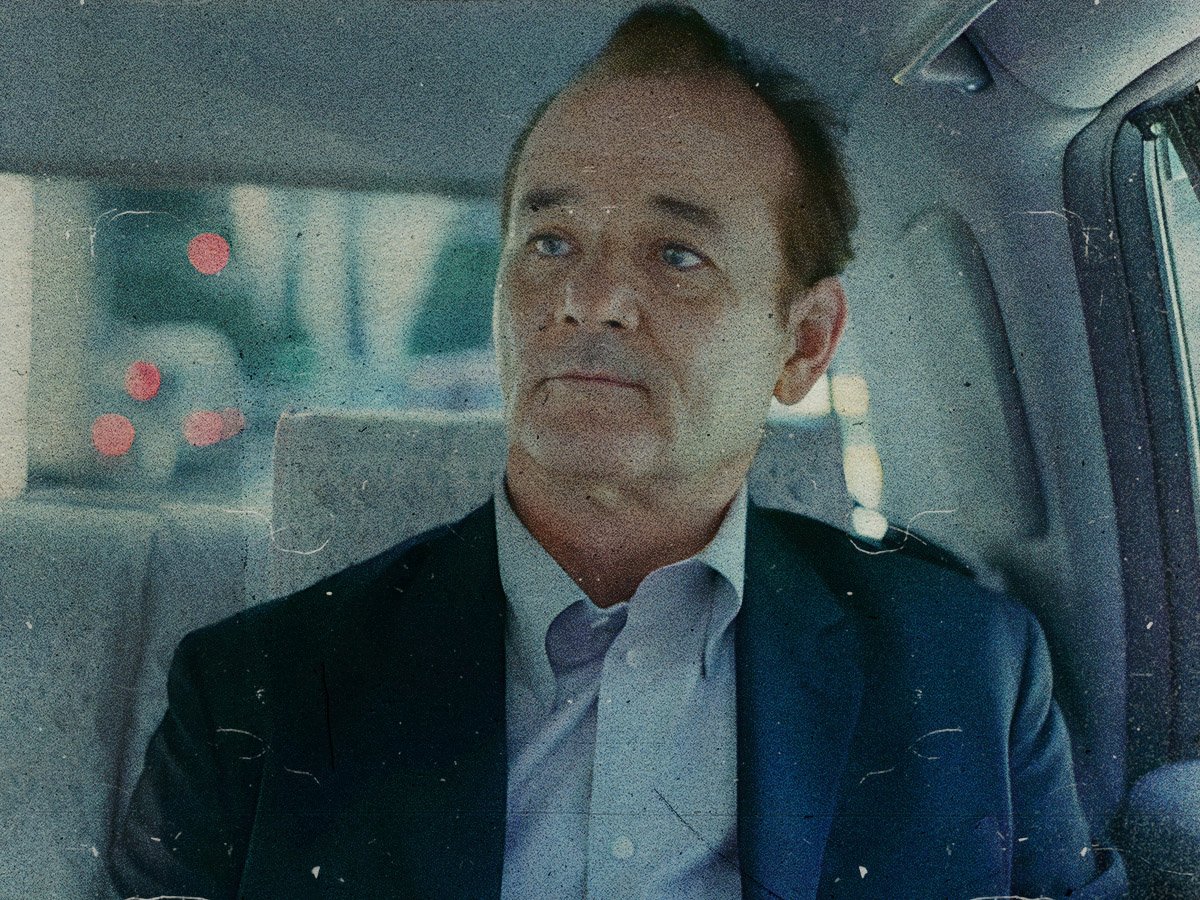
He would take on more dramatic roles in his future career. Perhaps his most beloved role, outside of comedy at least, was Lost in Translation, an award-winning performance that will go down as one of his finest. But that, like all the dramatic roles that would follow, allows Murray to add a shade of a smirk, and, perhaps, ease any fears that a completely serious turn might flop again.
Related Topics