
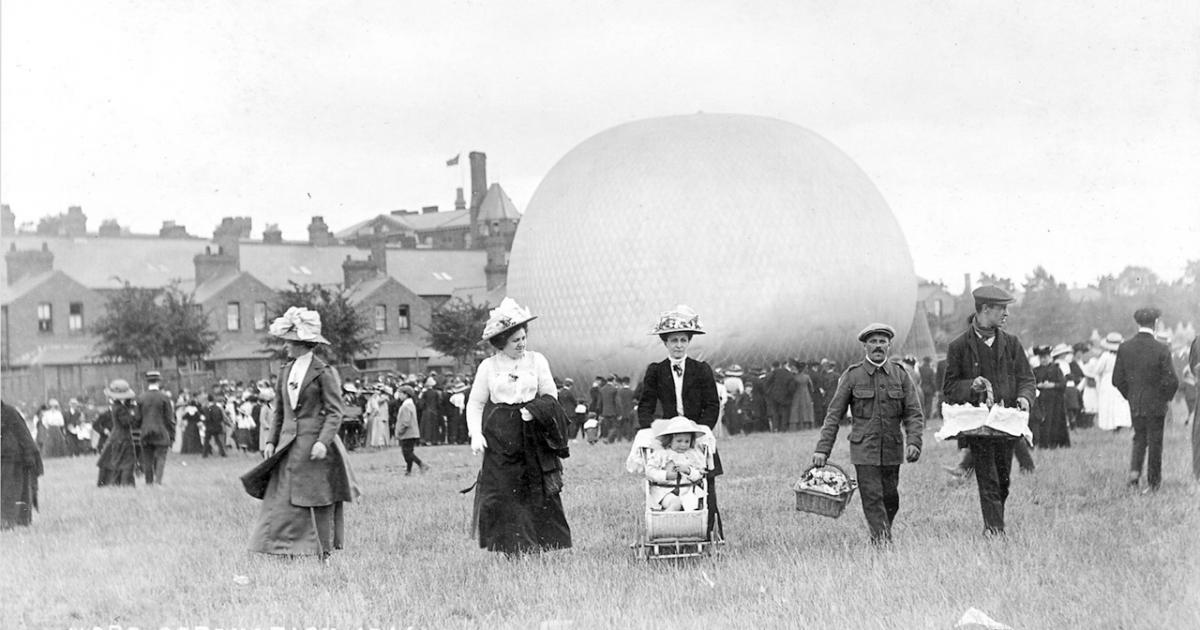
But decades, centuries even, ago for the men and women who took the pictures that form the basis of this nostalgia column it was a very different story.
So all credit then to Worcester historian Ray Jones who has devoted a book to crediting the work of the early photographers of Worcestershire.
More: 16 photos from the days of this former Worcester school
More: The death of the Worcester firm that printed Churchill’s war memoirs
More: Five homes you can buy for £250,000 or less
To turn the pages of Pioneers of Photography is to revisit a sepia world of horse-drawn transport, village fetes and thatched cottages, boneshaker bicycles and empty roads, buildings that are no longer there and locations you can just about recognise now.
Responsible for capturing this time warp were a group of Victorian and Edwardian characters for whom the new fad of photography did not necessarily pay the bills.
For example, Arthur J Neale worked full-time at the Royal Worcester Porcelain factory, Max Fischer was a commercial printer, Maud Parsons, the wife of Percy Parsons, ran the family’s College Café facing Worcester Cathedral and Bertie Dinsdale coupled freelance photography work with a fresh fish delivery round.
The 1850s was the decade in which photography as we know today really got going and two of the earliest businesses in Worcester were Thomas Bennett, who set up at 46 Foregate Street in 1856, and Francis Charles Earl, who opened up shortly afterwards at 46 Broad Street.
Ray explained: “These photographers worked mainly in their own studios and Victorian families would arrive by appointment dressed in their finest regalia for the event.
“They were posed with their most serious and respectable expressions, much as their ancestors had gone to an artist’s studio to have their portraits painted.
“Photography must have seemed a magical event for those able to afford the recording of such family events.
“Because early photographs were taken mainly in the studio, Victorian examples of everyday life are few and far between.
“However, the situation was to change with the invention of the portable camera at the end of the 19th century.
“The Edwardian era saw a rapid expansion in the number of local photographers and they produced a vast array of work which included social events, disasters, sporting occasions, family groups and nearby landmarks. Many of which found their way onto postcards.”
In fact postcard sending and collecting became an Edwardian craze and their production was an important source of revenue for many photographers.
Ray added: “Early portable cameras were bulky objects and we can only admire the enthusiasm of the likes of Max Fischer, Percy Parsons, Wilfred Clutterbuck, William Dowty and the like who cycled around town and countryside in search of suitable subjects.”
At the time, newspapers did not have the technology to include images alongside the text so Berrow’s Worcester Journal used to produce a separate Illustrated Supplement each month packed with photographs and many of the photographers featured in Ray’s book were regular contributors to the pull-out.
From his vast collection of early photographs of Worcestershire, Ray has chosen more than 330, covering from the 1850s to the mid-1940s, for his book Pioneers of Photography in the City of Worcester and Around.
It’s available on the High Street for around £16 but direct from Ray at rayjonesworcester@icloud.com you might get it as a fascinating Christmas present a bit cheaper.