
We all think we know what’s in the foods we buy regularly from the supermarket.
Most of us are creatures of habit, tossing the same favoured brands and staples into our shopping baskets every week. Many have attractive labels that convince us we’re eating healthily. But are we?
An investigation by The Mail on Sunday into the contents of an average weekly shopping basket has found that 61.5 per cent of what we’re buying counts as ultra-processed food, or UPF – defined as industrially produced and containing artificial ingredients.
Worryingly, these convenience foods, usually also packed with salt, fat and sugar, have become the backbone of diets in the UK.
It’s a concerning trend because of the growing body of evidence that suggests eating high amounts of these foods could be causing us harm.
Last week, the latest study to investigate their effects on our health found a possible link between UPFs and bowel cancer in young adults.
Women under 50 who consumed the most UPFs, up to ten servings a day, were 45 per cent more likely to develop bowel polyps – abnormal growths that can turn into cancer.
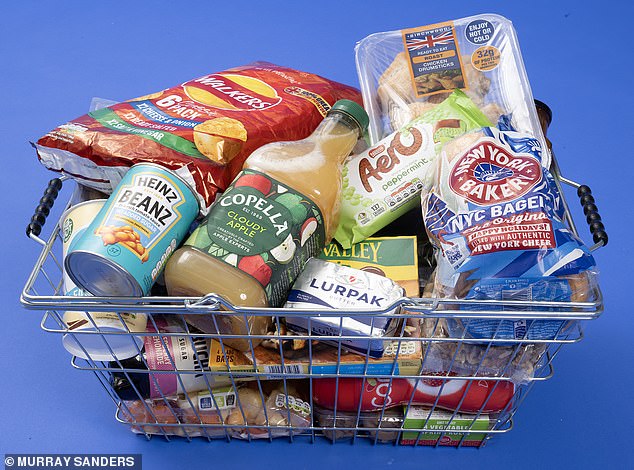
In average weekly shopping basket, like the MoS one pictured, 61.5 per cent of what we’re buying counts as ultra-processed food, or UPF – defined as industrially produced and containing artificial ingredients
It adds to previous research that has found UPFs may contribute to everything from weight gain and obesity to inflammatory bowel disease, gut inflammation, type 2 diabetes, cancers, fatty liver disease, kidney disease, dementia, depression and anxiety.
So how many are you eating? The Mail on Sunday’s shopping list was based on items contained in The Grocer’s 33 lists, which selects products from various categories, and data from the Office for National Statistics’ Living Costs and Food Survey.
‘In the UK we have watched childhood and adult obesity rates rise for three decades and we have done nothing,’ says Chris van Tulleken, professor of infection and global health at University College London. ‘The MoS’s shopping basket reflects that.
‘The UK’s high UPF diet increases the risk of overweight and obesity which, aside from the physical effects, is associated with low self-esteem, anxiety and depression. We now know that poor diet has overtaken tobacco as the leading cause of early death, and that’s largely due to UPF.’
But not all UPFs are bad. Dr Federica Amati, head nutritionist at health app ZOE, says: ‘Not all UPFs are created equal. Some can have genuine nutritional value. The key is knowing how to tell the difference.’
Here, our experts reveal which products you should keep in your trolley, and which to swap for healthier choices.
WHY IT PAYS TO GET FRESH
Experts recommend around 80 per cent of our diets should be from whole or minimally processed foods – in other words, fresh meats, fruit, vegetables, cheeses, nuts, whole grains and legumes.
Our basket contains just 38.5 per cent whole foods. This includes asparagus, courgettes, carrots, fruits such as mango and kiwis, a bag of walnuts and a bottle of extra virgin olive oil.

‘In the UK we have watched childhood and adult obesity rates rise for three decades and we have done nothing,’ says Chris van Tulleken, professor of infection and global health at University College London. ‘The MoS’s shopping basket reflects that’
The oil is considered one of the healthiest fats and can lower cholesterol and improve heart health.
There are plenty of vitamins and nutrients in the fruit and veg, and the nuts add protein, omega-3s and vitamin E, which boosts both heart and brain health. Dr Amati says: ‘As a rule, aim for 80 per cent whole or minimally processed foods, and keep the more processed ones to 20 per cent or less.’
In addition, a block of Lurpak butter and a bottle of Copella Cloudy Apple juice count as minimally processed and not UPF. The juice has ascorbic acid added, but that’s just vitamin C, and the Lurpak has no industrial additives.
PRODUCTS THAT ARE OK… IN MODERATION
Dieticians say that some products, consumed in moderation and alongside a balanced diet, are fine to eat occasionally.
This is particularly the case if the product has nutritional value because it contains protein, fibre and other vitamins and minerals.
How we filled our shopping basket
Goods in our average shopping basket were bought at Morrisons and Lidl last week – there was a total of 26 products, costing about £55.
The basket was based on consumer guide The Grocer’s ‘33 list’, used to compare supermarket prices and track supply chain efficiency.
These products, which change weekly, are chosen to represent fairly a British household’s weekly shop.
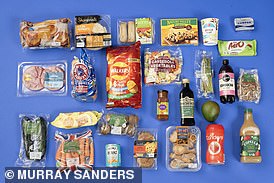
Everyone’s trolley will look slightly different in the real world.
But our list includes goods from all major food categories, including the bakery aisle and dairy counter, plus ready meal and store cupboard items, fresh fruit and vegetables, meat and fish, drinks, snacks and some sweet treats.
They also broadly represent the average weekly household spend on various categories of products in the Office for National Statistics’ Living Costs and Food Survey.
We found that 61.5 per cent of products on our list could be defined as UPFs. This was broadly similar to findings from other research.
<!- – ad: https://mads.dailymail.co.uk/v8/us/health/none/article/other/mpu_factbox.html?id=mpu_factbox_1 – ->
Advertisement
One example of this in our basket is the Morrisons cod fishcakes. They contain the preservatives sodium nitrite and potassium nitrate, which the International Agency for Research on Cancer (IARC), part of the World Health Organisation, classified as ‘probably carcinogenic to humans’.
They also contain dextrose, a refined industrial sugar, and various industrial flavourings.
But most of these additives are actually from the chorizo, a processed meat, in the fishcakes.
It’s a similar story with Morrisons gammon steaks, which contain phosphates and sodium nitrite, alongside dextrose.
This divided our experts. Gammon steaks are naturally high in salt (around ten times higher than pork), which contributes to high blood pressure and heart risk.
High intake of phosphates, found in processed meats, bakery products and some cheeses, has been shown to increase the risk of heart problems and stiffened arteries, in a 2011 analysis by doctors from the Universities of Colorado and Washington.
But cancer-linked nitrates are a particular issue.
Analysis by Imperial College London shows that for every 50g of processed meat consumed every day, the risk of bowel cancer increases by around 16 to 18 per cent.
The steaks are, however, rich in protein and B vitamins, so experts say they can be part of a balanced diet – as long as portion sizes are kept small. The NHS recommends no more than 70g a day (the steaks are 150g each).
Lidl’s roasted chicken drumsticks are also not just chicken – the processing means they also contain dextrose, and triphosphates as a stabiliser.
‘We have to be careful not to demonise UPFs, as some do have benefits,’ says dietician Zoe Griffiths, vice-president of Behavioural Medicine at health firm Numan. ‘These are still good sources of protein. But look at the ingredients on the packet and see if there are other products with fewer additives.’
Heinz beans contain modified cornflour, a highly digestible starch that breaks down easily and can cause blood sugar to spike, dietician Nichola Ludlam-Raine, author of How Not To Eat Ultra-Processed, says.
The high consumption of UPF foods containing modified starch, alongside other industrial ingredients, has been linked with type 2 diabetes in research, including a 2023 review by scientists from the US and the Netherlands.
But they’re high in fibre and protein and a good source of iron, folate, potassium and magnesium, as well as being low fat.
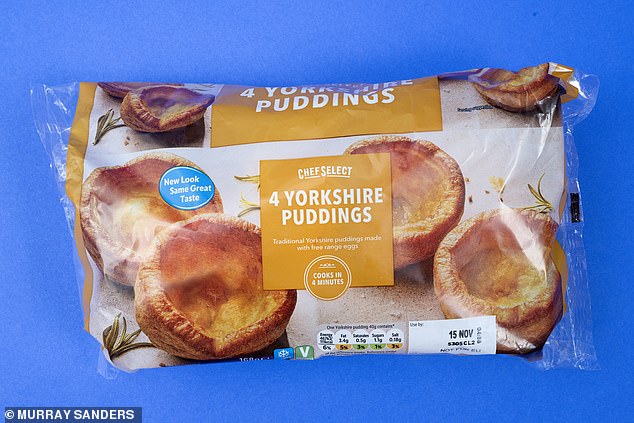
The Lidl Yorkshire puddings contain lecithin – an emulsifier that indicates highly processed products, but says dietician Nichola Ludlam-Raine, ‘It’s all about what you serve with them. If it’s alongside roast meat, potatoes and vegetables, that’s a balanced meal’
The Lidl Yorkshire puddings contain lecithin – an emulsifier that indicates highly processed products but is not itself linked to any health concerns as it comes from soya or sunflowers.
It also contains rapeseed oil, which becomes UPF if used in combination with other processed food ingredients. ‘It’s all about what you serve with them,’ says Ludlam-Raine. ‘If it’s alongside roast meat, potatoes and vegetables, that’s a balanced meal.’
The mango chutney is high in sugar and contains the preservative acetic acid (basically, vinegar), but experts say this is fine to consume occasionally.
Remedy kombucha is also good because it contains fermented tea, which is great for the gut.
‘The stevia it contains is better than artificial sweeteners, and the erythritol, a flavour enhancer, won’t do any harm,’ Ludlam-Raine says.
BE ALERT… AND SWAP FOR HEALTHIER CHOICES
Some products in our basket have little nutritional value, and contain industrially created chemicals and little else. These are the ones to avoid – or, at least, consume as little of as possible.
Griffiths says: ‘These are generally non-essential foods, which are high in fat and sugar and should be enjoyed less regularly.’
A peppermint Aero, for example, is full of vegetable oils, highly refined sugar syrups, emulsifiers, flavouring and colours.
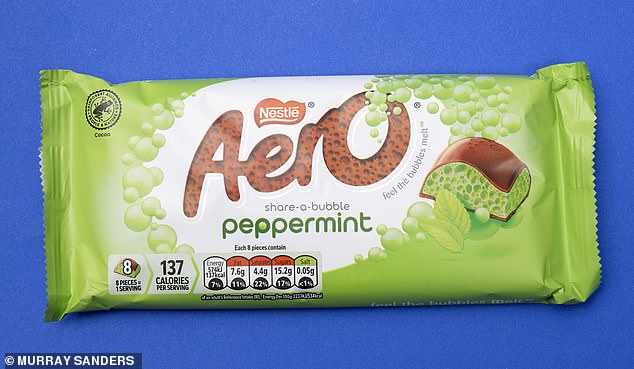
A peppermint Aero is full of vegetable oils, highly refined sugar syrups, emulsifiers, flavouring and colour. Swap it for plain dark chocolate, which contains heart-healthy polyphenols and plant flavonoids
Ludlam-Raine says: ‘It’s really energy-dense, devoid of fibre and contains zero nutrients. Swap it for plain dark chocolate, which contains heart-healthy polyphenols and plant flavonoids.’
The Lidl cake contains two emulsifiers, different types of fat, modified starch and diphosphates. Some emulsifiers have been shown in laboratory studies, including research by scientists at the University of Paris, to alter the composition of the gut microbiome ‘in a manner expected to promote intestinal inflammation’.
The Paris research found the most detrimental impact came from carboxymethylcellulose (CMC) and polysorbate-80 (E433). Neither were in any of the products on our list – but experts say they’re worth avoiding.
It’s also worth being wary of products that have what experts call a ‘health halo’ – in other words, they appear healthy.
The Nature Valley Protein bars contain protein and fibre, but also four types of highly refined sugars, including maltodextrin and glycerol, and four types of fat from different oils. Ludlam-Raine says: ‘You see the word “protein” and “nature” and think it’s healthy. They do contain a decent amount of fibre, roasted peanuts for protein, and less sugar than a Mars bar. But swapping them for Naked bars, which have no additives, would be better.’
Canderel, a sugar substitute, contains maltodextrin, along with artificial sweeteners aspartame and acesulfame-K. Aspartame has been classed as ‘possibly carcinogenic’ by the IARC, while data from a study in France found higher acesulfame-K intake was linked to a 40 per cent increased risk of heart disease.
Both can still be used in foods, however, because it has not been established that they directly cause harm.
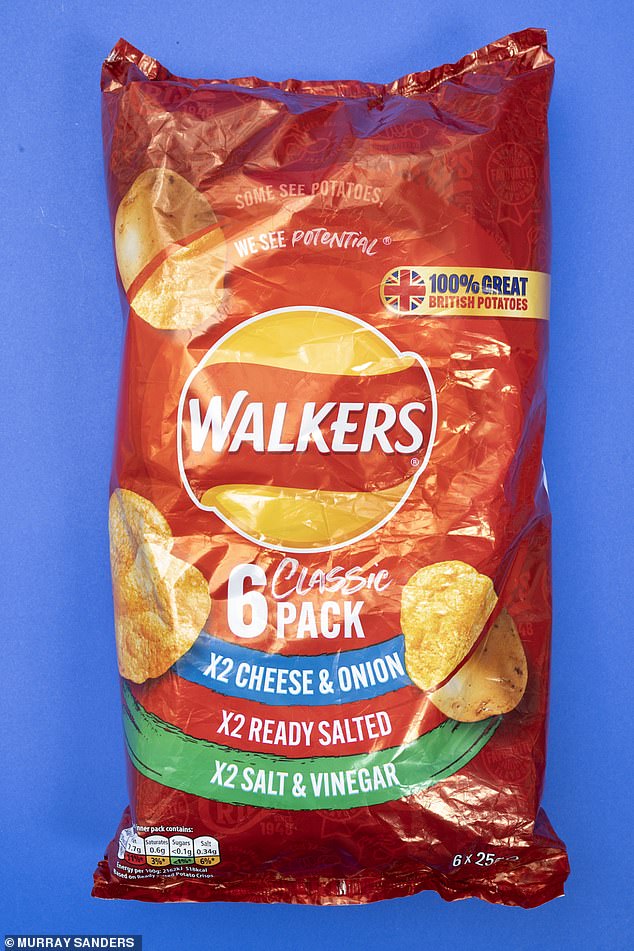
Walkers crisps are also full of salt, fat and added flavourings – replace with own-brand salted crisps, which often just contain potatoes, vegetable oil and salt
Walkers crisps are also full of salt, fat and added flavourings – replace with own-brand salted crisps, which often just contain potatoes, vegetable oil and salt, experts recommend.
Lidl’s vanilla yogurt might contain calcium but the addition of modified maize starch, flavourings and pectins makes it far less healthy. Griffiths says swap it for Greek yogurt topped with fruit.
The same goes for the New York Bakery Original Bagels – they’re low in fibre and nutrients and have an added preservative, calcium propionate. While not harmful, choosing wholemeal or seeded would boost their fibre content.
Products like the Lidl spring rolls and the poppadoms might be slightly better than a takeaway, but they also still offer little nutrition alongside their additives.
The spring rolls contain a stabiliser, hydroxypropyl methyl cellulose, which is safe at low doses. The poppadoms are largely UPF because of the industrial processes to create them.
Experts point out that UPF products tend to cost more. Ludlam-Raine adds: ‘A lot of these products are really expensive and while people think they have to buy fresh fruit and veg, it’s often much cheaper to buy it frozen. You can buy non-UPF crisps or chocolate for the same price.
What’s in Tim Spector’s basket?
Professor Tim Spector (pictured below) co-founder of personalised nutrition company ZOE, says: ‘My food shop is fairly simple but I like variety.
‘I’ll typically pick up most staples, such as fresh fruit and veg, from my veg box delivery or the farmers’ market.
‘I’ll go to a good butcher or fishmonger, as quality and freshness make a difference.
‘I mostly eat a plant-based diet, so my cupboard’s stocked with tins of beans, lentils and chickpeas, as well as whole grains and fermented foods.
‘They’re cheap, easy and packed with fibre, nutrients and plant protein.
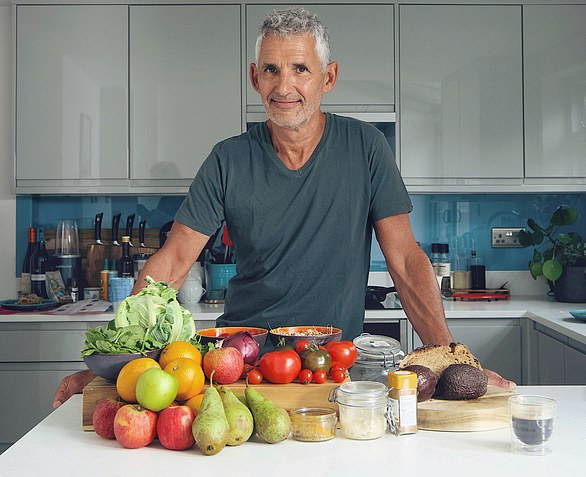
‘You’ll rarely find ultra-processed foods in my kitchen, such as jarred sauces or packaged snacks, though I am partial to a UPF cheese cracker.
‘I’ll usually have a sourdough or rye loaf to hand, baking my own when I can, and I turn leftover veg into soups or stews for easy meals.
‘I have a soft spot for cheese, especially a tangy blue rich
in live microbes, and I’ll often have a bit with wholegrain crackers, dark chocolate – 80 per cent or above – and a handful of roasted nuts for a minimally processed snack.’