
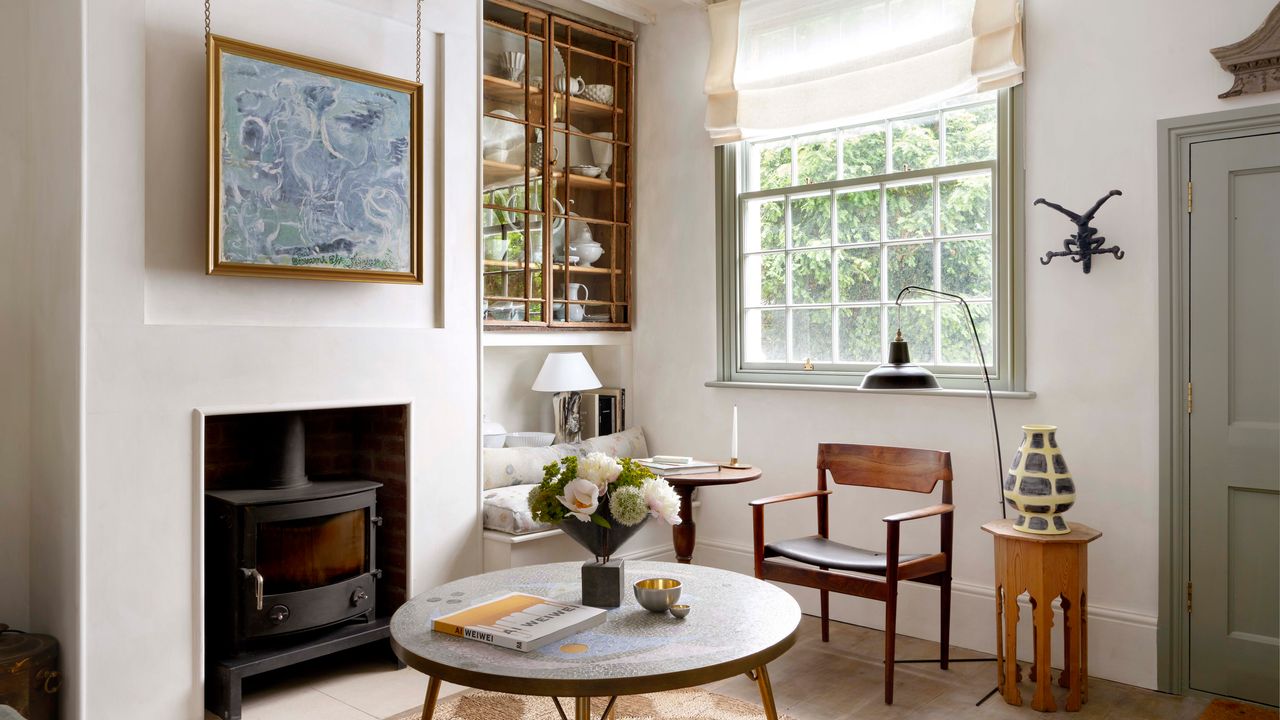
In many ways this cottage in Darley Abbey, a charming 19th century former mill village on the outskirts of Derby, felt like a homecoming. ‘This was somewhere I looked at buying my first house 20 years ago, before I ended up moving to London and working in the design world,’ explains Henry, who grew up in Derbyshire. ‘In a way it sort of represented something from my previous identity before I met Richard.’ Practical, not too big (three floors, with two bedrooms spread the upper two) and close to his parents, it met many of Henry’s requirements. ‘It wasn’t particularly run-down, just devoid of personality,’ he adds, recalling a bathroom that resembled a ‘metro-tile coffin’, a boxed in stairway that felt like a ‘tunnel of doom’ and a dark, distinctly 90s kitchen. ‘It became a quest to give the cottage back its identity and rediscover my own,’ he reflects.
The first task was to get the bones and layout in order. All of this was done in collaboration with Daniel Bland of The Upland Architect, an architect who Henry had previously worked with on a project, and Daniel handled the delicate issue of planning for the Grade 2 Listed cottage. Chunky 1970s windows were replaced with those that were closer to the Georgian ones that would have originally been there, while a small bay extension, fitted with full-height French doors, was added at the rear to transform the dark, east-facing kitchen into a light-flooded space that is now a joy to spend time in. ‘It was quite contentious, but we got there in the end and we worked very closely with the conservation officer to get all the detailing right,’ explains Henry. ‘I was probably a bit too much of a perfectionist, but I wanted to create a space that felt right,’ he recalls. ‘I was very romantic about it and approached it as if it would be my forever home.’
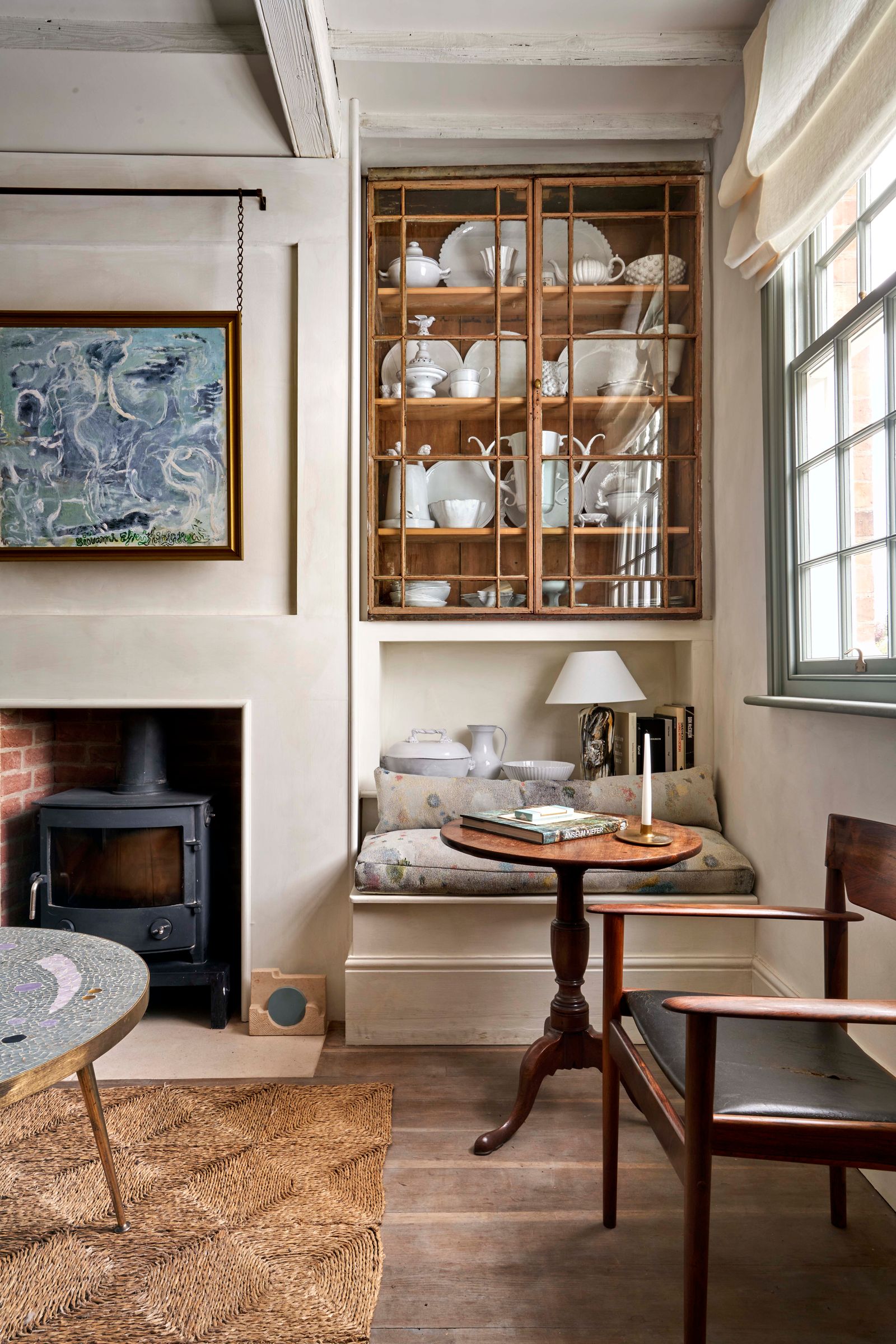
Seagrass squares, sourced from Pentreath & Hall sit atop the wooden boards, while a built-in bench is upholstered in Martyn Thompson’s ‘Accidental Expressionist’.
Simon Brown
Although the house had big windows and high ceilings, the rooms felt a little gloomy, so Henry set about finding ways for the light to penetrate deep into the space. ‘I wanted a space that felt calm, comfortable and light,’ he explains. The staircase was reconfigured between the upper two floors and a door repositioned to allow more light in, while all of the internal doors were swapped for half-glazed ones to ensure a good flow of light. The first floor bathroom was fitted with double pocket doors, allowing light to pour through into the staircase when they are open.