
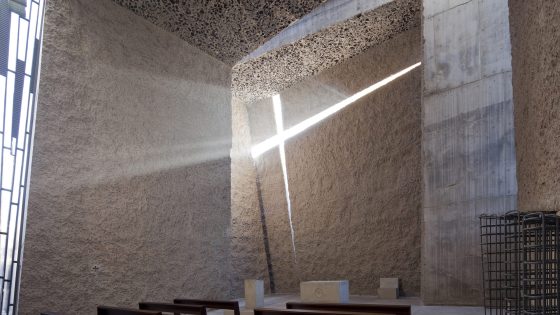
The Holy Redeemer Church and Community Centre of Las Chumberas in La Laguna, designed by Spanish architect Fernando Menis Architecture, was named the best in show at the annual festival, which took place last week (12-14 November) in Miami.
According to the jury, the scheme – which also includes a community centre and public square – had kickstarted regeneration in the ‘neglected’ neighbourhood, ‘rising as a landmark in a fragmented built landscape’.
Because the project was funded through an ‘irregular flow’ of donations, the four-block development was built in phases. The first two, housing the community centre, were completed 16 years before the final two stages.
The judges said the concrete church’s ‘massive, rough forms’ featuring ‘narrow cracks between structures, filled with sculptural metal and glass’ helped to filter daylight, creating a ‘minimalist, spiritual interior’.
They added: ‘Daylight is a key architectural element, shaping an introverted, austere space that invites reflection. Without windows, the building is illuminated by the unglazed cross and zenithal light. Throughout the day, the shifting light highlights different areas, guiding users through their interior exploration.’
The jury said the locally produced, ‘inexpensive, durable, and energy-efficient’ concrete structure had been chosen for its texture and acoustic performance.
‘[The] chipped concrete mixed with volcanic stones absorbs sound and, alongside smooth or rough exposed concrete, achieves a sophisticated sound control, comparable to an opera house – ideal for spoken word and song,’ they said.
As well as winning the best overall building title, the scheme had already scooped the civic and community category – one of 18 handed out for completed buildings at this year’s WAF.
It was selected by a super jury chaired by Iranian-American architect and educator Mohsen Mostafavi of Harvard University and included Laurinda Spear, founding principal of Arquitectonica; Ma Yansong, founder and principal partner of MAD Architects; and Peter Cook, director and architect at Peter Cook Studio Crablab.
WAF programme director Paul Finch said: ‘The judges particularly admired the intensity of the architecture and the way light has been used to shape the quality and character of the interiors, enhancing the tactile nature of the surfaces.
‘The building manages to masterfully accommodate symbolic and everyday needs of the community of which the architect is a part. The project has become a fine addition to the architecture of Tenerife.’
Fernando Menis Architecture founder Fernando Menis, 74, described winning as ‘a great gift, not only for me but also the church neighbourhood, who will now be recognised beyond Tenerife’.
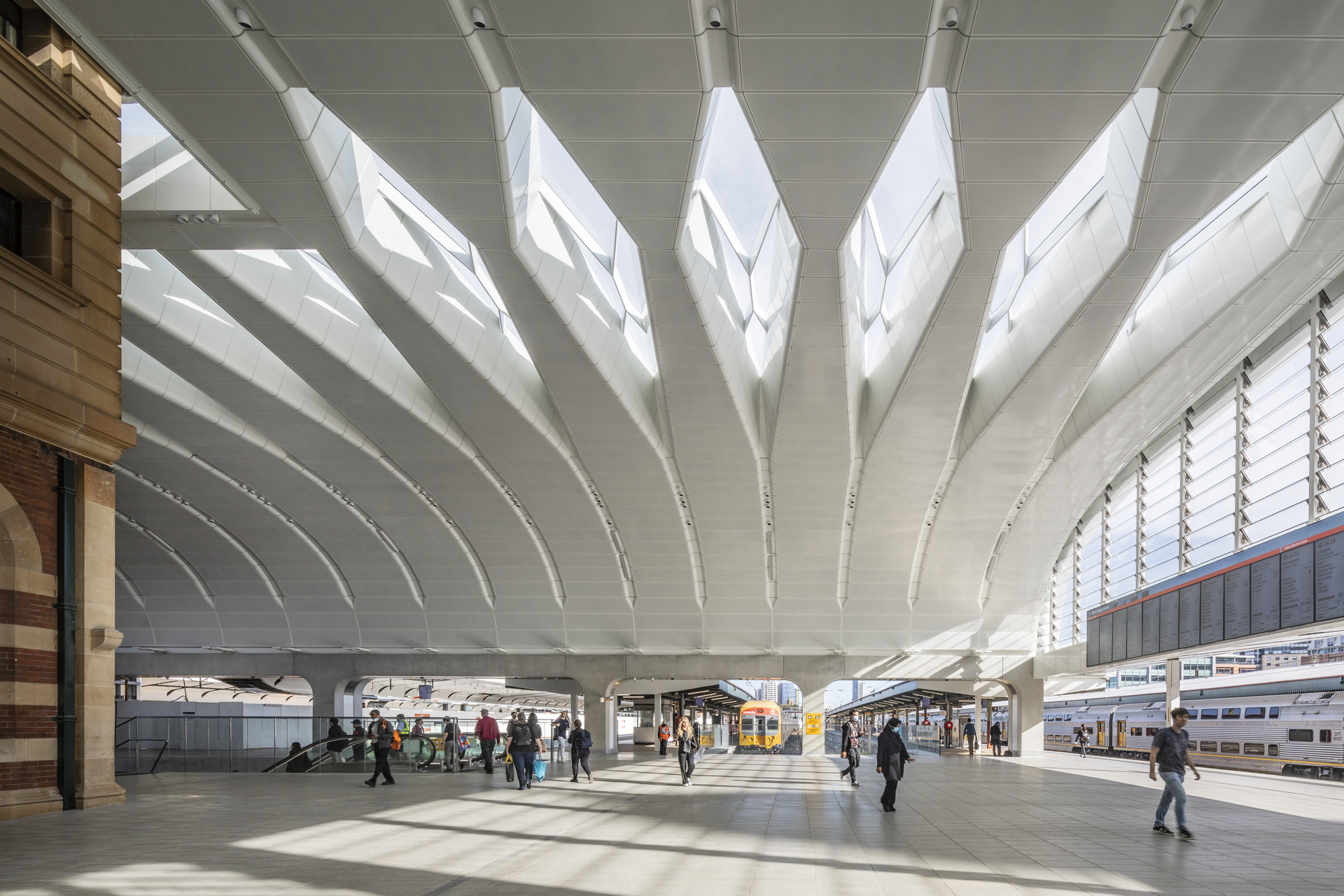
WAF 2025 – transport category winner: Central Station by Woods Bagot in collaboration with John McAslan + Partners
The only UK-based practice to win any of the completed categories was John McAslan + Partners, working with Woods Bagot, which won the transport category for the ‘sophisticated’ new metro interchange at Sydney’s Central Station.
Other WAF awards included Future Project of the Year, which was picked up by BIG (Bjarke Ingels Group) and Arup’s Gelephu International Airport in Bhutan.
Last year, Australian architect FJCstudio made history by becoming the first practice to win the top award at WAF for a second time.
The Sydney-based practice won World Building of the Year for its Darlington Public School, a community school on the outskirts of Sydney with ‘a strong connection to Aboriginal people embodied in its redesign’.
FJC Studio previously won best building in 2013, for The New Auckland Art Gallery Toi o Tāmaki, an ‘extensive public project’ which included restoration, new build and landscaping.
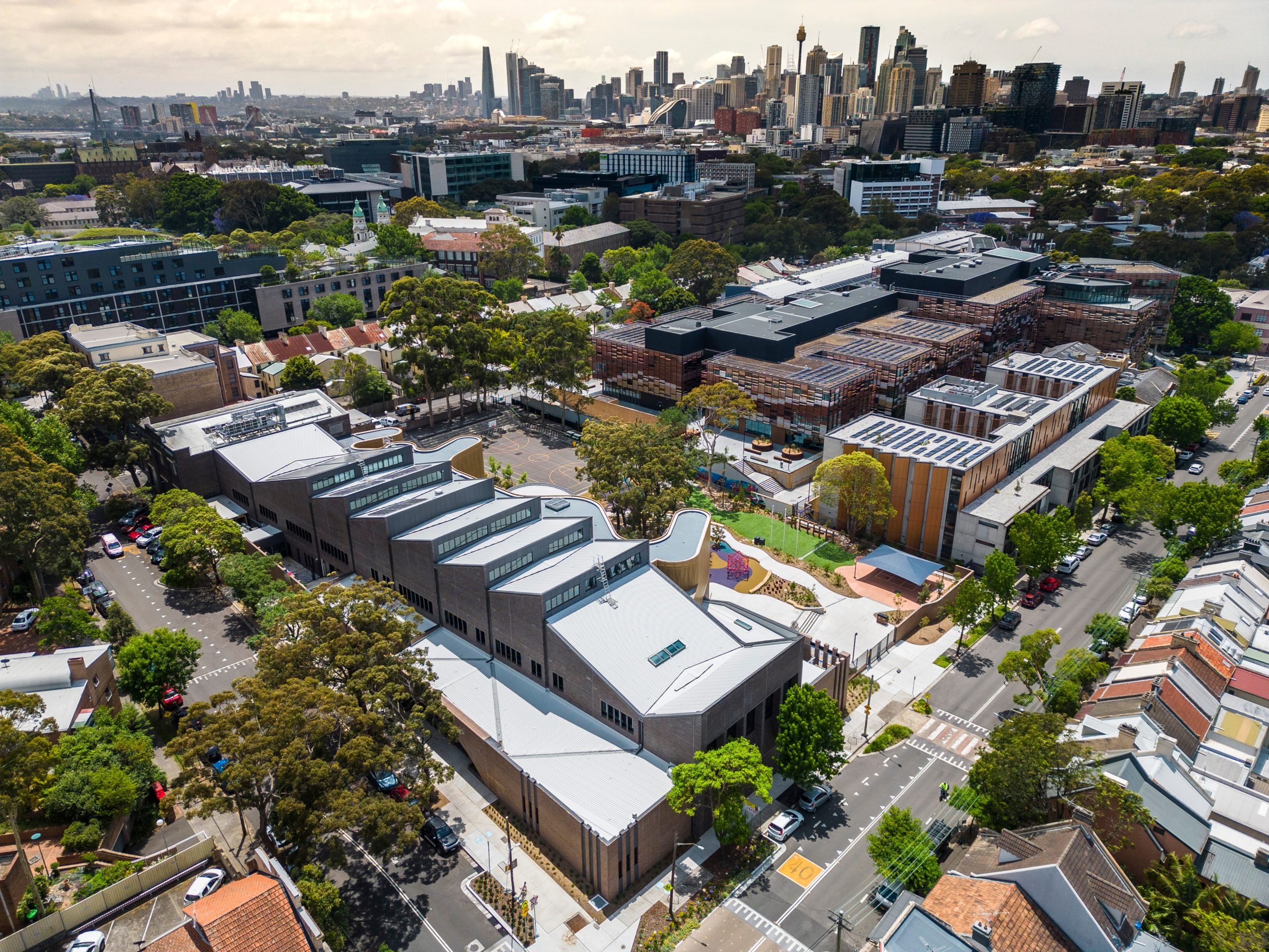
WAF 2024 – World Building of the Year: Darlington Public School by fjcstudio