
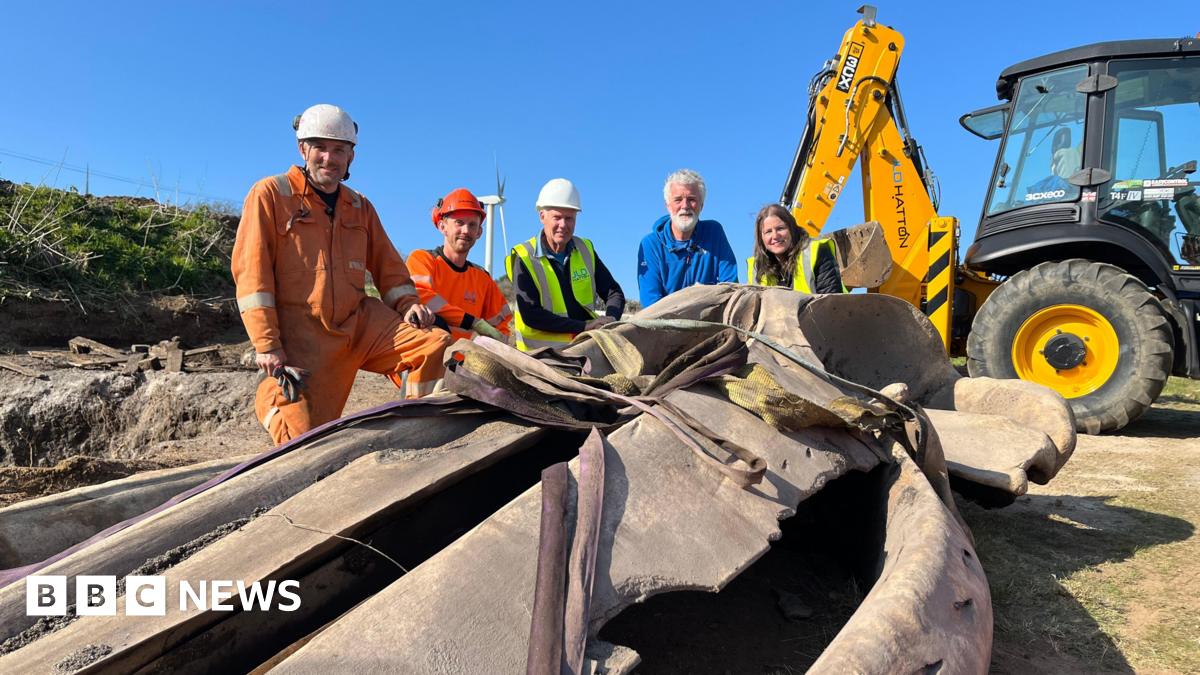
Usually whale carcasses are disposed of by the landowner but scientists, who hold a licence from Natural England, are allowed to take animal bones for scientific and educational purposes if permission is granted.
“There is so much to be done to improve the state of the natural environment,” Prof McDonald added.
“There’s a big global commitment to preserve and effectively manage about 30% of the sea by 2030 and we’ve got a long way to go.”
He said the whale’s skull was a “gargantuan reminder of what we can do to improve the marine environment”.
Part of the research on the bones would also be to see whether the process of decomposition in the soil had cleaned them of any remaining tissue, he added.
The excavation comes after another fin whale stranded on the Cornish coast on Monday.