
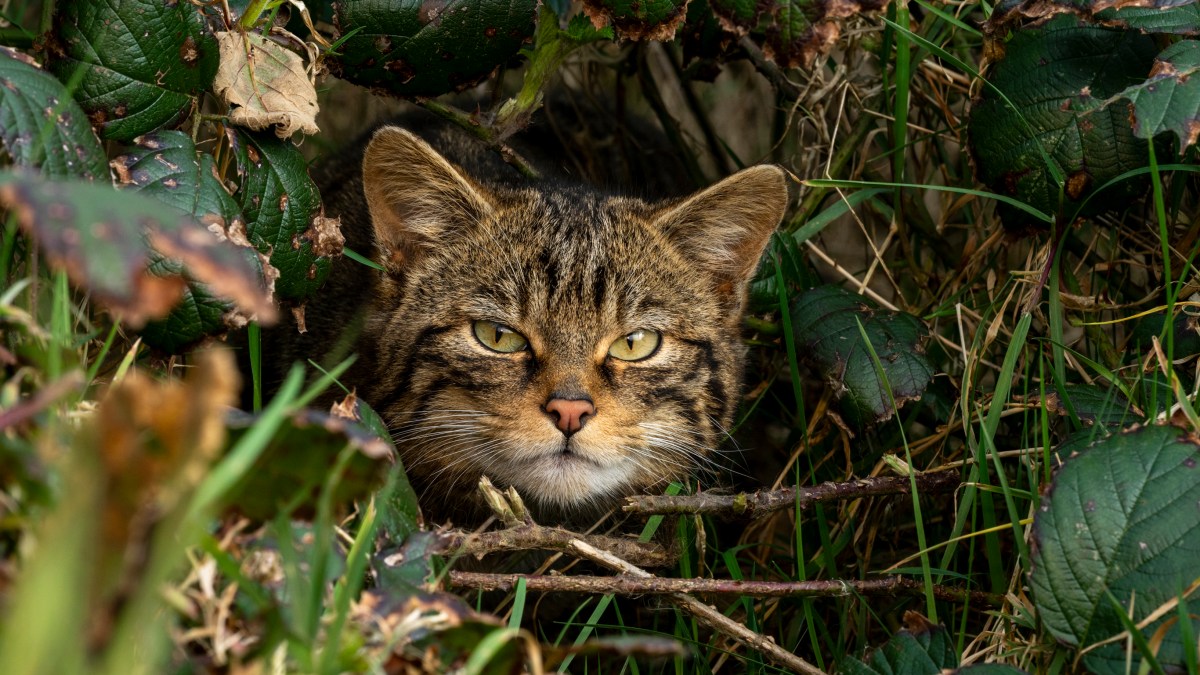
Wildcats could return to the southwest of England for the first time in a century after a two-year study found that the region has the right habitat and strong public support.
Conservationists said that the area has sufficient woodland, linked by hedgerows, rough grassland and arable land, to sustain a viable population of Britain’s only remaining native cat.
Mid-Devon has emerged as the most promising location due to its well-connected landscape, and relatively few towns and major roads, a hazard that has hindered the species elsewhere in Europe.
Independent research suggested that local enthusiasm is high. Surveys by the University of Exeter found that 71 per cent of a representative sample of 1,000 people backed the return of wildcats, while an online questionnaire drew support from 83 per cent of the 1,425 respondents.
Conservationists believe that with at least 50 animals released gradually, a thriving population could be established.
Historically known as “woodcats” for their affinity with forested landscapes, wildcats once roamed across the southwest. There were reports of wildcats on Exmoor as late as the 1920s. They vanished under pressure from persecution, hunting and the fragmentation of their woodland habitat. Today, the species clings on in the Highlands, where as few as 115 individuals remain and hybridisation with domestic and feral cats poses a threat.
• Stay at the heart of an ambitious rewilding project in the Scottish Highlands
The study found that wildcats would pose no significant risk to endangered species such as bats or hazel dormice, nor to people, pets or livestock. Lambs are not at risk and poultry can be protected through the same measures used against foxes. Their diet is dominated by small mammals (voles, rats, wood mice and rabbits) which make up about 75 per cent of their prey.
Conservationists said that they could help restore ecological balance by limiting species that damage habitats or are non-native, such as grey squirrels.
The South West Wildcat Project, led by Devon Wildlife Trust with partners including Forestry England and the Derek Gow Consultancy, was set up in 2023 to explore the feasibility of reintroduction. Its report emphasised the importance of working closely with communities and cat welfare organisations, including running neutering programmes to minimise hybridisation.
Cath Jeffs of Devon Wildlife Trust said that the findings were exciting, offering hope that the animals could form part of the region’s natural heritage. “A lot of work remains to be done before the first wildcats could be released,” she said, adding that future plans would hinge on extensive engagement with farmers and the shooting community.