
(Credits: Far Out / Universal Music Group / The White House)
Wed 19 November 2025 3:00, UK
Woodstock is often presented as the defining moment of the hippie counterculture, and often of the 1960s in general. That unshakably rose-tinted reputation, however, ignores the fact that the festival’s line-up featured more than a few glaring omissions. Namely, none of The Beatles appeared over the course of the weekend, despite having carved out the inherent sound of the decade.
Expectedly, the reasons for The Beatles’ omission from Woodstock are myriad. For starters, the band were already long since on the rocks by the time 1969 rolled around, with George Harrison temporarily quitting the band months before Woodstock started to take shape.
What’s more, the band had already renounced live performances years prior, in 1966, so it was unlikely that they’d make an exception to play for thousands of bare-footed, acid-riddled hippies covered in mud. Seemingly, though, the prevailing reason for the Fab Four’s absence was political meddling.
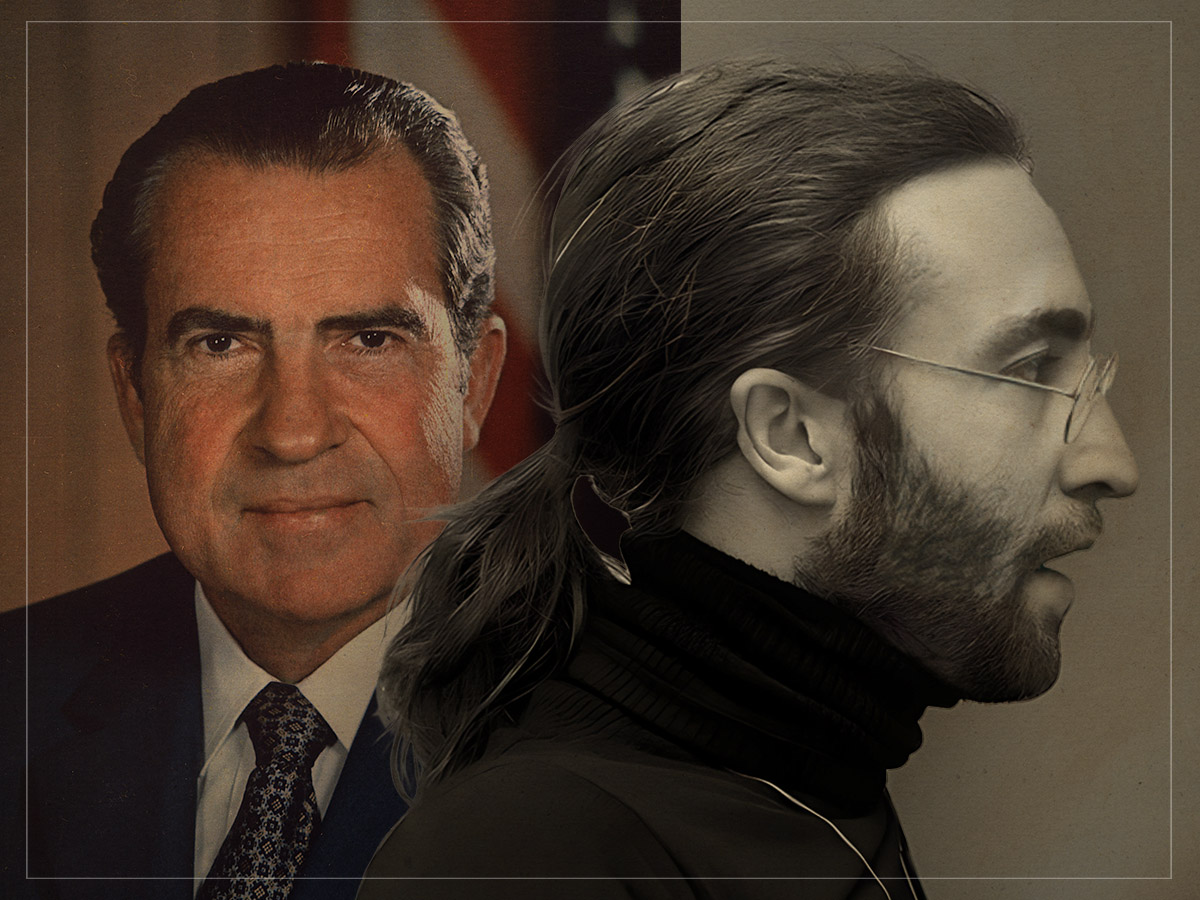
Instead of attempting to book all four of The Beatles, organiser Michael Lang focused his efforts entirely on John Lennon, but one man stood in their way: Richard Nixon. The 37th President of the United States always seems to rear his jowls at the most inopportune moments, whether it’s bugging the Democratic National Committee headquarters or extending the already catastrophic Vietnam War into neighbouring Cambodia. Seemingly, though, he also found time to pull the strings of popular culture.
“We really wanted John Lennon, but Nixon didn’t want him in the country at the time,” Lang told The Guardian back in 2012. “We tried to figure out ways of getting him in. Funnily enough, when I was doing my memoir, I found a letter from Apple offering the Plastic Ono Band. The letter arrived the day we lost our site, and I never saw it until the day I wrote the book.” Still, that begs the question of why exactly Richard Nixon had such a seeming vendetta against Lennon.
Seemingly, Nixon’s administration had been keeping very close tabs on Lennon from the beginning of the president’s election. A sense of McCarthyism was still rife throughout the Republican Party, in particular, and so virtually any artist with a left-leaning ideology was placed under suspicion. In fact, the FBI amassed extensive files on the songwriter, with one memo from J Edgar Hoover calling attention to his supposed “extreme left-wing activities in Britain.”
What exactly those extreme activities entailed is up for interpretation; it wasn’t until later on, during his solo career, that the songwriter became more hands-on in his political approach, after all. Nevertheless, his calls for peace and an end to the war in Vietnam, coupled with his insurmountable fame across the globe, were enough for Nixon to try and prevent Lennon from entering the United States.
In hindsight, of course, the entire situation is ludicrous. Lennon was no more extreme in his policies than anybody else who performed at Woodstock in 1969, and even if he had performed, the audience at the festival was already pretty turned-on to the anti-war movement. As for Nixon’s fears that popular support for Lennon and his advocacy for peace would damage his re-election campaign, that wouldn’t matter in the long run either, as Nixon was forced to resign in 1972 over the Watergate scandal anyway.
Even without the inclusion of John Lennon, though, Woodstock still managed to compile potentially the greatest festival line-up of all time – rivalled only, perhaps, by the Isle of Wight Festival the following year – uniting a multitude of the cultural trendsetters and pioneering artists who helped to make the 1960s a true golden age of grassroots music and activism.
Related Topics