

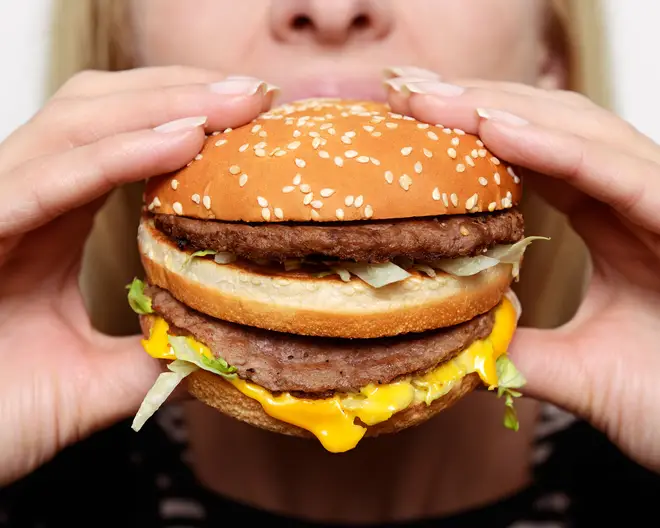
Ultra-processed food (UPF) has been linked to harm in every major organ system of the human body according to findings.
Picture:
Alamy
Ultra-processed food (UPF) has been linked to harm in every major organ system of the human body and poses a “seismic” threat to global health, to according to new reports.
The rise in UPF, which includes ready meals, fizzy drinks, fast food and protein bars, are rapidly displacing fresh food in the diets of both children and adults across the globe.
The findings, from a series of three papers published in the medical journal Lancet, have found the food are also associated with increased risk of health conditions including obesity, type 2 diabetes, heart disease and depression.
Worldwide intake of UPF is being spurred by “profit-driven corporations” using a “range of aggressive tactics to drive consumption,” according to the review.
Read more: Princess of Wales urges business leaders to value ‘time and tenderness’ during landmark speech
Read more: Examples of where inflation jumped in October – and where it eased

Ultra-processed foods have been linked to a range of health conditions including heart disease and depression.
Picture:
PA
Evidence reviewed by 43 of the world’s leading experts suggests that diets high in UPF are linked to overeating, poor nutritional quality and higher exposure to harmful chemicals and additives, the Guardian reports.
One of the Lancet series authors, Prof Carlos Monteiro, professor of public health nutrition at the University of São Paulo, said the findings underlined why urgent action is needed to tackle UPF.
He said: “The first paper in this Lancet series indicates that ultra-processed foods harm every major organ system in the human body.
“The evidence strongly suggests that humans are not biologically adapted to consume them.”
Mr Monteiro and his colleagues in Brazil came up with the Nova classification system for foods which groups them by level of processing, ranging from one which are classed as unprocessed or minimally processed foods, such as whole fruits and vegetables, to four, which are ultra-processed.

UPF has been described as a seismic threat.
Picture:
Alamy
This category is made up of products that have been industrially manufactured, often using artificial flavours, emulsifiers and colouring including soft drinks and packaged snacks.
They are also designed and marketed to displace fresh food and traditional meals, while maximising corporate profits, Monteiro said.
He added: “The growing consumption of ultra-processed foods is reshaping diets worldwide, displacing fresh and minimally processed foods and meals.
“This change in what people eat is fuelled by powerful global corporations who generate huge profits by prioritising ultra-processed products, supported by extensive marketing and political lobbying to stop effective public health policies to support healthy eating.”
The second paper in the series proposes policies to regulate and reduce UPF production, marketing and consumption.
Although some countries have brought in rules to reformulate foods and control UPF, “the global public health response is still nascent, akin to where the tobacco control movement was decades ago,” it said.

UPF includes products industrially manufactured, often using artificial flavours, emulsifiers and colouring including soft drinks and packaged snacks.
Picture:
Getty
The third paper says that global corporations are driving the rise of UPF.
Series co-author Prof Barry Popkin, from the University of North Carolina, said: “We call for including ingredients that are markers of UPFs in front-of-package labels, alongside excessive saturated fat, sugar, and salt, to prevent unhealthy ingredient substitutions, and enable more effective regulation.”
The authors also proposed stronger marketing restrictions, especially for adverts aimed at children, as well as banning UPF in public spaces such as schools.
Although some countries have brought in rules to reformulate foods and control UPF, “the global public health response is still nascent, akin to where the tobacco control movement was decades ago,” it said.
The third paper says that global corporations are driving the rise of UPF.
Series co-author Prof Barry Popkin, from the University of North Carolina, said: “We call for including ingredients that are markers of UPFs in front-of-package labels, alongside excessive saturated fat, sugar, and salt, to prevent unhealthy ingredient substitutions, and enable more effective regulation.”
The authors also proposed stronger marketing restrictions, especially for adverts aimed at children, as well as banning UPF in public spaces such as schools.