
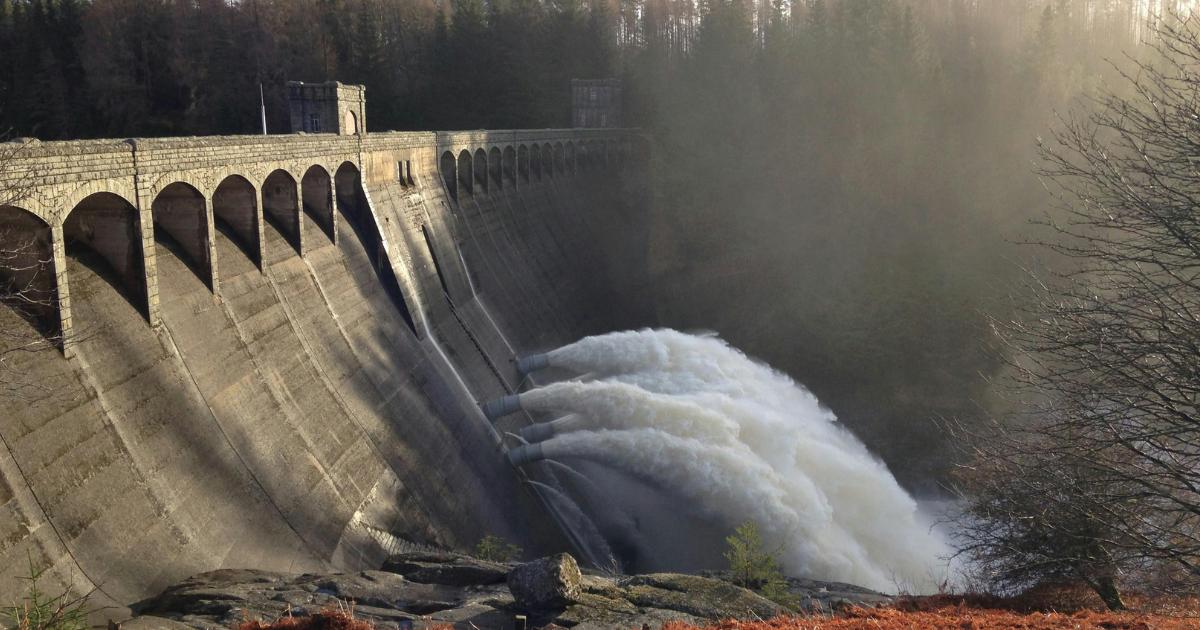
The Environment Agency, alongside the Department for Environment, Food, and Rural Affairs, said that this could happen if the winter is dry.
The agency released its Drought Prospects Report on Friday, November 14, which looks at the amount of rain needed this winter, to ensure the country’s low water levels recover by spring 2026.
Despite recent rain, the record dry spring and the hot, dry summer have left the country in a “precarious” drought situation.
The Environment Agency said that drought is only over when water levels are fully replenished, and England has seen below-average rainfall for eight out of the ten months so far this year.
They said this means that flooding in drought is possible, including flash floods as dry soils struggle to soak up intense downpours.
The Met Office has also said that there is a higher-than-usual likelihood of dry conditions from November to January, which could make the drought worse.
This would mean hosepipe bans, pressure on the environment and a risk to crop yields.
The report also looks at three different rainfall scenarios over the winter, and what each one would mean for water security across the country.
Without average rainfall, most of England will experience a drought with widespread impacts felt by consumers, farmers, businesses and nature.
The Environment Agency is urging the public to continue using water wisely in anticipation of another drought year.
Helen Wakeham, director of water at the Environment Agency, said: “There will be a drought next year, unless we get sustained rainfall through the winter.
“The severity of that drought will depend both on the weather and the actions we take over winter following this very dry year.
“The public have been brilliant in using a little less water this summer and following the restrictions in some parts of the country.
“I would urge people to continue to be as efficient as possible with their water use this winter – even if it is raining outside.
“Our wildlife, our rivers and our public water supplies depend on it.”
Water minister Emma Hardy said: “I welcome the recent rainfall but the prolonged dry weather throughout this year continues to pose risks to public water supplies, farming and the environment.
“We continue to work with the National Drought Group and water companies to maintain supplies for communities across the country.
“Climate change means we will face more frequent, severe droughts and flooding in the years ahead.
“That’s why this government is taking decisive action to secure our long-term water resilience, which includes building nine new reservoirs and investing in new pipes to reduce leakage.”
The Drought Prospects Report said that with 80 per cent of average winter rainfall, drought conditions would increase over the winter months because of the current low river flows, groundwater and reservoir levels.
By the end of March, a large area spanning from Dorset to East Yorkshire would be in drought.
The south east, south west and East Anglia would be in prolonged dry weather with only the north west experiencing normal conditions.
This rainfall scenario would increase the risks to some crops, with a reduced breeding success of birds, an increased risk of wildfires and potential navigation closures.
With 60 per cent of average winter rainfall, by spring 2026 all of England would be in drought.
There would be reduced water for irrigating crops, reduced vegetable production and an impact on grass growth.
Most water companies would see impacts in either all or part of their supply area, meaning an expectation of hosepipe bans and non-essential use bans.
There would also be the potential for permanent environmental damage as well as significant impacts in the leisure sector, such as golf clubs and football pitches.