
Published November 19, 2025 03:33AM
George Hincapie has seen the good, the bad, and the ugly in professional bike racing, and after a few years on the sidelines, he’s jumping back into the game with America’s first new men’s road racing team in years.
The goals are sweeping as they are ambitious for his upstart Modern Adventure Pro Cycling team.
The former pro and his backers hope to reinvigorate the U.S. road racing market and deliver what he calls America’s next “dream team” to the Tour de France.
That’s a very high bar to set, especially considering that the domestic road racing calendar is largely on life support.
Yet there’s a booming gravel scene and a generational-high level of Americans among both men and women winning races at the elite WorldTour.
Hincapie wants to bridge that gap.
What’s missing — at least in Hincapie’s view — is a heavy American imprint on international road racing.
“The mandate is at least 50 percent Americans,” Hincapie told Velo in a phone call this week. “We’ve got 12 Americans signed, actually 13 now.
“If we make it to the Tour de France someday, we want to show up with mainly Americans. I think that will help spark interest in U.S. cycling again.”
The blueprint is in place. Hincapie and his team have already secured a ProTeam racing license for 2026 and will field a 20-rider team to debut in a few weeks.
Work began nearly one year ago, and it’s finally time for rubber to hit the road.
“The medium long-term plan is to try to get to the WorldTour and race the Tour de France,” Hincapie said. “That is the vision. It’s going to take a lot of money to get there, but we’re off to a good start.”
‘Bad News Bears’
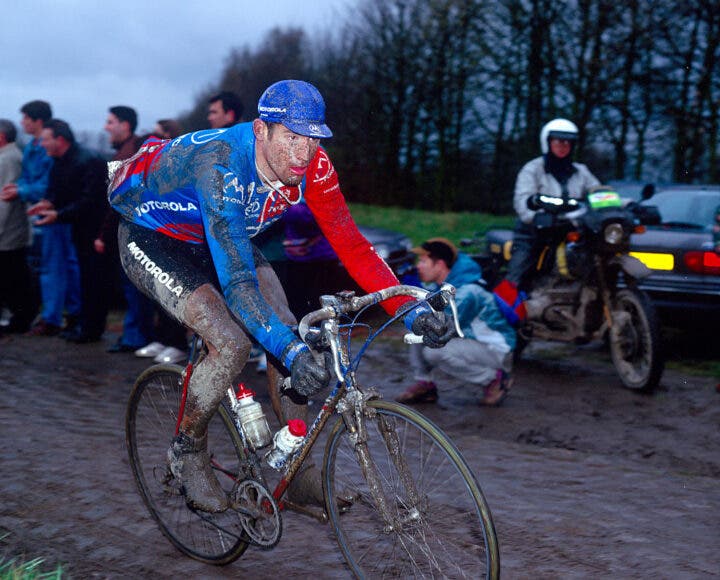 Hincapie, shown here in the 1994 Paris-Roubaix, turned pro in 1993. (Photo: Graham Watson/Getty Images)
Hincapie was at his home in South Carolina when he took a call from Velo this week. At 52, Hincapie wasn’t exactly bored in what’s been a very busy life in his post-racing chapter of his life.
He is still involved in several businesses, including apparel, hotels, and other projects, and appears regularly as a panelist on The Move, part of the Lance Armstrong media group. Hincapie confirmed to Velo that Armstrong, who is banned for life, is not involved in the project.
Hincapie acknowledges that life was comfortable before he jumped at the chance to own and build up a pro team, but something was missing.
“This feels like a lot more purposeful,” he told Velo. “To lead something that can be special and be impactful in the sport we all love. That’s why I’m doing it.”
Hincapie will forever be linked to the Armstrong generation, and he served a six-month racing ban as part of the USADA case. Hincapie is hoping to help heal some of those wounds by throwing himself into the Modern Adventure project.
He’s been working overtime during the past 12 months to create the foundations of the team.
“I’m kind of back in that mindset of my first year at Motorola,” Hincapie told Velo. “Getting my ass kicked, nobody knowing who I was. And it’s motivating. I’ve done it before in the sport, reached the highest level, and now I want to do it again, this time as a team owner, starting from scratch.”
The calendar plan is to mix the best of American races, including some gravel and crits, with a strong European focus. And build from there.
“I wanna look back in five, six years from now and go, this is where we started,” he said. “From basically ‘Bad News Bears’ to building to be one of the best teams in the world.”
Hincapie hopes to join EF-Education First and Lidl-Trek, now under a German racing license, as the leading U.S.-linked teams at the top of the sport.
Securing the financial backstop
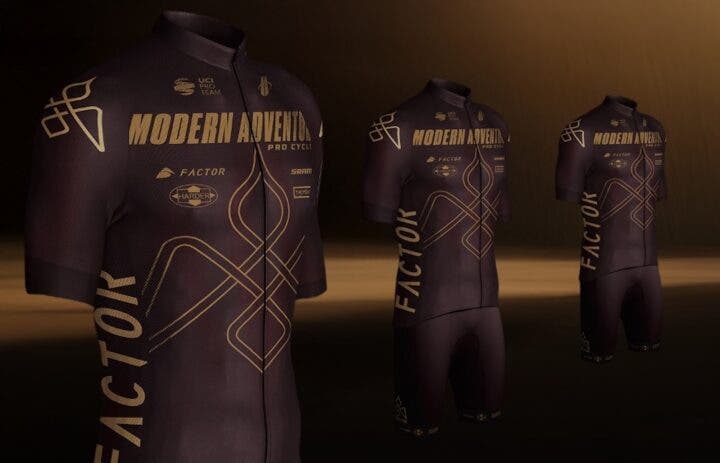 Here’s an early glimpse of the Modern Adventure team kit. (Photo: Special to Velo)
The idea of building a new U.S.-centric pro team had been kicking around for years. The leap from talking about it over beers to actually making it happen is something else altogether.
Key backers include team co-owner Dustin Harder and Luis Vargas, from the title sponsor Modern Adventure, an upscale travel company.
Everyone kept nudging him to start a team, but Hincapie wasn’t sold until he saw the long-term commitment behind the project.
During his long racing career, he saw teams come and go, from Motorola to HTC-Columbia, both of which folded after not securing title sponsors.
Before even agreeing to join the project, Hincapie wanted to know that the money was in place.
“When I realized the opportunity and the long-term commitment, I said, OK, this could be really something special,” he told Velo. “I have a minimum six-year, most likely eight-year commitment from my main sponsor.
“We can grow the team, bring in better riders, but start off slowly. There’s no pressure next year to try to win every race we enter.”
He takes inspiration from Jim Ochowicz, the pioneering American manager who built the fabled 7-Eleven and Motorola teams and later won a Tour de France with Cadel Evans at BMC Racing.
Hincapie did not reveal the team’s budget, but said it was “middle of the pack” for the ProTeam league, meaning that the budget is well into seven figures.
That solid financial footing is key going into the first decisive seasons of the team.
“I’m not worried about a corporate sponsor saying, why aren’t you guys winning every day, or why aren’t you guys getting into the Tour de France right away?” Hincapie says. “We’re all very, very clear that it’s going to take time. It’s going to take a lot of hustling from all of us.”
Right now, the budget does not match the scale of the ambition.
Hincapie confirmed to Velo that he’s already working with several agencies to search for a top-billing title sponsor, which he hopes to secure in the coming seasons.
Infrastructure and staffing
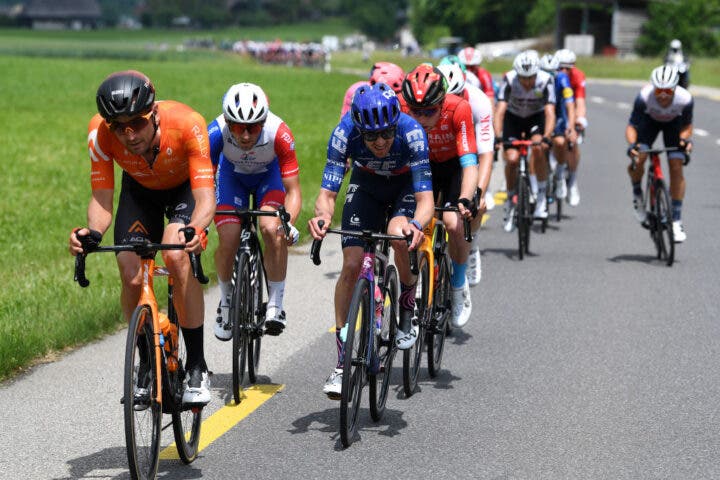 Rosskopf in orange and Howes in EF colors, shown here racing in 2021, are part of the sport director team. (Photo: Tim de Waele/Getty Images)
Behind the flurry of marketing and social media posts over the past week to officially confirm the team’s 20-rider roster is more than a year of hard work.
The past 12 months for Hincapie have been a blur of flights, meetings, and UCI paperwork.
“I’ve been to Europe six or seven times this year,” he said. “It’s been busy, but motivating. The UCI registration is a complicated and intense process. With the vetting, everything has to be dialed in. But so far we’ve hit all the marks.”
He tapped into his network of contacts to build out the staff, with Bobby Julich heading up performance and coaching. His brother Rich, who ran the Hincapie development team from 2012 to 2020, is the general manager.
Ex-pros Joey Rosskopf, Alex Howes, and Ty Magner, all three close in age to today’s rising stars, will lead the sport director lineup.
The team will have its first get-together next month at Hincapie’s hotel at Traveler’s Rest in South Carolina to fit bikes, plan calendars, and get acquainted. The squad will reconvene in Europe in January, and that’s when the real work begins.
Right now, the Tour de France seems very far away, but Hincapie knows the most important step is the first one.
Hat in hand
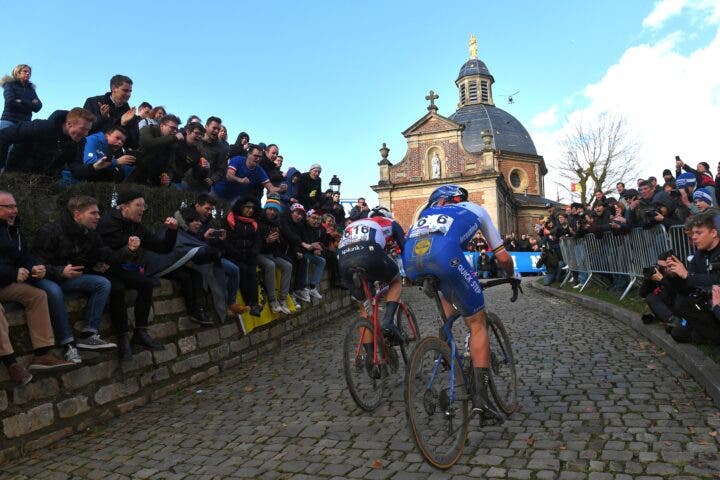 Hincapie is hoping to work his contacts to get the team invites to some of the smaller Belgian classics. (Photo: Tim de Waele/Getty Images)
Once the team decided to go all-in over the winter, Hincapie’s been burning the candle at both ends in an endless string of phone calls, meetings, trips, and crunch time with lawyers and accountants to pull it all together.
The payoff is a freshly minted ProTeam racing license for 2026.
The team already bought a bus, cars, and dialed in equipment sponsors. It’s building out a U.S. base in Greenville, S.C., and Hincapie revealed that he’s signed a long-term lease for a service course in cycling hotbed at Girona, Spain.
Now comes the hard part: getting into races.
The ProTeam license — just below WorldTour status — allows the team to start the top European and global races on invitations, but those invites are not easy.
He’s been working the phones, hoping to tap into his network of contacts to get invitations in the Middle East and Europe to kickstart the team’s calendar in the opening months of 2026.
“One of my strong suits as a rider was my relationships with people,” he said. “A lot of organizers and team leaders are people I raced with. It’s fun reconnecting and hearing, ‘Great to see you back, George.’ There’s a lot of interest in another American team coming back.”
Of course, as Hincapie pointed out, it’s very competitive for the invitations.
“I have a wish-list of the races I’d like to race,” he said. “The calendar is so big that between the Middle East and Europe, I think we’ll have a pretty schedule for the spring.”
Expect the team to secure invites from some key early-season races, perhaps like the AlUla Tour or the Tour of Oman, and some second-tier classics, like Danilith Nokere Koerse or the Bredene Koksijde Classic.
Building a new American team
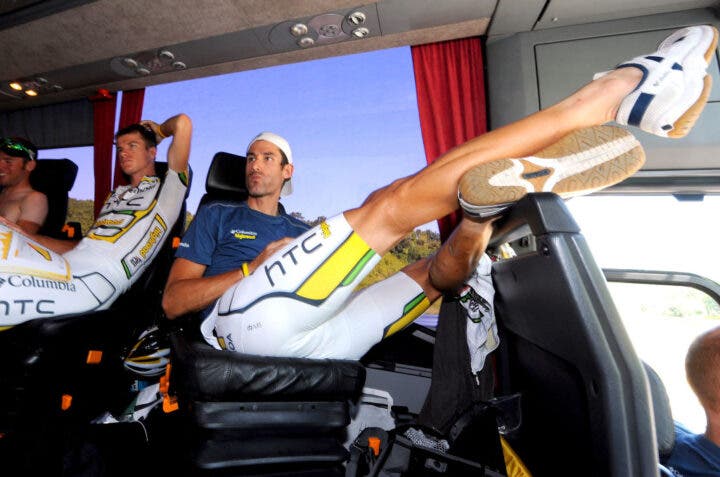 Hincapie hopes to build a team like HTC, which he said featured laidback vibes. (Photo: Tim De Waele/Getty Images)
While the money is there for a guarantee of at least six years, it’s a far cry from the $50 million-plus budgets of today’s super teams.
With a limited budget, Hincapie and his staff targeted established riders with untapped upside and young, hungry pros who were just starting their careers but were overlooked by the big WorldTour-backed development teams.
Stefan de Bod and comeback story Leo Hayter have WorldTour experience, and Robin Carpenter and Scott McGill are some of the most experienced U.S. pros. A core of the team is a pack of young up-and-coming Americans and international talent.
“We hired riders that we think are far from reaching the top of their game,” he told Velo. “My main goal is not to say I want to win 5 races or 10 races. I want to finish the year next year and say, the guys that we hired are now 10 percent better because we gave them the best equipment, and they’ve become better cyclists.”
He argues the United States has the talent — that’s obvious with more than the dozens of elite women and men racing in the WorldTour — but what’s lacking in his view is a stronger American narrative.
“In the U.S., we have an incredible talent pool of cyclists right now, but they’re scattered all over the WorldTour,” Hincapie said. “For a non-hardcore fan, it’s hard to follow them.”
Hincapie knows it will take time. The upper echelon of international cycling is more competitive than ever. The challenge now is to see if an American-centric team can rise to the Tour de France level.
“Ideally, we can get a lot of these guys under the same umbrella,” Hincapie said. “I think that would really spark the interest of cycling here in the U.S. again.”
Hincapie wants to bring that American talent into one team and light up international racing. It all starts now.