

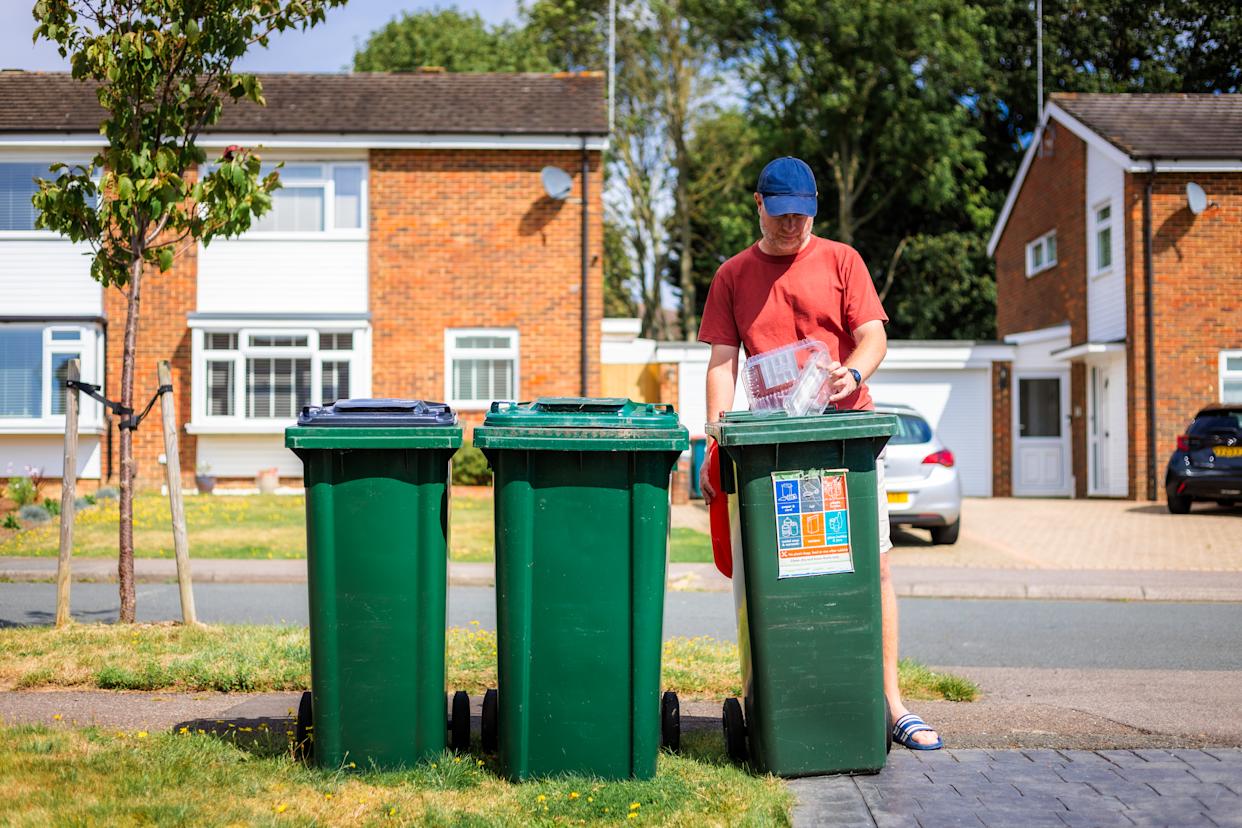
Plastic bottles make up the largest fraction of plastic packaging. (Getty)
(coldsnowstorm via Getty Images)
Almost half of the plastic items thrown out by households in the UK do not get recycled – contributing to the country’s growing plastic waste problem.
From plastic film that isn’t yet recycled to tubs that are made of too many materials for some councils to collect, millions of tonnes of plastic ends up in the environment every year.
The government is attempting to tackle the issue with the introduction of its Simpler Recycling scheme, which will see households sort their waste into four different streams for collection and standardise recycling collections across England.
But with concerns about the growing threat to health posed by plastic waste, how much does your household throw away each year?
What are the most common types of plastic waste?
Bottles make up the largest fraction of plastic packaging (39%), and are made from plastics such as polyethylene terephthalate (PET), which is widely recycled, according to leading sustainability charity WRAP.
Plastic film (which is not yet recycled, but will be collected with other plastic by councils from March 2027) makes up about one-quarter (27%) of packaging.
Plastic pots, tubs and trays (which are not recycled in many areas due to being made up of a wider variety of plastics) also make up about one-quarter (26%) of packaging.
These will be collected by local authorities from March 2026 in England, with similar measures coming into force in Scotland, Northern Ireland and Wales.
How much does each household throw away?
Every British household throws away about 44kg of plastic waste every year, according to calculations from WRAP.
That’s equivalent to the weight of a family dog or an adult chimpanzee – worse still, only half of this amount is currently recycled.
Adam Herriott, senior specialist at anti-pollution organisation WRAP, said: “UK households generate around 44 kg of plastic packaging every year, roughly the weight of a labrador.
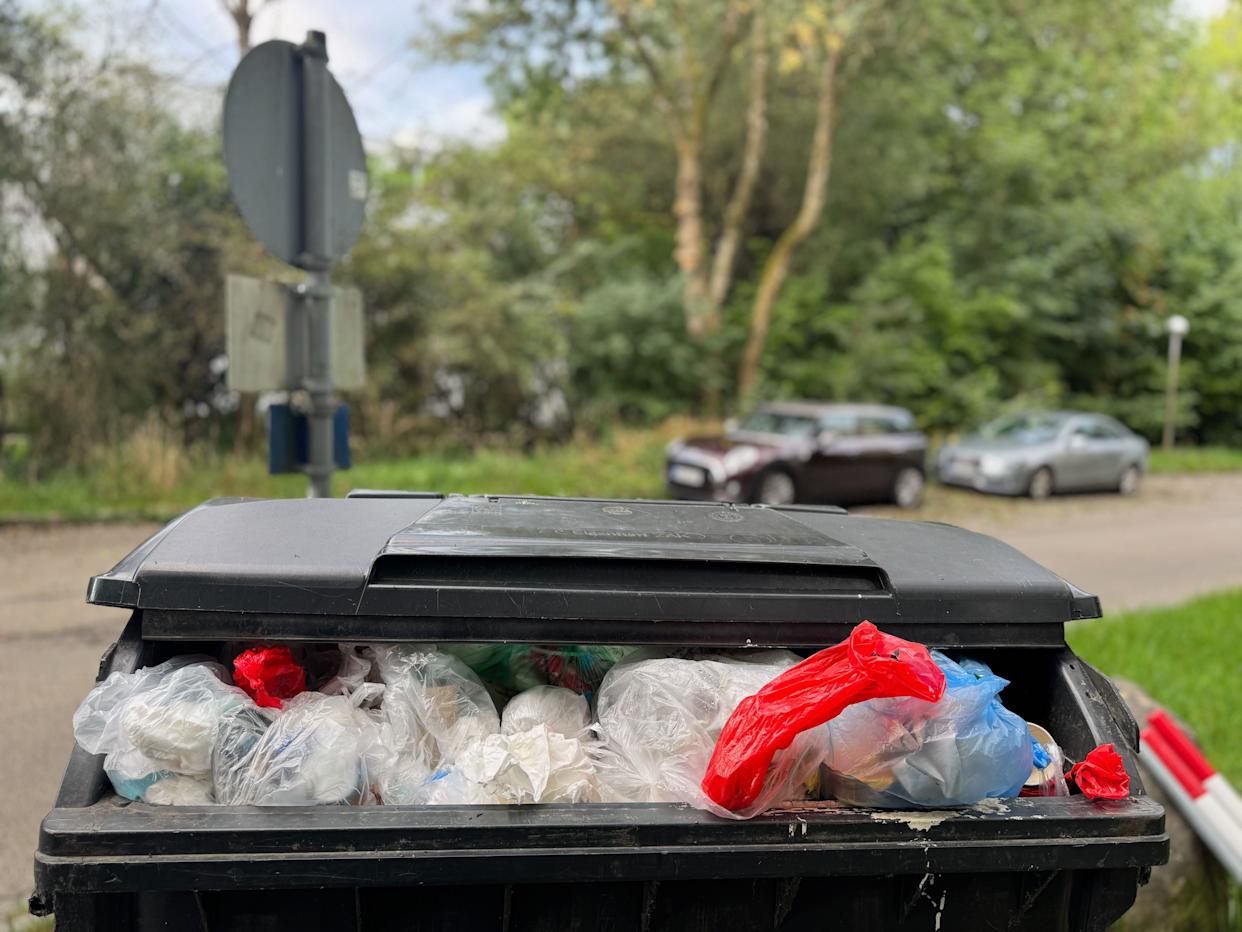
British households generate mounds of plastic waste every year. (Getty)
(mmadpic)
“Only about half of that is recycled.”
WRAP based their calculations on the 1,267,000 tonnes of plastic waste arising in the UK every year, working on data from PackFlow Refresh 2023: Plastic.
Calculating from that and the 28.6 million households in the UK, according to the Office for National Statistics, it comes to 44 kg per household.
What harms do plastics cause?
In addition to concerns that around 20 million tonnes of plastic ends up in the environment every year (according to the International Union for Conservation of Nature), WRAP points out that there are other worrying impacts.
Every year, 1.8 billion tonnes of carbon emissions a year from global plastic production, and 5% of the global carbon budget is expected to be spent on global plastics production by 2040.
Just 10% of the 142 million tonnes of plastic packaging produced each year is effectively recycled.
The remainder is sent to landfill, incinerated or leaked directly into the environment representing £60bn to £90bn in lost value.
A Lancet report published in September 2025 described plastic as a global health threat, which already costs £1.15tn a year.
The report said: “Plastics cause disease and death from infancy to old age and are responsible for health-related economic losses exceeding $1.5tn annually.”
What needs to change to reduce plastics pollution?
Products need to be designed for recyclability and reuse from the ground up, according to WRAP.
Herriott says: “The amount of plastic waste shows why design for recyclability and reuse must be the next big shift if we’re serious about cutting waste.”
This means, for instance, not using multiple materials in plastic designs, like metal in plastic bottle nozzles, which makes products unrecyclable.
Other designs mean that plastic items are less likely to be accepted to be recycled.
Coloured PET plastic bottles are also lower in value, and less likely to be recycled, so WRAP campaigns for manufacturers to use colourless plastic.
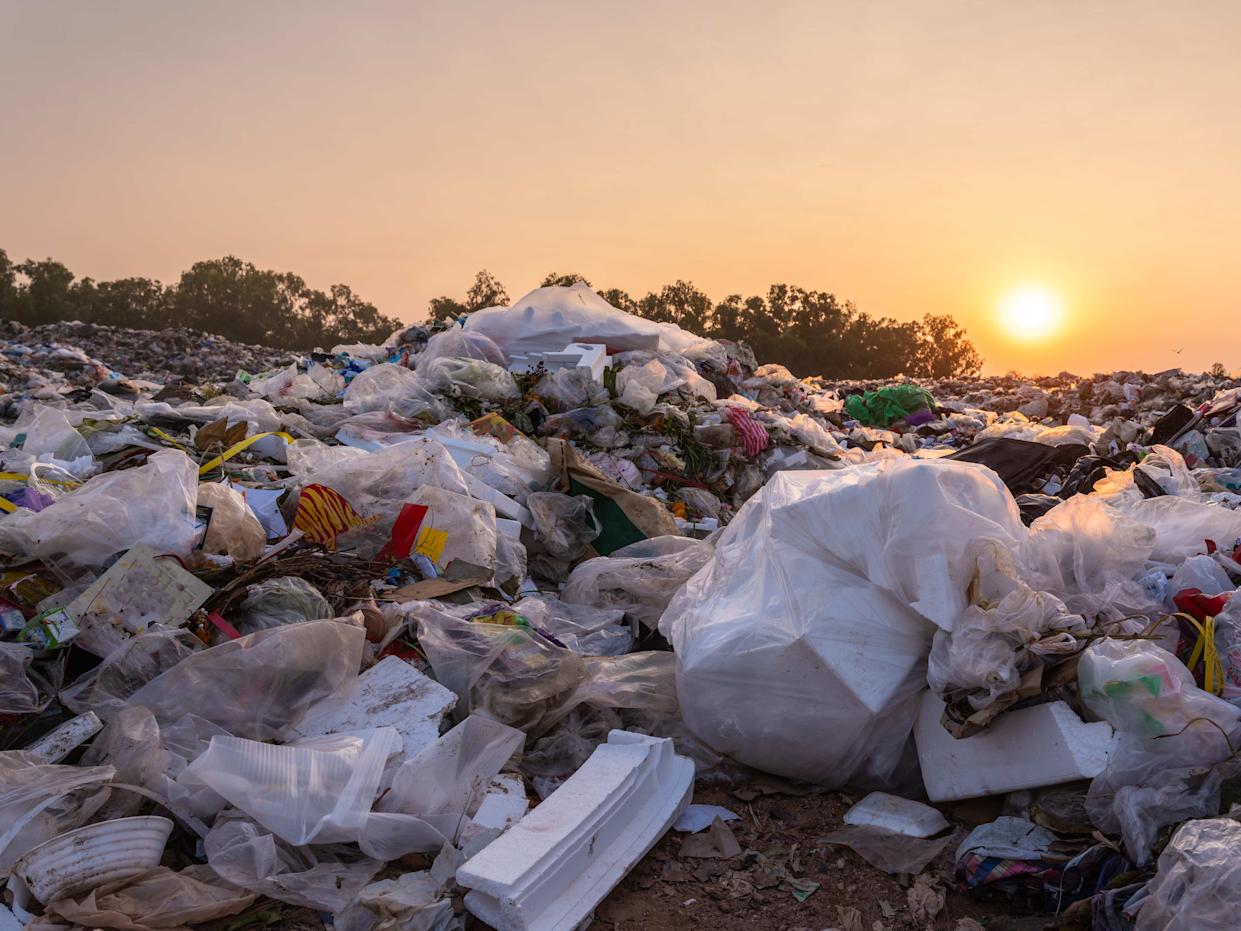
20 million tonnes of plastic ends up in the environment every year.
(Pramote Polyamate via Getty Images)What will change in the future around plastics recycling?
From 2027, plastic recycling is about to change in England – and many plastics that previously ended up being incinerated will be recycled from kerbside green bins.
This includes some plastics that some British people might have assumed were already being recycled.
The biggest change is that, from March 2027, plastic films and bags will be collected and recycled where possible.
Plastic films include (for example) the see-through coating on packets of chicken in the supermarket (at present, only the harder bottom half can be recycled).
Under the government’s Simpler Recycling scheme, paper and card will be collected in one bin. Other recyclable materials including plastic, glass and metal will all be collected in another bin.
The scheme aims to standardise recycling across the country.