
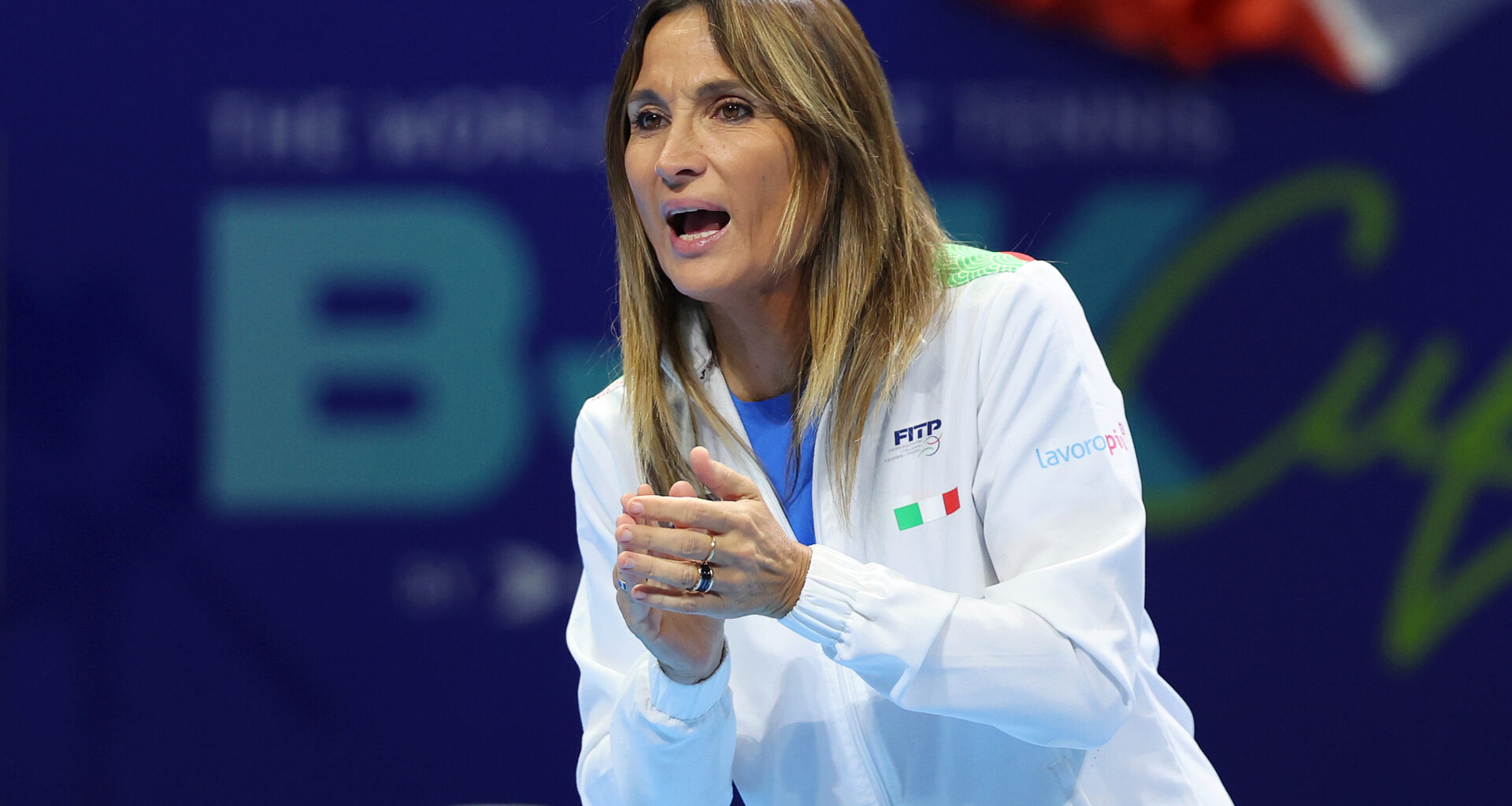
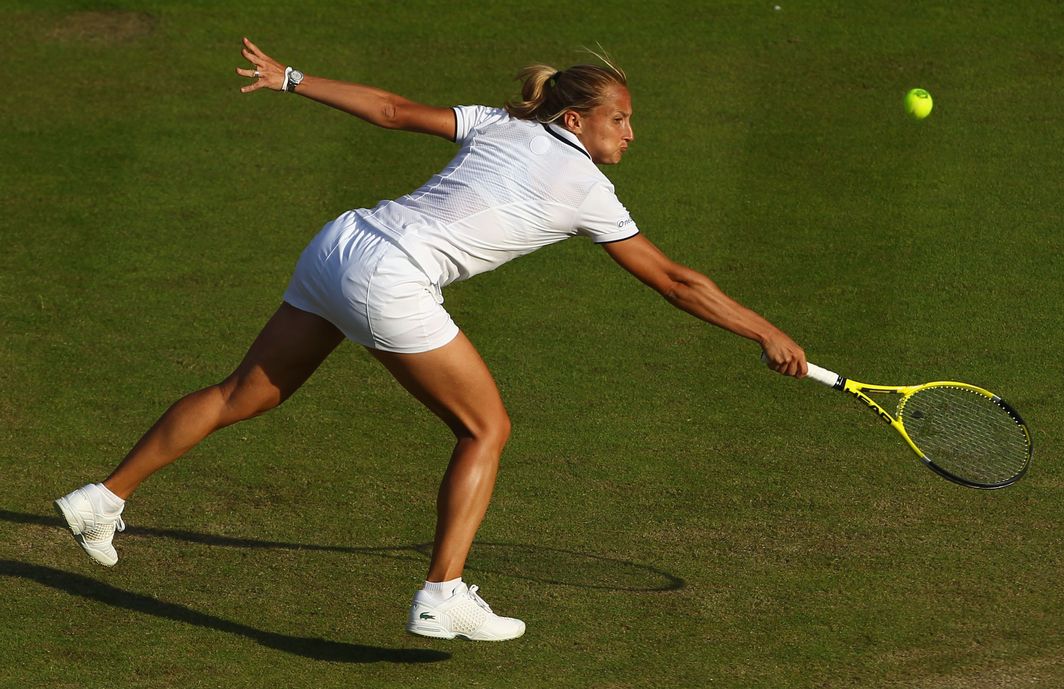
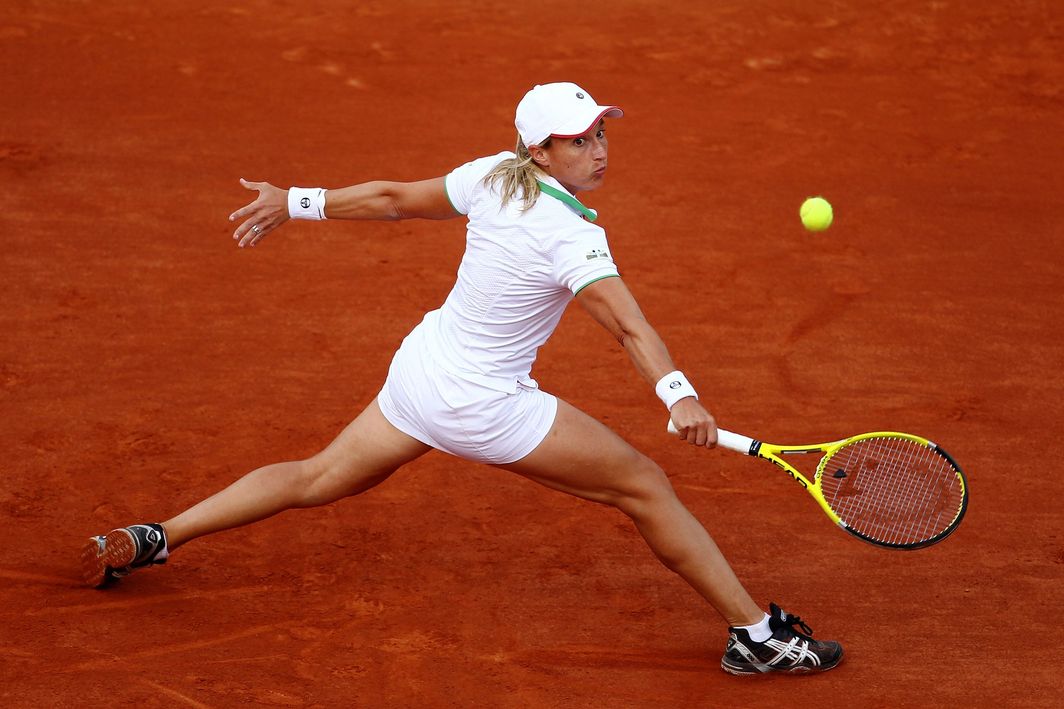
Tathiana Garbin is a former Italian professional tennis player who competed on the WTA Tour from 1996 until her retirement in 2011. She reached a career-high singles ranking of No. 22 in the world in 2007 and was Italy’s top-ranked female player at that time. Today, she serves as the captain of Italy’s Billie Jean King Cup team.
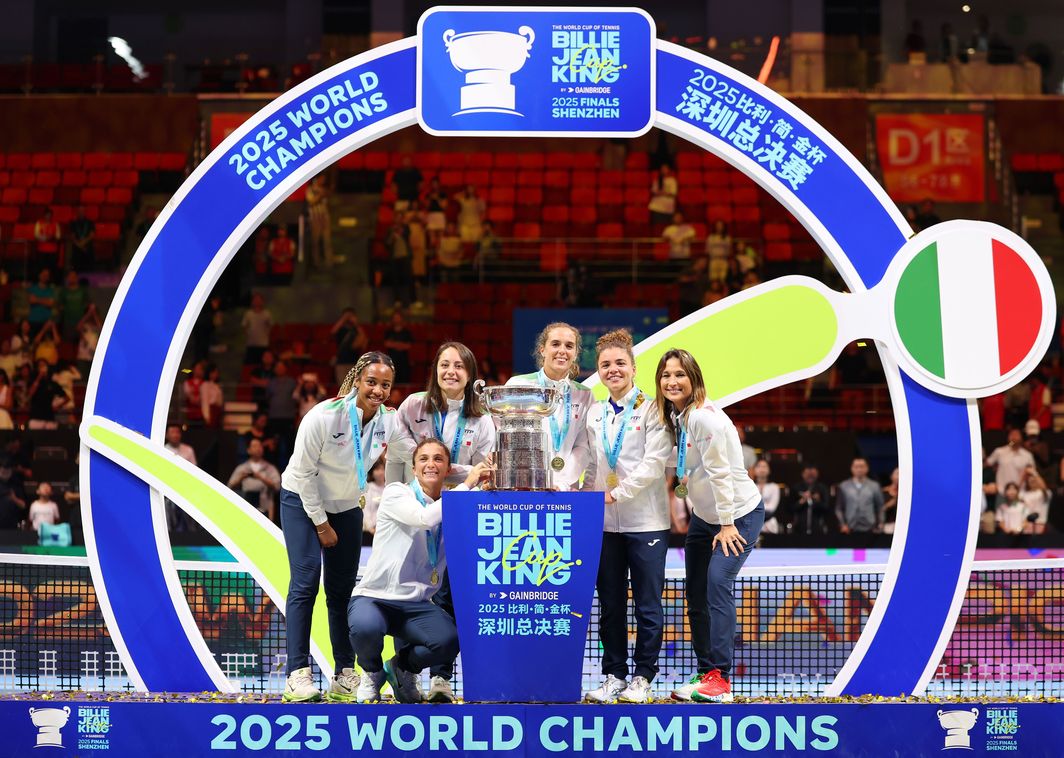
Under her leadership, Italy reached the final of the 2023 Billie Jean King Cup but was defeated by Canada. However, Italy bounced back to win the 2024 Billie Jean King Cup title and recently secured a second consecutive championship by defeating the United States 2–0 in the final.
In 2023, Garbin faced a personal health challenge when she was diagnosed with pseudomyxoma peritonei, a rare abdominal tumor. She underwent surgery in October of that year, just a month before the Billie Jean King Cup, and had another surgery immediately after the competition.
In 2025, she authored a memoir titled Tathiana Garbin – Il Mio Match Per La Vita Tra Gioie e Cicatrici (My Match for Life Between Joys and Scars), reflecting on her journey both on and off the court.
You had a great career as a player, then moved into coaching Italy’s Billie Jean King Cup team. How was that transition for you? What was it like moving from playing to coaching?
The transition from player to coach was very difficult, because in reality you don’t just change your role — you change the way you think, reason and relate to others. When you are a player, everything revolves around you: all the attention is on you, and you think about how to perform better, how to develop your skills, and how to improve your ranking.
But when I stopped playing and began my career as a coach — and later as captain of the BJK team — I realized how much tennis had given me. I had learned so much, and tennis had taught me incredible lessons. I felt the need to give back, in some way, everything I had received.
Purchase book here: https://a.co/d/fiD35ri (Italian version)
And in giving back, I experienced a beautiful feeling — as if I were closing a circle. It was important because if you keep everything to yourself, you’re not generous enough to share what you’ve learned. That wasn’t who I wanted to be; I needed to have a purpose, and that became my purpose.
When I stopped playing professionally, I immediately began working for the Italian Tennis and Padel Federation. I started a career mainly as a coach, helping young girls to grow and improve their tennis, which I enjoyed very much. Then, in 2017, the president called me to offer me this honor — this beautiful position within the federation — to lead the BJK Cup team as captain.
For me, it was a dream come true. I had never imagined I could achieve such a dream. It was something truly beautiful, especially seeing the girls I had worked with when they were very young grow up and join me in the BJK Cup. That was something deeply meaningful, powerful, and it gave me a wonderful feeling.
After all the success you’ve had with the Italian team, how do you keep the players motivated and hungry for more?
It’s not easy, but the main point is not to think only about victory. The most important — and also the hardest — thing for a player who always wants to win is to understand why you do things. When you know why, you understand your path. It’s important to have motivation, and to know that it’s based on meaningful values. The values we believe in are resilience and the strength to never give up. In fact, my players in the BJK Cup never give up, even in the hardest moments when everything seems lost — they keep fighting.
Getty Images
You wrote a very personal book, Tathiana Garbin – Il Mio Match Per La Vita Tra Gioie e Cicatrici. When did you decide to write it, and what made you want to share your story?
The first thing I actually did after receiving such a strong, categorical diagnosis was to start writing a very important diary — to lower the emotional volume. Writing is a powerful tool that helped me turn thoughts into words, and words into reality and strength. That was what helped me the most. I needed to bring this rival — because it’s not an enemy — onto a tennis court, a space I knew well.
For me, it was essential to find parallels that could help me face this entirely new challenge in a way that felt familiar. That was crucial to getting through the moment more positively. Over time, I realized that my experience could help other people — those who were suffering or going through difficult times — and connecting with them became very important to me.
Other coaches on the WTA Tour may face personal struggles while trying to do their job and help their players succeed. What advice would you give to coaches dealing with challenges like that?
It’s very important not to close yourself off. When I realized that I could open up to my players, it was a very meaningful discovery — something I actually learned thanks to my illness. I know it sounds strange to say “thanks to my illness,” but through that experience I understood so many things that have been valuable in my life.
As leaders, we often try not to show our weaknesses. Tennis players are like that — we keep a poker face and try not to reveal what we’re feeling on court. I had carried that same attitude into my way of coaching. But when I understood that I could ask for help, that allowing myself to be helped could actually build stronger, more lasting relationships, I realized how important that was. It’s what helped our team bond more deeply and create something extraordinary.
When we understand that leadership doesn’t mean never asking for help — but rather being open to others, showing even our difficult moments, and letting ourselves be supported — we create an incredible sense of closeness.
How was coaching through your cancer treatment? You had surgery in October 2023, then coached the Italian team just a month later at the Billie Jean King Cup, before having another surgery immediately after. How did you manage coaching during that time, and how did it affect your team?
I had my first surgery in October 2023, and a month later was the BJK Cup. I remember my players were in China, and all I could think about was being ready by November so I wouldn’t leave them alone. My only thought was, I don’t want to abandon them right now. I want to be there with them, no matter what.
I asked my doctor if I could go, and he gave me the OK, but I had to undergo another operation right after the competition. I shared this with my players, and when we met and talked about it, it was a deeply emotional moment for me. As I said, our relationship truly grew stronger. We became so much closer.
I remember that we lost the final, but during the award ceremony, we made each other a promise: I promised I would get better, and they promised they would win the following year. And they kept that promise; it was incredible. This year they even repeated their victory, and sometimes I truly feel they do extraordinary things for me. They did it last year. This year, they played with incredible energy, passion, and determination, and I am a witness to this beautiful victory, another wonderful victory that together we have brought to Italy.
Did coaching help you personally during your illness? How did your experience as a player and coach support you through this tough period?
When I was a player, I learned dedication, discipline, and the trust I needed to place in others. As a coach, I’ve learned to give of myself and to take care of others. Together, these two experiences have created an incredible balance and a new way of approaching everything. My “coach’s voice” has helped me become stronger, while my “player’s voice” has taught me to be patient.
Getty Images
As you know, the WTA has the Coach Inclusion Program aimed at increasing the number of female coaches on the tour. What advice would you give to other women who want to follow in your footsteps and become successful coaches?
What I feel like suggesting to young women — without sounding presumptuous, because that’s not my intention — is that those who are already captains in the Billie Jean King Cup or coaches in general must serve as examples for others. The most important thing for future generations is precisely to show by example that it can be done. When you see someone who has already achieved something, you can take that as a reference point and think, then I can do it too. That’s something I feel a real responsibility for right now.
It’s important that we lead by example. And I also want to say that, unfortunately, there are still too few women on the tour. I would love to see many more, because they have a very special way of coaching. They are often more empathetic and can sense even the smallest expressions in a player’s face, how she’s feeling. They bring an important kind of sensitivity, one that in this historical moment — and always — we need more and more: a greater sensitivity toward others and a willingness to open ourselves to that.
Are there any plans to have your book translated into English so that more coaches, players, and people around the world can learn from your journey?
We’re thinking about it — maybe next year we’ll translate it into English. I’d love to, because the message it carries really has no boundaries. I hope it can help many people who are suffering or going through a difficult time. What matters most to me is that the purpose of this book is simply to help others.
To finish, can you tell us a bit about yourself outside of tennis? What do you like to do to relax and recharge?
What I like to do? I love traveling — a lot — and discovering the cultures of the most unusual places. I love spending time with my family, who are my anchor. I really enjoy reading, writing and living a very simple life with my friends. Every now and then, I play padel and tennis — more padel than tennis. I exercise because I like to stay in shape, and also because I believe it’s a mindset. You never stop being a player. You always have to stay an athlete in your mind, and that’s the most important thing.
Getty Images
“Each of us, sooner or later, faces a challenge that seems too big, too hard, too unfair. But I want to tell you this: there is no battle or game that isn’t worth fighting. Even when everything seems to be against you, even when the road is uphill, even when you want to stop … keep going.”
This is the story of a woman and a captain. Of challenges faced on the tennis court and in life. Of an illness that strikes suddenly and leaves a deep scar, but also of a team capable of turning pain into strength and fear into victory. An intimate and powerful tale that traverses fragility, struggle, and rebirth. And it speaks to anyone searching for the courage not to give up, even when all seems lost.