
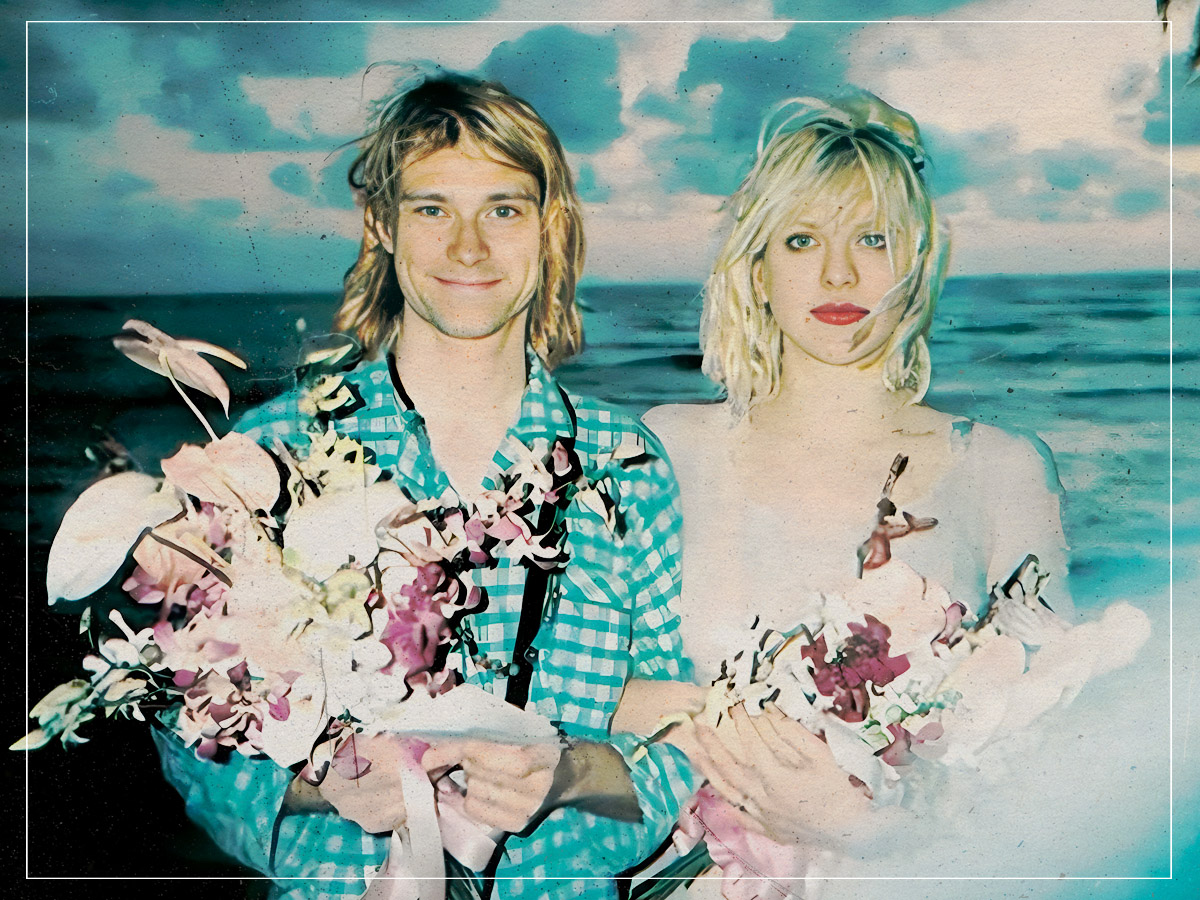
Credits: Far Out / Courtney Love via Instagram
Sat 22 November 2025 14:00, UK
While Kurt Cobain was known for his obsessive journal usage and documenting his favourite records of all time, it’s perhaps less known what the preferred tastes of his wife, Courtney Love, were throughout their time together.
Despite being a pioneering figure within the world of grunge, and arguably the person who helped the small scene from the Pacific Northwest garner mainstream attention, Cobain’s musical preferences stretched far beyond the world in which he was known for operating within, and the records that appeared in his scribbled journal notes stretch from classic 1960s pop to influential art rock and punk records from the decades after.
Love, on the other hand, was more synonymous with the alternative rock and riot grrrl movements happening concurrently with the grunge scene, and while there was some overlap between acts in both of these worlds, it’s hard to say whether what her own band, Hole, were doing, was in any way attempting to attract the same crowd as Nirvana were.
That being said, the two had more connections than just their own music, and in 1994, shortly after the tragic passing of Cobain, Love conducted an interview with Spin to promote the release of Hole’s second album, Live Through This, and listed off some of her own favourite albums of all time.
While there were plenty of unique picks within her list of ten records, there were three that saw her tastes overlapping with ones that appeared in Cobain’s infamous list of his top 50 albums of all time, and the trio of records that the couple could firmly agree upon were all hugely influential releases that came out during a time when both were active in their own projects.
Despite being an EP, the first album that sees both Love and Cobain’s tastes overlapping is Mudhoney’s seminal record, Superfuzz Bigmuff. One of the most celebrated bands to have emerged from Seattle’s grunge scene, their 1988 debut was considered to be a major turning point in the genre’s history, and across the six tracks, the band deliver some of the most abrasive riffs with gnarly and raucous production to go with it. It’s hardly surprising that both Love and Cobain appreciate this record, given how their respective early releases both adopt a similar approach, but the two following albums have even more in common.
The next record that the duo could agree on was Pixies’ 1989 debut, Surfer Rosa, which despite not being easily classifiable as grunge, was a pivotal moment in establishing a new vanguard in guitar music following a period where synths and electronic sounds had been prevailing in modern releases. The skittish yet melody-laden approach taken by the Boston band was something that was adored by many, and while their follow-up, Doolittle, was arguably a step ahead of their debut, it’s still a masterpiece.
Finally, the third record that Love and Cobain agreed upon was PJ Harvey’s Dry, which came out in 1991. While more of a punk-blues hybrid, this record from the English songwriter was considerably more raw than the records she went on to make, and while it’s interesting to ponder whether Cobain would have still been a fan of her later movements, one can easily see why her early work stood out to him. Harvey, like Cobain and previously the Pixies, would go on to work with producer Steve Albini on her following album, Rid of Me, which only goes to further underline just why this would have been something he could easily connect with.
There may not always have been audible overlap between the art that Cobain and Love created while together, but judging by their own personal preferences in listening habits, it’s clear that they shared a mutual appreciation for similar things, and that’s the sort of bond that’s hard to dispute.
Related Topics