
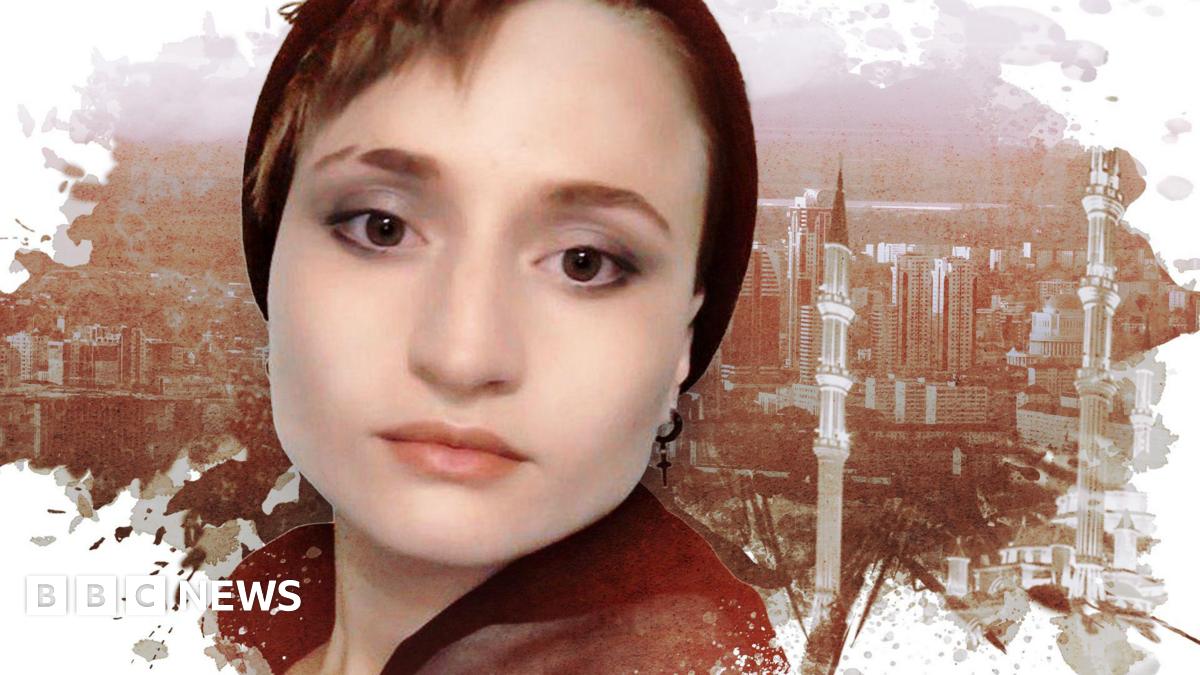
Armenian authorities say they are investigating two unnamed people in connection with Aishat Baimuradova’s murder, but they have released no further details about them.
Ramzan Kadyrov is sensitive to people criticising Chechnya from abroad, says Michael Dennis, an expert on Chechen politics at the University of Texas.
“The very existence of a diaspora is a clear signal to the entire world that something is wrong in Chechnya. It’s a matter of personal pride and political image,” Mr Dennis told the BBC.
Since the early 2000s, asylum seekers from Chechnya have been coming to Europe – fleeing first the war and later Kadyrov’s repressive rule.
But changes to EU migration policy, followed by visa restrictions for Russians because of the war in Ukraine, have all but closed that route.
That leaves the South Caucasus, where Russians can travel visa-free, as the easiest escape route, but far from the safest.
In July, another escapee, 24-year-old Laura Avtorkhanova, was found in a shelter in Georgia by a group of male relatives who reportedly tried to coerce her into returning to Russia. After being questioned by police she was able to stay safely in Georgia.
For other Chechen women who have fled, Aishat’s death has reinvigorated a fear that has haunted them since they left Russia.
Several have told the BBC how even before her murder they had steered clear of community events, avoided speaking Chechen in public and restricted their social media presence.
Now they worry it may not be enough to hide from those who may want to punish them.
“The fear I’ve lived with all my life – embedded in my DNA – has reawakened with renewed vigour,” said one escapee living in Western Europe, who asked to hide her name and precise location.
“It’s like sleep paralysis: a monster appears, and I lie there frozen, staring into its eyes. It’s the fear of being killed.”
“You can escape,” she said, “but you never really feel free.”