
It was buried in an unlikely place
Lauren Beavis SWNS and Abigail Neep
16:00, 23 Nov 2025
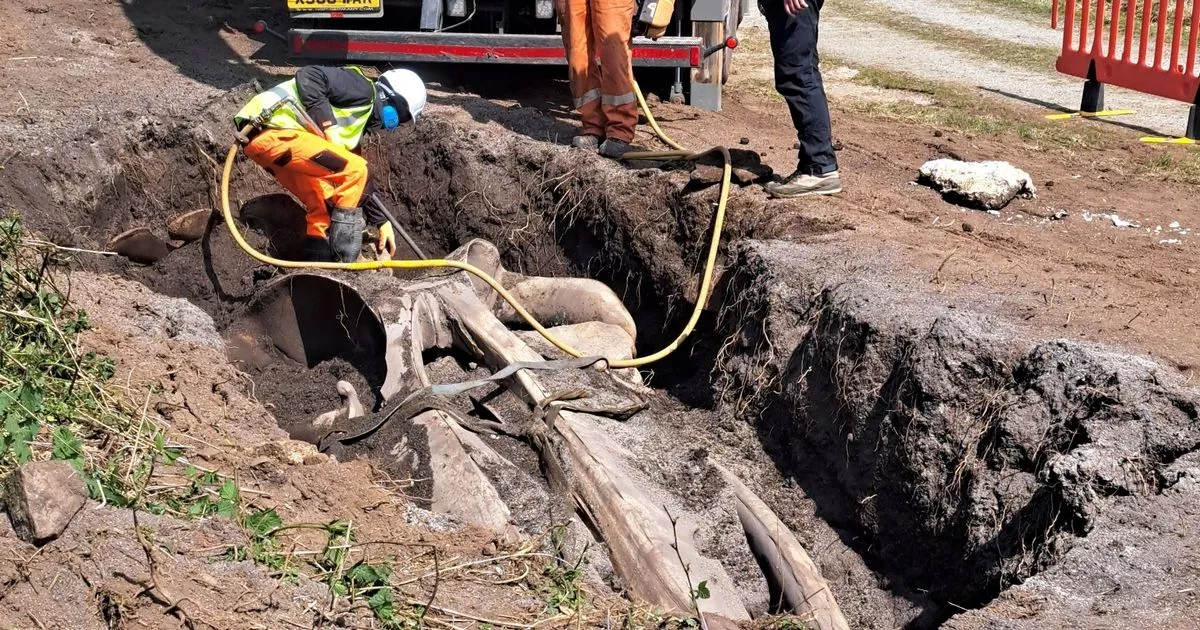
Experts have excavated a two-tonne head of a whale that died after getting stranded in Cornwall. The 60-foot (20m) female fin whale was killed after being stranded in Parbean Cove in 2020.
Its head was then buried on University of Exeter land in Falmouth to help prepare the bones for study as it is the most natural way to clean them.
Back in February 2020, the huge 20m mammal was beached at the mouth of the Helford River. The whale remained underground for five years until April 2025. Over the course of ten hours, a team used specialist vacuum excavation equipment to remove the soil.
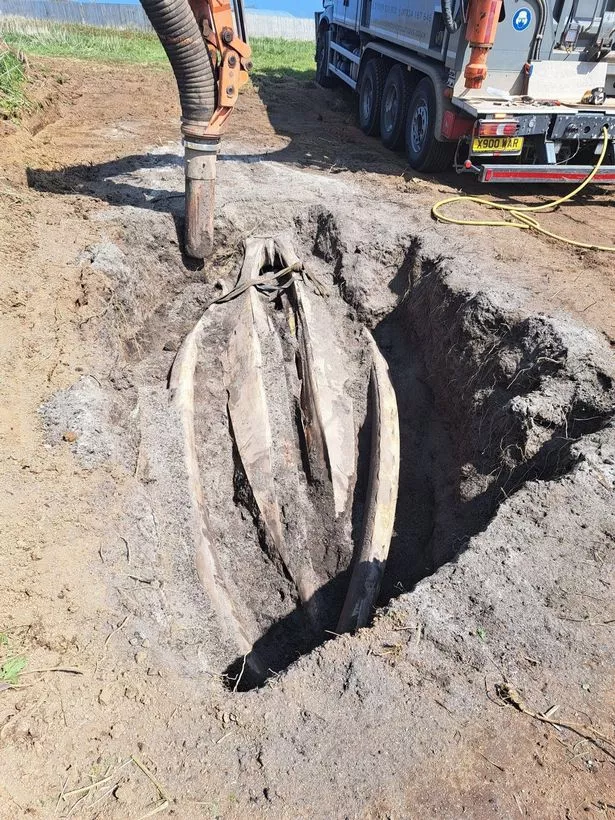 Experts excavated a whale skull 5 years after the mammal’s death(Image: SWNS)
Specialists from the British Divers Marine Life Rescue team tried to keep her alive by dousing her with water in the hope that she might be refloated during high tide. But sadly the whale, which was later found to be severely malnourished, was too weak to survive.
Weeks later, the two-tonne head of the whale was given to ecologist Robbie then a Professor in the Environment and Sustainability Institute.
After gaining permission from the landowner, the Duchy of Cornwall, Professor McDonald, who saw the ‘research potential’ in studying the whale’s decomposition, arranged for her to be buried in specially prepared soil in the research field close to the Penryn campus in the University of Exeter.
The industrial vacuum machine, normally used to excavate buried utility cables, was used to help remove the soil from around the head which was then craned out of a two-metre-deep hole.
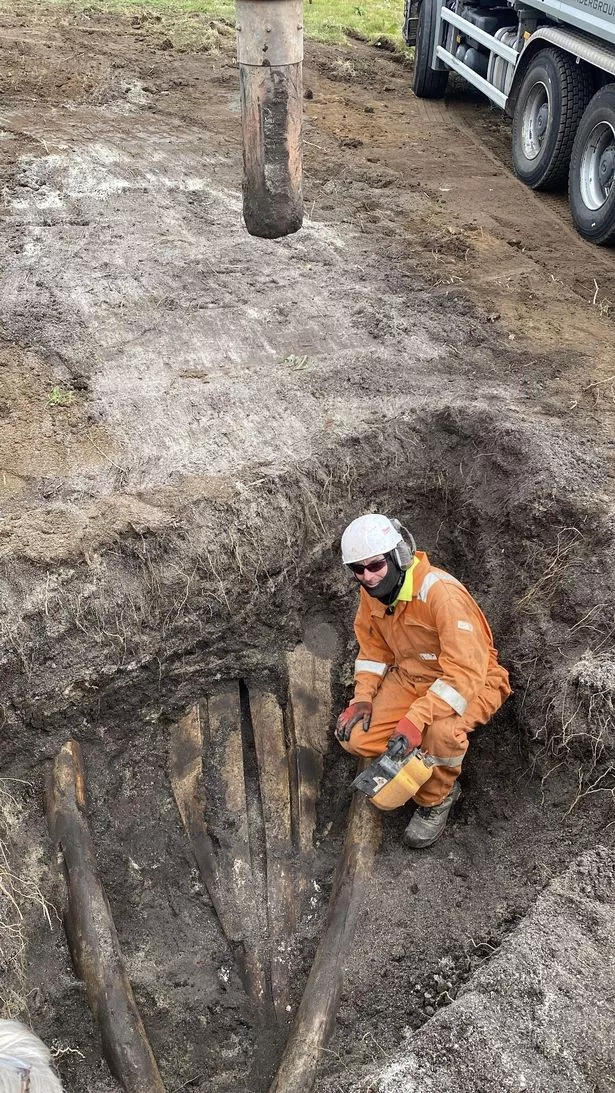 Experts excavated a whale skull 5 years after the mammal’s death(Image: SWNS)
The team discovered that organisms in the soil had, but for one piece of blubber, stripped it clean.
Scientist Robbie McDonald, an Honorary Professor at the University of Exeter, said: “It’s fantastic. We didn’t know what to expect after five years underground, but it’s come out really clean.
“This skull is a gargantuan reminder of what we can do to improve the marine environment.”
Discussions are now underway as to the future of the whale skull, with the possibility that a permanent installation will be created on the Penryn campus.
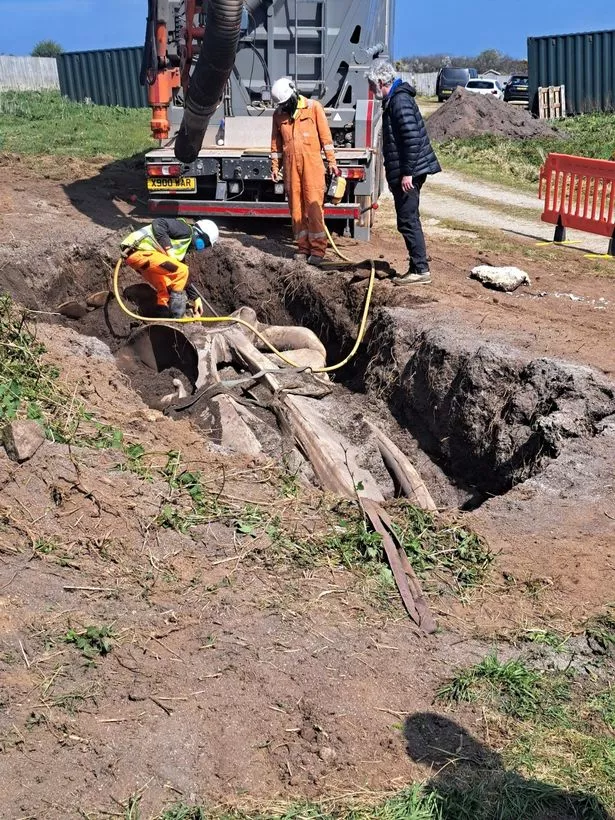 Experts excavated a whale skull 5 years after the mammal’s death(Image: SWNS)
Professor Brendan Godley, Director of the Graduate School of Environment and Sustainability, said: “This story reflects so much of the work the University conducts in relation to our environment.
“It speaks to our education and research across marine science, from the health of our ocean to the way ecosystems are adapting or otherwise to these rapid changes.
“It also reflects our deepening engagement with the world around us, mediated through humanities and social sciences, where our scholars play such a valued role in communicating these issues to the public – capturing imaginations.”